
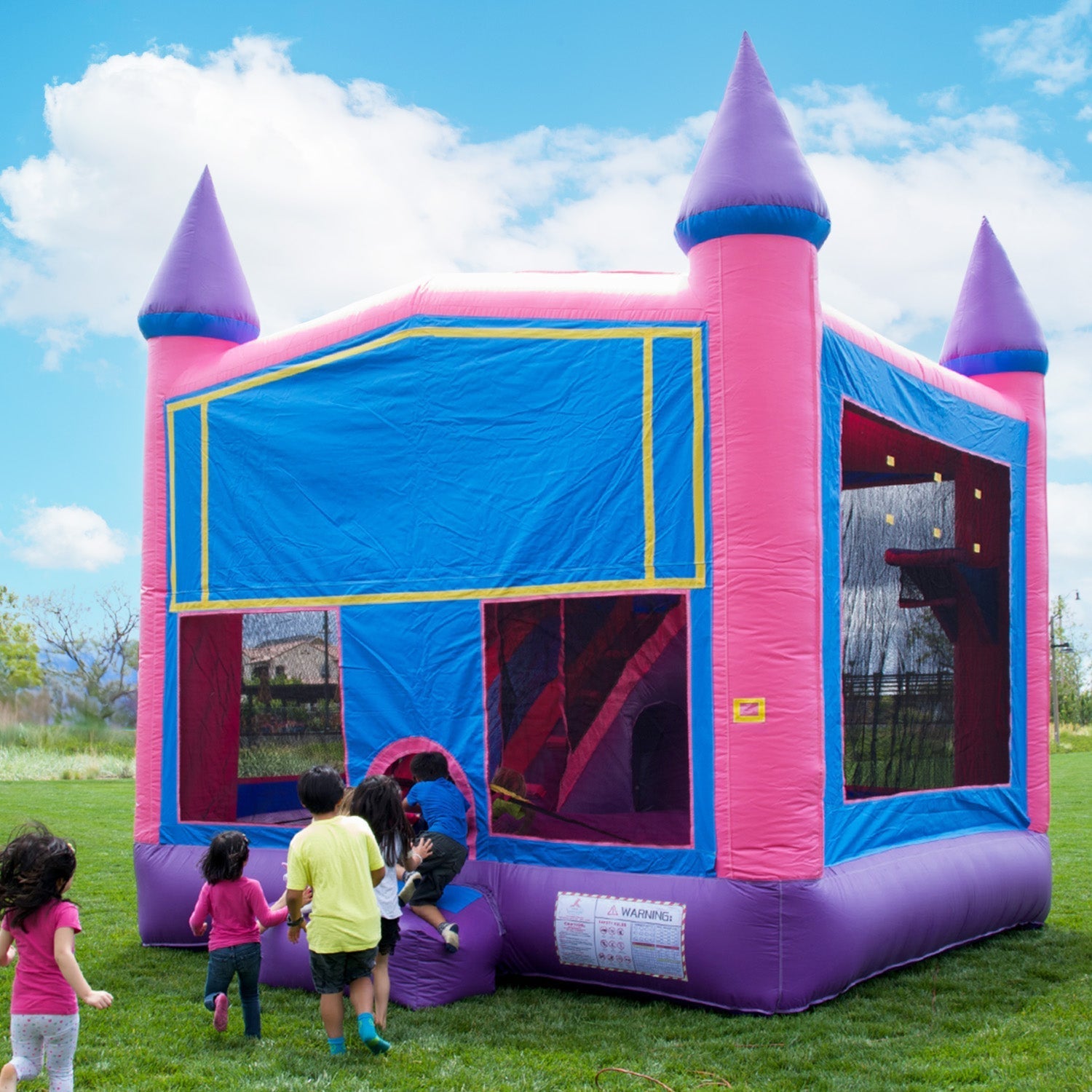
Key Takeaways:
- Wind and inadequate anchoring together account for 60% of all weather-related inflatable incidents and are almost entirely preventable with the right protocols in place.
- Gusts can exceed sustained wind speeds by 50% or more, making on-site anemometer readings the only reliable measure of actual conditions at the inflatable.
- Wet or saturated soil reduces stake pullout resistance by 50% or more, meaning a properly anchored unit before rain can become dangerously under-anchored during it.
- The heat index inside a bounce house can reach nearly 104°F with peak values of 117°F, even when ambient outdoor conditions feel manageable to adults.
- Every rental agreement must define the exact conditions that trigger a shutdown before the booking is confirmed, not after conditions deteriorate on event day.
Weather is the most unpredictable risk in bounce house rentals. It does not warn you, it does not wait, and it does not care that you have a booking to protect. The operators who build strong weather protocols before an event and use equipment from certified inflatable manufacturing solutions are the ones who stay safe, stay compliant, and stay in business.
Why Do Bounce House Weather Protocols Matter for Safety, Liability, and Operations?
Weather protocols cover every stage of a rental: the forecast review days before delivery, the on-site decisions during setup, the active monitoring while kids are bouncing, and the documentation after the event ends. Skipping any stage creates exposure.
Injuries and Deaths from Weather Incidents Are Documented and Preventable
Between 2003 and 2013, the CPSC estimated 113,272 emergency department-treated injuries linked to inflatable amusements, along with 12 fatalities. A separate AMS and NOAA study documented 132 wind-related bounce house incidents worldwide from 2000 to 2021, causing at least 479 injuries and 28 deaths. Wind and inadequate anchoring together account for 60% of all weather-related incidents and are almost entirely preventable.
Operating Without Protocols Creates Personal Liability
Seventeen states have no inflatable safety guidelines at all. Nineteen states explicitly reference ASTM standards. If you operate in an unregulated state, you carry the full weight of that responsibility yourself. ASTM F2374 and CPSC guidelines represent the industry standard of care and are your primary defense if an incident leads to a claim.
What Weather Conditions Should You Check Before Confirming a Bounce House Setup?
Pre-event weather review is not a day-of task. It starts days in advance and involves more than checking a weather app.
Start Your Forecast Review 72 Hours Before the Event
Access the National Weather Service or a professional weather service 72 to 24 hours before the event. Look for wind advisories, severe thunderstorm watches, heat advisories, and precipitation probability. If the forecast shows winds exceeding 15 mph or a thunderstorm probability above 60%, contact the customer immediately to review the cancellation policy and discuss backup plans. Customers informed in advance accept changes far more easily than customers surprised on the day of their event.
Location and Surface Type Amplify Weather Risk
A standard bounce house weighs only 200 to 400 lbs but presents a wind-catching surface area of several hundred square feet. Open fields, hilltops, and exposed backyards magnify that risk significantly. Over three-quarters of all wind-related bounce house incidents happen in the warm season, with cold fronts, dust devils, and thunderstorm-related winds as the most common causes. Know the site before you commit to the setup.
How Do Wind Conditions Affect Bounce House Safety the Most?
Wind is the single most dangerous weather variable for inflatable operators. It is the leading cause of airborne incidents that result in severe injuries and fatalities.
Gusts Are More Dangerous Than Steady Wind
Sustained wind speed is the average velocity over one to two minutes. Gusts are sudden spikes that can exceed sustained speeds by 50% or more. A site showing 10 mph sustained winds may experience gusts of 15 to 18 mph. Those gusts exert tremendous force on the inflatable surface. You must monitor for both and always apply the stricter number.
Wind Force Increases Exponentially as Speed Rises
Wind force is proportional to the square of velocity. A 20 mph wind exerts four times the force of a 10 mph wind. At 25 mph, uplift forces on a large inflatable can exceed the holding capacity of any standard anchoring system. Risk levels based on ASTM F2374, CPSC, and HSE data: 10 to 15 mph is CAUTION; 15 to 20 mph is HIGH RISK; 20 to 25 mph is CRITICAL RISK; 25 mph and above is IMMEDIATE or EMERGENCY SHUTDOWN. No exceptions. For a deeper look at wind limits for bounce houses and how equipment design affects wind resilience, review those thresholds before your next delivery.
How Does Rain Change Bounce House Setup and Use Decisions?
Rain creates two separate hazard categories: slip and fall risks from wet surfaces, and electrical hazards at the blower and power connections.
Wet Vinyl Surfaces Become Dangerous Immediately
PVC vinyl becomes extremely slick when wet. Light rain increases fall risk, collision risk, and the chance of injury from contact with walls and floors. Heavy rain can allow water to accumulate inside the unit, destabilizing participants and affecting structural integrity. The industry standard is to evacuate at the onset of heavy rain, not to wait and see how bad it gets.
Rain Weakens Anchoring and Creates Electrical Risk
Wet or saturated soil reduces stake pullout resistance by 50% or more compared to dry, compacted soil. A properly staked unit before rain may become dangerously under-anchored once the ground softens. Inspect all anchor points if rain occurs during an event. On the electrical side, the CPSC has confirmed that standard blower motors are not designed for wet outdoor conditions and that current standards do not mandate GFCI use. Position the blower on an elevated, dry surface. In light rain, cover the motor with a waterproof cover while maintaining ventilation. In heavy rain, turn off and disconnect the blower immediately.
How Does Extreme Heat Affect Bounce House Safety and Event Operations?
Heat is the most underestimated weather hazard in bounce house rentals. Most operators watch the wind. Far fewer track the heat index inside the unit.
Internal Temperatures Exceed Ambient Conditions by a Large Margin
A University of Georgia study found that the average heat index inside a bounce house can reach nearly 104°F, with peak values of 117°F. Exterior PVC vinyl surfaces exposed to direct sunlight can exceed 130°F to 150°F, creating a burn risk for young children who fall or sit on the material. In 2013, a child in Texas suffered severe heatstroke during a summer birthday party; internal inflatable temperatures had far exceeded the ambient outdoor reading. These conditions appear even when outdoor temperatures feel manageable.
Heat Protocols Must Be Based on Temperature and Heat Index Together
Here is the operational framework: below 85°F ambient and below 90°F heat index means normal operation. Between 85°F and 90°F ambient, provide water and shade breaks. Between 90°F and 95°F ambient, limit sessions to 15 minutes with mandatory water breaks. Above 95°F ambient or above 103°F heat index, limit sessions to 10 minutes, enforce shade breaks, and monitor children closely. Above 100°F ambient or above 110°F heat index, consider cancellation and consult with the event organizer before proceeding.
What Is the Main Process for Applying Bounce House Weather Protocols Before and During an Event?
A structured process removes guesswork and empowers staff to make the right call without needing to reach you by phone from the event site.
Follow a Four-Phase Weather Monitoring Workflow
Phase 1 is 72 to 24 hours before: access NWS, identify hazards, contact the customer if needed, and confirm all monitoring equipment is charged. Phase 2 is on arrival: take an initial wind reading, assess ground conditions, identify site hazards like overhead power lines and trees, verify all anchors, and take a second wind reading after setup. Phase 3 is active operation: designate one staff member as the Weather Monitor whose only job during the event is weather. Every 30 minutes, that person takes and records a wind speed reading, checks the radar app for approaching precipitation or lightning, and notes any change in conditions. Phase 4 is post-event: complete the weather log, document any shutdowns, inspect equipment for damage, and file the log for a minimum of three years.
Know the Six-Step Emergency Shutdown Protocol Before You Need It
When sustained winds reach 20 mph, lightning is detected within six miles, or heavy rain begins: step 1, announce a calm evacuation and have all participants exit before deflation; step 2, stop the blower and disconnect the power source, full deflation should occur within two minutes; step 3, secure the deflating unit with extra sandbags to prevent wind catching; step 4, move all participants to a sheltered location, for lightning that means a solid building or hard-topped vehicle, not a tent; step 5, contact the event organizer; step 6, document everything including the exact time, wind readings, conditions, and all actions taken.
What Wind Guidelines Should Operators Follow to Reduce Risk?
The UK Health and Safety Executive is explicit: if an anemometer is not available, the inflatable should not be operated outdoors. Smartphone weather apps are not a substitute. HSE prohibits their use for wind speed measurement because they cannot account for localized conditions.
Anchoring Standards Are Wind Safety Standards
For soil installations, stakes must be 18 to 30 inches in length and at least 5/8 inch in diameter, driven at an angle opposing the direction of pull, never straight down. For hard surfaces, the minimum is 75 to 100 lbs of anchoring weight per anchor point. For a unit with six anchor points, that is 450 to 600 lbs of total ballast distributed evenly across all points. Weight must be secured with non-stretch straps and inspected throughout the event. The Devonport, Tasmania incident in December 2021, where a wind gust killed six children at a school event on what had been a calm day, is the clearest case study in the industry for why anchoring and wind monitoring cannot be treated as optional. Operating bounce castles safely in rain and wind applies equally to your full inflatable inventory.
What Rain Guidelines Should Operators Follow to Protect Guests and Equipment?
If rain is already falling at setup time, the decision to proceed must be deliberate, not default. Light rain with reduced occupancy and continuous monitoring is a permitted exception in some cases, not a standard operating mode.
Protect Your Blower, Cords, and Anchor Points When Moisture Is Present
Keep the blower on an elevated, dry surface at all times. If an extension cord is unavoidable, it must be outdoor-rated, GFCI-protected, and no longer than 100 feet; blower cords should ideally be 5 to 10 feet and limited to 5.5 amperes. Check all anchor stakes after any rainfall during the event. Saturated soil can cut pullout resistance in half without any visible warning. If conditions deteriorate, add supplemental weight or relocate the unit. Operators running bounce house combos with more anchor points have more variables to check during wet conditions, so build that into your monitoring routine.
What Heat Guidelines Should Operators Follow During Hot-Weather Rentals?
Surface temperature is a separate check from air temperature. Do not assume ambient conditions reflect what children are actually contacting inside the unit.
Shade, Breaks, and Hydration Are Operational Requirements, Not Suggestions
Where possible, position the unit so the entrance and primary play surface receive shade from structures, trees, or temporary canopies. For large events with extended runtimes in summer heat, build mandatory break schedules into your delivery conversation so customers know before the day what the rules are. Enforce the session time limits. Above 95°F, ten minutes is the maximum. Above 100°F, talk to the organizer about whether the event continues at all.
What Mistakes Do Rental Operators Make With Bounce House Weather Protocols?
Most weather-related mistakes follow a predictable pattern: an operator knew conditions were borderline, hesitated, and waited too long to act.
Relying on Apps and Avoiding Shutdown Decisions Are the Two Biggest Failures
Smartphone weather apps measure regional data, not localized wind conditions at your specific site. An anemometer at ground level tells you what is actually happening at the inflatable. The second failure is waiting too long to shut down because of customer pressure or fear of losing a booking. The Niagara County incident in 2016, where a bounce house was carried into power lines, was linked to an anchoring system that was insufficient for the wind conditions present at the time. Operator negligence accounts for 5% of weather-related incidents with a prevention effectiveness score of 88 out of 100, meaning better decisions would eliminate nearly all of it.
How Should You Communicate Weather Protocols to Customers Before Problems Start?
Disputes over weather shutdowns almost always start before the event, not during it. If customers do not know the policy going in, they will push back when it is enforced.
Put the Policy in the Rental Agreement Before the Booking Is Confirmed
Every rental agreement should include: the specific conditions that trigger a cancellation or shutdown, the customer notification timeline, the available remedies such as rescheduling or a raincheck valid up to one year, and a clear statement that the operator retains the right to shut down at any time for safety reasons. When a shutdown is required on-site, state the specific wind speed or condition reached, reference ASTM standards as the governing authority, and confirm next steps within 24 hours.
How Can You Build a Repeatable Weather Decision System for Every Bounce House Rental?
A system fails when it depends on one person's memory or judgment under pressure. Build it into your pre-event checklist, your staff training, and your rental agreement before you need it.
Document the Rules and Train Staff to Apply Them Without Escalating Every Call
Your standard operating procedures should include the Appendix A ten-item weather checklist covering forecast review, site assessment, ground conditions, wind readings, anchor verification, blower and electrical checks, active monitoring every 30 minutes, lightning and radar checks, heat index monitoring during summer events, and post-event documentation. Pursue SIOTO certification for all operators and delivery staff. Lightning and electrical incidents account for 14% of weather-related incidents but carry a prevention effectiveness score of 95 out of 100 — the highest of any category. Clear documented rules are the reason that number is so high. If you want to match your protocols to your specific equipment and event types, talk to a product advisor before your next season.
Every Event You Protect Is a Booking You Keep
Weather incidents do not just create injuries. They end businesses. A single preventable event can result in a liability claim, a lost license, and a reputation that takes years to recover. The operators who build repeatable weather protocols are the ones who keep booking weekends, earning referrals, and building something that lasts.
JumpOrange builds commercial-grade inflatables including industrial-strength inflatable water slide units designed for operators who take safety as seriously as revenue. If you are ready to match your equipment, your protocols, and your growth plan, talk to the JumpOrange team today. We are here to help you build a business worth protecting.


Leave a comment
This site is protected by hCaptcha and the hCaptcha Privacy Policy and Terms of Service apply.