Key Takeaways:
- Plan real inflatable rental startup costs across equipment, storage, insurance, and staffing—not just the first bounce house.
- Use a clear cost breakdown rental business model so you know the true cost to start a rental business and your expected payoff timeline.
- Track inflatable rental business financials monthly—revenue, operating costs, and ROI per unit—to guide smart reinvestment.
- Prepare for seasonality like Frozen Ground and Utility Safety: Best Practices for Winter Excavation, using off-season services to keep cash flow steady.
- Answer “What are the initial costs involved in starting an inflatable rental business?” with data-driven projections for your bounce house business startup, not guesses.
The total startup cost to start a rental business in inflatables typically ranges from $10,000 to $50,000. Most inflatable rental startup costs fall into three clear tiers: basic, standard, and premium, each with different bounce house business startup gear and support.
|
Investment Tier |
Estimated Budget |
What’s Included |
|
Basic Startup Package |
$10,000–$15,000 |
1–2 commercial-grade bounce houses, essential safety equipment, basic insurance, business registration |
|
Standard Startup Package |
$25,000–$35,000 |
3–4 diverse units, delivery vehicle, comprehensive insurance, marketing essentials |
|
Premium Startup Package |
$35,000–$50,000 |
5+ premium inflatables, dedicated cargo van, full business setup, professional website |
In real inflatable rental business financials for commercial grade water slides, first-year operational expenses usually land about 25% higher than your initial budget. This cost breakdown rental business view helps answer, "What are the initial costs involved in starting an inflatable rental business?" Just like planning Frozen Ground and Utility Safety: Best Practices for Winter Excavation, you want firm numbers before you break ground on your bounce house business startup
What Equipment and Initial Setup Costs Should You Budget For?
Most inflatable rental startup costs come from equipment and setup. This is the core cost breakdown rental business owners use when planning a bounce house business startup and answering, “What are the initial costs involved in starting an inflatable rental business?”
|
Expense Category |
Cost Range |
Details |
|
Standard Bounce House |
Around $2,000 |
Single commercial-grade unit |
|
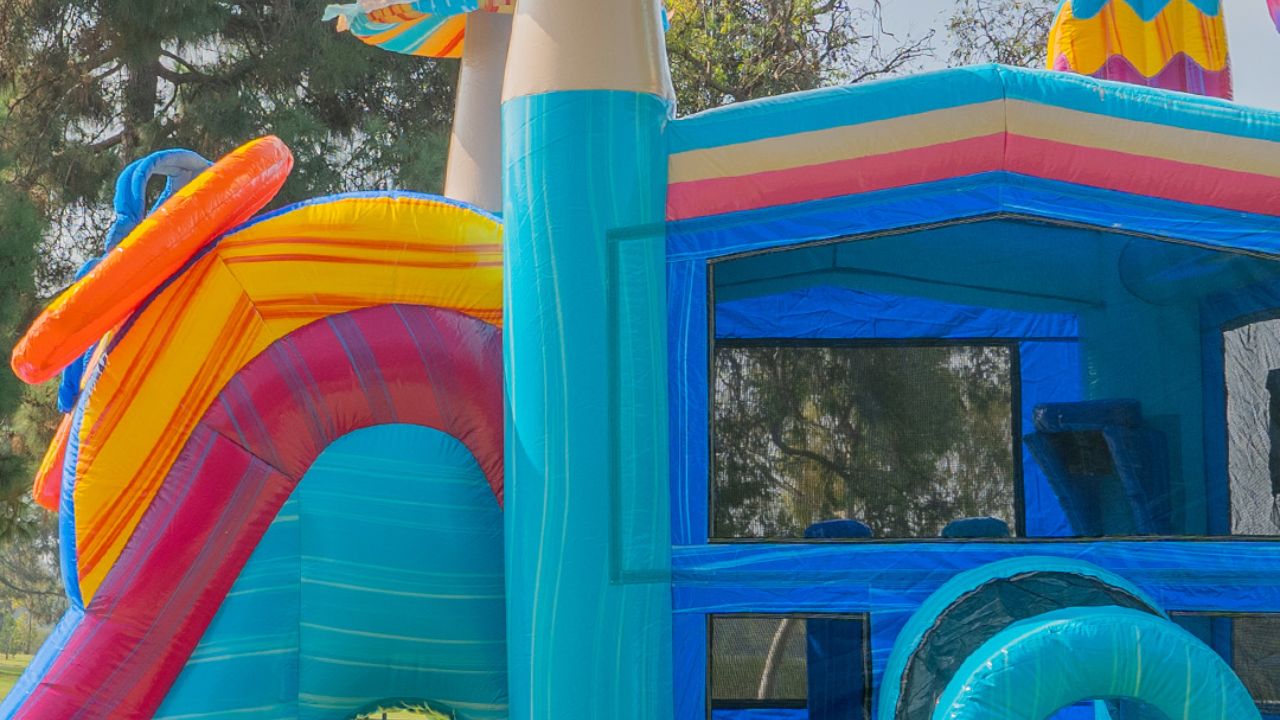
Combo Units with Slides |
$3,500+ |
Multi-function inflatables with extra play features |
|
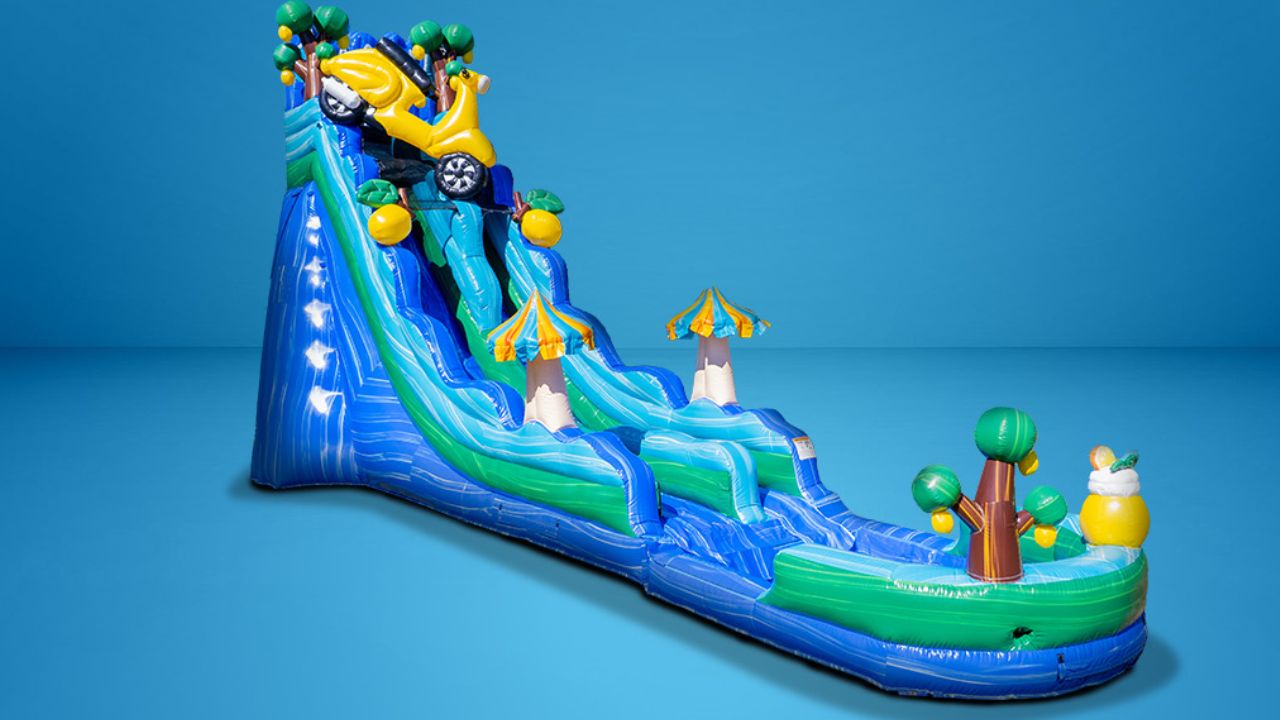
Commercial Water Slides |
$4,500+ |
High-demand premium rental items |
|
Blowers & Safety Equipment |
$450–$700 |
Blowers ($200–$400), safety mats ($150–$300), anchors ($100–$200) |
|
Delivery Vehicle |
$15,000–$40,000 |
Reliable truck or cargo van for transport |
|
Storage Rental |
$400–$800/month |
Climate-controlled facility to protect inventory |
|
Insurance (Annual) |
$1,800–$3,600 |
Liability, equipment, and vehicle coverage |
|
Licenses & Permits |
$500–$2,000 |
Business registration and local compliance |
|
First Aid Kits |
$50–$100 each |
Basic on-site safety support |
|
Cleaning Supplies (Initial) |
$100–$200 |
Cleaners, sprayers, and towels for regular sanitizing |
|
Themed & Obstacle Course Units |
Varies, usually higher |
Start with popular children’s themes and slides with obstacle-course features |
When you map these items into your inflatable rental business financials, you see that the real cost to start a rental business is more than just a single bounce house. Smart planning of inflatable rental startup costs around vehicles, storage, and safety gear keeps operations smooth. Just as Frozen Ground and Utility Safety: Best Practices for Winter Excavation require careful prep before digging, your bounce house business startup needs clear numbers and a realistic cost breakdown rental business model before you invest.
What Are Your Monthly Operating Expenses?
Monthly operating expenses sit on top of your inflatable rental startup costs and shape real inflatable rental business financials. For most bounce house business startup plans, expect at least $1,000–$2,500+ in fixed costs every month, before staffing and card fees. Typical items include storage at $400–$800 per month for a climate-controlled unit, insurance at about $150–$300 per month, and vehicle maintenance that averages around $208–$417 per month from an annual budget of $2,500–$5,000. Cleaning supplies usually run $150–$300 per month because every inflatable needs regular sanitizing.
On the admin side, booking management platforms often cost $50–$200 per month for real-time availability, digital contracts, and payment processing. Digital marketing tools such as social media schedulers, email automation, and basic website upkeep add another $100–$300 per month. Every card payment will incur about 2.9% plus $0.30 per transaction. Event staffing is another key part of the cost breakdown that rental business owners track closely, with $15–$25 per hour and at least one staff member required per inflatable unit. When you look at the full picture, the real cost to start a rental business isn’t only about gear; it’s about sustaining those monthly numbers, much like planning for Frozen Ground and Utility Safety: Best Practices for Winter Excavation where ongoing conditions matter as much as the initial plan. Managing these recurring costs well keeps your inflatable rental startup costs under control and supports long-term inflatable rental business financials.
How Quickly Can You Recover Your Investment?
Most owners can recover their inflatable rental startup costs within the first year. With solid demand and smart pricing, a well-run bounce house business startup often pays off its initial cost to start a rental business in 8–12 months, especially when peak season is strong, and expenses stay tight.
What Revenue Can You Expect Monthly?
A normal weekend rental brings in about $200–$500 per event. That drives three common monthly revenue scenarios that most inflatable rental business financial models use. A conservative calendar with 8–10 rentals a month might generate around $4,000. A moderate schedule with 12–15 rentals can bring $6,000. An aggressive schedule with 18 or more rentals can push $8,000+ per month, and in peak season, many operators see $8,000–$12,000. After all expenses, a 30–40% net profit margin is realistic, which is why many owners can pay off their initial investment in the first year. When people ask, “What are the initial costs involved in starting an inflatable rental business?” this revenue picture is a key part of the answer and belongs in any serious cost breakdown rental business plan.
How Do Seasonal Fluctuations Impact Your Budget?
Seasonality is a big factor in how fast you recover your inflatable rental startup costs. Most party rental businesses peak in spring and summer, then slow during the cold season. Q2 (April–June) often accounts for about 35% of the annual budget, with roughly 45% higher rental activity. Q3 (July–September) usually delivers around 30% of the annual budget, with water slides and similar units generating about 40% higher revenue. Q1 (January–March) tends to hold 20% of the annual budget and is used for maintenance and prep, while Q4 (October–December) makes up the last 15% with winterization and lighter bookings. Planning for this curve in your inflatable rental business financials is like planning for Frozen Ground and Utility Safety: Best Practices for Winter Excavation—conditions change, so your budget and operations must adapt for your bounce house business startup to stay profitable year-round.
What Hidden Costs Do New Owners Often Overlook?
New owners often overlook how big hidden expenses can be in real inflatable rental business financials. Beyond visible inflatable rental startup costs and the obvious cost to start a rental business, many bounce house business startup operators end up paying $15,000–$25,000 per year in extra costs. These include quarterly maintenance at $500–$1,500 per commercial-grade inflatable, workers’ compensation insurance at $1,000–$3,000 annually, and safety certification at $200–$500 per employee to stay compliant with standards like ASTM F2374-22. You also need an equipment repair reserve of $200–$500 per unit (about 10% of equipment value), an insurance deductible reserve of $2,500–$5,000, plus staff training that can run $500 per quarter.
On top of that, a smart cost breakdown rental business plan sets aside an emergency fund of about 15% of peak season monthly revenue. This helps cover unexpected expenses that often eat up 18–22% of total revenue once you're operating. If you only look at bounce house waterslide combo gear prices, your inflatable rental startup costs will seem lower than they really are. But when you factor in these hidden lines, your cost breakdown rental business model gets more accurate, and your bounce house business startup runs smoother. It's the same mindset as Frozen Ground and Utility Safety: Best Practices for Winter Excavation—you plan for what you can't see, so a surprise doesn't wreck your project or your budget.
How Can You Generate Revenue During Off-Season Months?
Off-season income is what keeps your inflatable rental business's financials healthy after peak season slows. When you plan off-season services early, your inflatable rental startup costs and overall cost to start a rental business are easier to recover, even for a small bounce house business startup facing Frozen Ground and Utility Safety: Best Practices for Winter Excavation conditions and fewer outdoor events.
Most owners add simple, year-round services to their cost breakdown rental business model. Renting tables and chairs often becomes the main off-season earner. Christmas light installations work well too, with about 40% of US consumers spending $150 or more on decorations. Indoor décor for Halloween, Thanksgiving, Christmas, and New Year helps fill the calendar. Soft plays and bubble houses tap into an indoor entertainment market worth over $12 billion globally. You can also sell party planning services, where planners often earn $60K–$100K per year, or offer equipment maintenance, repairs, cleaning, and storage to other operators. In slow months, drop rates to spark demand, and host themed event nights to showcase inventory. All of this supports stronger inflatable rental business financials and answers a key question behind What are the initial costs involved in starting an inflatable rental business?—You recover inflatable rental startup costs faster when off-season revenue is built into your cost breakdown rental business plan from day one.
What Financing Options Are Available for Equipment Purchases?
Financing helps spread your inflatable rental startup costs over time instead of draining cash on day one. The right mix of loans, leasing, and credit can make the real cost to start a rental business easier to manage and keep your inflatable rental business financials stable, even when demand feels as unpredictable as Frozen Ground and Utility Safety: Best Practices for Winter Excavation conditions.
Should You Finance or Buy Equipment Outright?
Buying equipment outright gives you full ownership and no monthly payments, but it front-loads your inflatable rental startup costs. Financing uses your inflatables as collateral and lines up repayment with rental income, which can smooth cash flow in a bounce house business startup. For example, a $75,000 startup funded at 7% interest over 5 years creates about $1,485 per month in payments, which you need to plug into your cost breakdown rental business model. SBA 7(a) loans and microloans offer longer terms and competitive rates for new operators with limited history. Leasing works well for high-ticket items like big tents or sound systems because it lowers upfront cost, but you do not own the assets at the end. Business credit cards fit smaller buys—linens, décor, marketing, software—and help bridge short-term gaps, but interest can stack up fast if balances are not cleared. All of this should sit next to your projections for “What are the initial costs involved in starting an inflatable rental business?” so your cost to start a rental business stays realistic.
Are Grants or Partnership Options Available?
Some regions offer grants for tourism and events, which can offset inflatable rental startup costs without adding debt. There are also special programs for minority-owned, women-owned, and veteran-owned businesses that can reduce the effective cost to start a rental business. Partnerships with venues or event planners can include shared equipment purchases, where both sides invest and benefit, lowering your direct cash outlay and improving overall inflatable rental business financials. Private investors are another option; they trade startup capital for equity or profit-sharing, which changes your long-term cost breakdown rental business picture but can speed up growth. When you map these options together, you get a clearer answer to “What are the initial costs involved in starting an inflatable rental business?” and how much of those costs you actually need to fund yourself.
Is an Inflatable Rental Business Worth the Investment?
Yes, for most owners, an inflatable rental business is worth the investment when inflatable rental startup costs are planned with real numbers. The market is projected to grow by about $810.16 million by 2028 at a 5.81% CAGR, which supports strong demand for any serious bounce house business startup. A solid cost breakdown rental business plan usually assumes operating costs at 30–35% of revenue, marketing at 10–15%, and maintenance at 5–10%. When you match that with typical revenue and a clear answer to “What are the initial costs involved in starting an inflatable rental business?”, many operators recover the cost to start a rental business within the first year and then scale profits after that. Smart inflatable rental business financials track ROI on each equipment category—standard units, combos, slides—so you know where to reinvest first.
Success also depends on relationships and execution, not just gear. Build strong vendor and venue partnerships for repeat bookings, and think like Frozen Ground and Utility Safety: Best Practices for Winter Excavation—plan ahead for slow seasons and local conditions. A simple four-step startup path keeps things clear: purchase inventory, arrange transport and storage, complete legal paperwork, and implement ongoing promotions. If you manage inflatable rental startup costs, track every dollar in your inflatable rental business financials, and keep a clean cost breakdown rental business model, the return on your bounce house business startup can be both fast and sustainable.
Ready to Start Your Inflatable Rental Business?
If you’re serious about a bounce house business startup, now is the time to act. Review your inflatable rental startup costs, build a clear cost breakdown rental business plan, and lock in equipment that supports strong inflatable rental business financials in every season—even when it feels like Frozen Ground and Utility Safety: Best Practices for Winter Excavation.
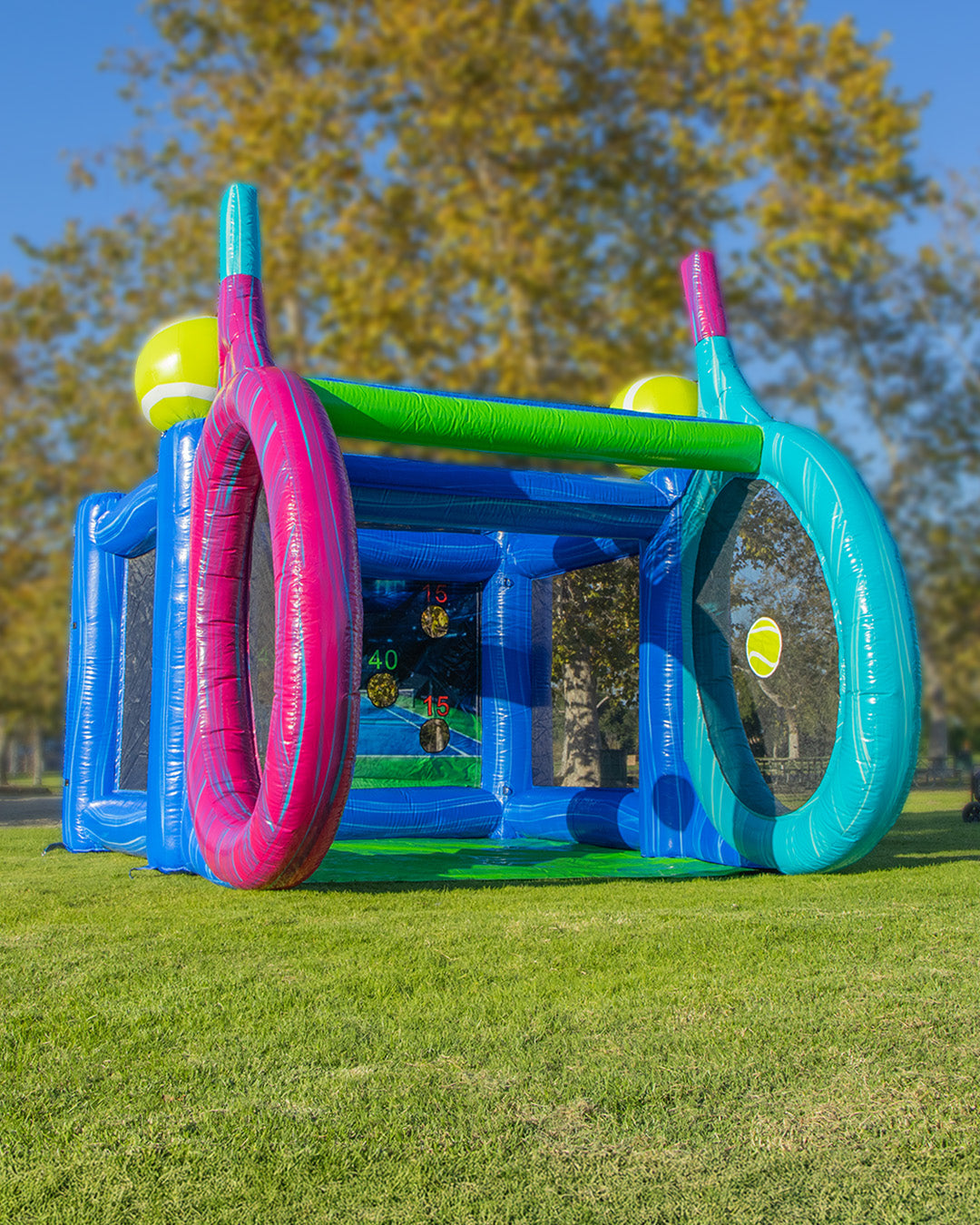
JumpOrange can help you choose the right sports inflatables units so the real cost to start a rental business pays you back faster, supports your goals, and answers the big question: What are the initial costs involved in starting an inflatable rental business—and how soon can I profit?


Leave a comment
This site is protected by hCaptcha and the hCaptcha Privacy Policy and Terms of Service apply.