
Key Takeaways:
- Unoptimized delivery operations plateau at 3.5 jobs per day regardless of how many units you own.
- Reverse-order loading the night before eliminates cargo rearrangement at every site and saves 10 to 20 minutes per stop.
- A motorized dolly is the single highest-ROI accessory investment a solo operator can make before buying a second unit.
- Route optimization software cuts delivery costs by up to 40%, recovering up to $24,000 annually on a 400-delivery operation.
- Clean, dry, upright-loaded inflatables with proper edge protection consistently outlast equipment that is handled without a system.
Running a solo inflatable rental business means you are the driver, the crew, and the logistics manager all at once. How you move your equipment determines how many jobs you complete, how long your inventory lasts, and how professional you look doing it. Most operators focus on bookings and equipment but underinvest in the transport system that makes both worth having. This guide covers everything a solo operator needs to know about vehicle selection, loading strategy, and building a delivery system that scales.
What Is Inflatable Transportation and Why Does It Matter for Solo Operators?
Transportation covers every step between folding a unit after the last rental and pulling stakes at teardown. Get it wrong and you lose time, money, and customers. Get it right and you run more jobs with less effort.
What Does Inflatable Transportation Include Before, During, and After Delivery?
Transportation starts the moment you clean and roll a unit. It includes loading, securing, driving, unloading, setup, teardown, and return. A standard bounce house setup runs 30 to 45 minutes total. A large water slide runs 45 to 65 minutes. Teardown adds another 25 to 35 minutes per unit. Every minute of that falls on you when you work solo.
Why Do Vehicle Choice and Loading Strategy Affect Safety, Speed, and Profit?
22% of rental businesses lose revenue directly from inefficient logistics. Poor route planning alone can add $20 to $50 in excess fuel costs per delivery. Your vehicle and how you pack it determines how many jobs you run each day and how much revenue you keep. Inflatables are one of the highest-ROI entertainment businesses you can build but only when your back-end operations are tight.
What Problems Do Solo Operators Face When Moving Heavy Inflatables Alone?
Four to five stops per day is the practical limit for a solo operator. Push beyond that and quality drops along with your body. Traditional commercial units take 20 to 30 minutes to set up per stop. Without the right tools and a fixed system, that time compounds across every delivery and kills your daily capacity before summer peaks.
What Vehicle Requirements Should Solo Operators Understand Before Transporting Inflatables?
Your vehicle is your infrastructure. The wrong one limits your inventory size, your access to residential driveways, and your booking capacity. Match the vehicle to where your business is and where it is heading.
What Vehicle Types Work Best for Transporting Bounce Houses, Water Slides, and Combo Units?
Cargo vans fit one to five units. A 16-foot box truck suits five to eight. A 26-foot box truck handles eight to twelve. If you are growing into a larger inventory that includes bounce house combos, plan your transport capacity before you outgrow your vehicle mid-season.
How Do Payload Limits, Cargo Space, and Door Height Affect What You Can Carry?
The Mercedes-Benz Sprinter delivers 223 to 533 cubic feet of cargo space and 3,351 to 6,812 pounds of payload depending on configuration. A 16-foot box truck provides 960 cubic feet and 7,500 pounds. A 26-foot box truck jumps to 1,800 cubic feet and 10,000 pounds. Know your numbers before you overload.
Can the Wrong Vehicle Make Loading, Unloading, and Route Planning Harder?
Yes. Unoptimized operations plateau at 3.5 deliveries per day regardless of fleet size. That ceiling is not a booking problem. It is a vehicle and system problem. A mismatched vehicle turns every stop into a logistics puzzle you solve on the spot.
What Equipment Should Be Ready Before You Load an Inflatable by Yourself?
The right tools make solo loading safe and fast. Without them, every unit is a physical risk and a time drain before you even leave the driveway.
What Moving Tools Help Solo Operators Load More Safely and With Less Strain?
A motorized dolly built for the inflatable industry, such as the Jolly Dolly, carries 1,000 pounds and can be fitted with a 2,500-pound winch for lifting and rolling heavy units. This is the single highest-ROI accessory purchase a solo operator can make. OSHA is clear: lift with legs and core, not your back. The right dolly removes that equation entirely.
Should You Keep Straps, Ramps, Dollies, and Protective Pads in Every Vehicle?
The FMCSA requires a minimum of two tie-downs on any item of significant size and weight. That is a legal floor, not a suggestion. Ratchet straps, aluminum loading ramps, and edge padding belong in every vehicle on every trip.
Can Missing Equipment Slow Down Every Stop on Your Route?
One solo operator cut on-site delay from 15 minutes to under five minutes per stop after adding rental management software with packing list automation. Across a five-stop day, that is 50 minutes recovered. The system that prevents you from arriving without a blower pays for itself in one weekend.
What Should You Check Before Loading an Inflatable for Transport?
A five-minute pre-load check prevents equipment damage, delivery delays, and liability exposure. Skipping it always costs more time than it saves.
Is the Inflatable Fully Dry, Clean, and Folded Correctly Before Loading?
Mold and mildew cause permanent vinyl damage when moisture is trapped inside a rolled unit. Clean and fully dry every inflatable before rolling. This is one of the most preventable causes of equipment loss in the first two years of any rental operation.
Do You Need to Confirm the Delivery Order Before Placing the First Unit Inside?
Yes. Stage equipment the night before in reverse delivery order. The first stop loads last, closest to the door. The last stop loads first, deepest in the vehicle. Doing this at home the night before saves 10 to 20 minutes per stop in rearrangement time at sites.
Can Poor Pre-Loading Checks Create Transport Damage or Unloading Delays Later?
ASTM F2374-22 requires inspection of all straps, zippers, anchor points, and inflation tubes before every transport. Operators who follow this standard protect their equipment life and their liability position. Also check stored equipment every three to four weeks during the off-season. Catching a problem in January is far cheaper than finding it at a Saturday booking.
What Is the Best Way to Load Inflatables as a Solo Operator?
Loading order, unit position, and strap placement determine how fast you unload and how safely equipment arrives at every site. A disciplined loading system turns a complicated process into a repeatable routine.
How Do You Position the First Inflatable to Support the Rest of the Load?
Load inflatables upright in the trailer, not flat-stacked. Upright positioning maximizes cubic footage, keeps units stable against each other, and prevents stacking weight from compressing seams over time. A correctly loaded cargo van holds three to five standard bounce houses or two to three medium commercial water slides per trip.
How Do You Load by Delivery Order to Reduce Unloading Time Later?
Reverse-order loading is the professional standard. The last stop of the day goes in first, deepest in the vehicle. The first stop goes in last, right at the door. This eliminates cargo rearrangement at every site and keeps your schedule from unraveling before noon.
How Do You Secure Inflatables So They Do Not Shift During Turns or Stops?
Apply ratchet straps in a crisscross pattern for forward and backward pressure on each unit. Use cam straps between adjacent inflatables to prevent lateral drift. For multi-unit loads, a single long ratchet strap threaded through all units binds the entire cargo into one stable mass. Apply edge protection wherever a strap contacts the vinyl surface.
How Do You Leave Enough Access for Blowers, Hoses, Anchors, and Smaller Gear?
Blowers go at the front of the trailer near the cab. Extension cords, stakes, tarps, and repair kits go in labeled bins near the rear door. When everything has a fixed position, the first item you need at a site takes 90 seconds to reach, not five minutes.
How Should Solo Operators Choose Between a Van, Truck, or Trailer?
The best vehicle matches your current inventory size, your service area, and your monthly budget. Match it to where your business is now and where it will be in 12 months.
Is a Cargo Van Better for Speed, Protection, and Easier Access?
For most solo operators, yes. Cargo vans run 14 to 22 MPG, lease for $600 to $1,200 per month, and insure for around $1,762 per year. The Ford Transit reaches up to 43.5 MPG in certain configurations, making it the most fuel-efficient option for suburban multi-stop routes. If you are building your first rental startup inventory, a cargo van is the right starting point.
When Does an Enclosed Trailer Become the Better Option for Growing Inventory?
When you outgrow the cargo van but are not ready to commit to a box truck lease. A 16-foot box truck runs $800 to $1,800 per month. A 26-foot box truck runs $1,000 to $3,500 per month. An enclosed trailer is the practical middle step for operators at the four to eight unit stage. A pickup with a detachable trailer also reduces fuel use and improves maneuverability on non-delivery days.
How Do Weather, Theft Risk, and Lifting Height Affect the Best Choice?
Flatbed trailers allow loading from multiple sides, which reduces load time for large obstacle courses. The trade-off is full weather exposure. Enclosed vans and covered trailers provide the most consistent protection against UV damage, fading, and vinyl degradation across an entire rental season.
How Do Weight Distribution and Securement Affect Safe Transport?
An unbalanced or loose load does not just create risk on the road. It accelerates wear on your vehicle, your tires, and your equipment. Discipline here protects everything you have invested in.
Why Should Weight Be Spread Evenly Across the Cargo Area?
Heavy-duty truck engines burn nearly one gallon of fuel per hour at idle. Every minute spent repositioning an unbalanced load at a site adds direct fuel cost on top of lost time. Even load distribution is an operational habit that pays in every direction.
Can Poor Balance Affect Braking, Handling, and Tire Wear?
Yes. Monthly vehicle maintenance for a rental operation runs $208 to $417. Poor load balance accelerates tire wear, brake wear, and rear suspension fatigue, pushing that figure toward the top of the range and shortening vehicle life well before your fleet needs an upgrade.
How Tight Should Tie-Down Straps Be and What Signs Show a Load Is Not Secure?
Straps should be firm but not crushing. Apply edge protection at every strap-to-vinyl contact point to prevent abrasion damage. Before leaving the warehouse, do a short parking lot test drive. If anything moves or rattles, the load is not ready. If you run water slides, this guide on water requirements and site prep covers setup basics that also affect your load sequence and arrival timing.
What Loading Mistakes Cause the Biggest Problems for Solo Operators?
Most loading mistakes are predictable. They fall into four categories: order, weight, straps, and accessories. Fix these and you eliminate the majority of time lost on delivery days.
Do Operators Lose Time by Loading Units in the Wrong Delivery Order?
Yes, and it shows. Rearranging a packed trailer at a customer's home while a family watches costs 15 to 20 minutes and signals amateur-level operations. It is the most visible and most preventable mistake in solo delivery.
Can Overloading a Vehicle Create Safety, Legal, or Maintenance Problems?
Yes. Hidden annual costs for a rental operation can reach $15,000 to $25,000, including $200 to $500 per unit in equipment repair reserves. Overloading accelerates wear on every system and pushes all of those figures higher.
Are Loose Accessories One of the Most Common Causes of Wasted Time at Delivery Stops?
Unexpected expenses hit 18 to 22% of total annual revenue for rental operators. Disorganized accessories that get left at the wrong site, damaged in transport, or simply lost during a busy weekend are a direct, avoidable contributor to that number. A fixed labeled bin system eliminates this category of waste entirely.
How Can Solo Operators Make Loading and Unloading Faster Without Taking Risks?
Speed comes from having a system, not from moving faster. Build the routine once and the time savings repeat on every job.
Can a Fixed Loading Routine Reduce Stress and Save Time on Every Job?
Yes. Quick-setup inflatables with tool-free connection systems cut unit connection time from 10 to 15 minutes down to 1 to 2 minutes. A fixed loading sequence removes decision-making from every step. Combine both and you eliminate the two biggest time drains at the start and end of every stop.
Can Better Folding and Tighter Rolls Make Transport Easier From the Start?
Inflatables made from 15 oz vinyl weigh 12 to 14% less than standard 18 oz vinyl. Purpose-built solo operator designs reduce full setup time from 20 to 30 minutes down to 6 to 10 minutes per unit. Across a four-stop day, that is 40 to 60 minutes recovered without changing your route. If you want help choosing the right equipment for your market, JumpOrange offers one-on-one product advice to match your inventory to your operation.
How Should You Organize Accessories and Smaller Equipment Inside the Vehicle?
Organization inside the vehicle is as important as the route outside it. Disorganized gear turns a solid delivery day into a slow one.
Where Should Blowers, Extension Cords, Stakes, Hoses, and Sandbags Be Stored?
Use a two-tier approach. Group first by category: inflatables, blowers, anchoring hardware, repair supplies. Then organize within each category by delivery stop or corresponding unit. This structure scales from a garage to a warehouse without reinvention.
How Do Labeled Bins or Fixed Zones Reduce Mistakes During Busy Days?
Digital inventory systems using barcodes or printed labels catch missing items at staging, not at the site. Safety certification costs $200 to $500 per employee. Organized vehicles reduce misuse and the incidents that trigger those costs. A solo operator who added organization alongside routing software went from three to four stops per day to five to six, a 50 to 67% capacity gain without adding a vehicle or a crew member.
How Can Solo Operators Protect Their Equipment During Transport?
Equipment protection during transport is equipment protection during operation. The habits you build on the road directly affect how long your inventory lasts.
Should You Use Floor Protection, Wall Padding, or Edge Guards Inside the Vehicle?
Always lay a clean, dry tarp on the vehicle floor before loading. Direct contact between vinyl and a trailer bed introduces debris, moisture, and surface abrasion before the unit ever reaches a site. This is one of the most overlooked protective habits in the industry and one of the cheapest.
What Habits Reduce Stains, Seam Wear, and Bag Damage Over Time?
Use vinyl-safe or PVC-safe cleaning solutions with soft-bristle brushes after every rental before rolling and storing. Budget $150 to $300 per month for cleaning supplies. Equipment repair reserves should run $200 to $500 per unit annually. Operators who clean consistently stay at the low end of that range. Clean equipment also photographs better, and in a business where parents share party photos, appearance drives bookings.
How Can You Build a Repeatable Inflatable Transport System as a Solo Operator?
A system turns individual good habits into consistent business performance. Build it once, run it on every delivery day.
What Should Be Included in a Solo Loading and Transport Checklist?
Run this every night before a delivery day: confirm all bookings and verify addresses, generate your route using routing software, group deliveries into geographic clusters, load in reverse delivery order, confirm every accessory is present for every booking, fill the fuel tank, and complete a vehicle safety check before departure.
How Do You Decide When Your Current Vehicle No Longer Fits Your Business?
Match your vehicle to your stage. Startups running one to three units belong in a cargo van with basic routing. Four to eight unit operators should evaluate a 16-foot box truck or enclosed trailer and invest in GPS routing software. Nine to fifteen units requires a multi-crew dispatch system and dedicated routing software. At fifteen or more units, you need a 26-foot box truck and a second vehicle.
How Do Repeatable Transport Habits Improve Speed, Safety, and Daily Booking Capacity?
Route optimization software cuts delivery costs by up to 40%. On 400 deliveries per year at an average delivery cost of $150, that is $24,000 in annual savings. Fully optimized routing with a two-van fleet produces 243% more deliveries per day than manual planning. Net profit margins for rental businesses run 30 to 40%, with investment recovery in 8 to 12 months. Every minute saved in loading translates into more bookings per season without adding a single unit.
Ready to Run More Jobs, Protect Your Equipment, and Build the Business You Planned For?
The operators who scale are not the ones with the most gear. They are the ones with the tightest systems. The right vehicle, a fixed loading routine, and equipment built for solo operation remove the friction that keeps most rental businesses stuck at a handful of weekend jobs.
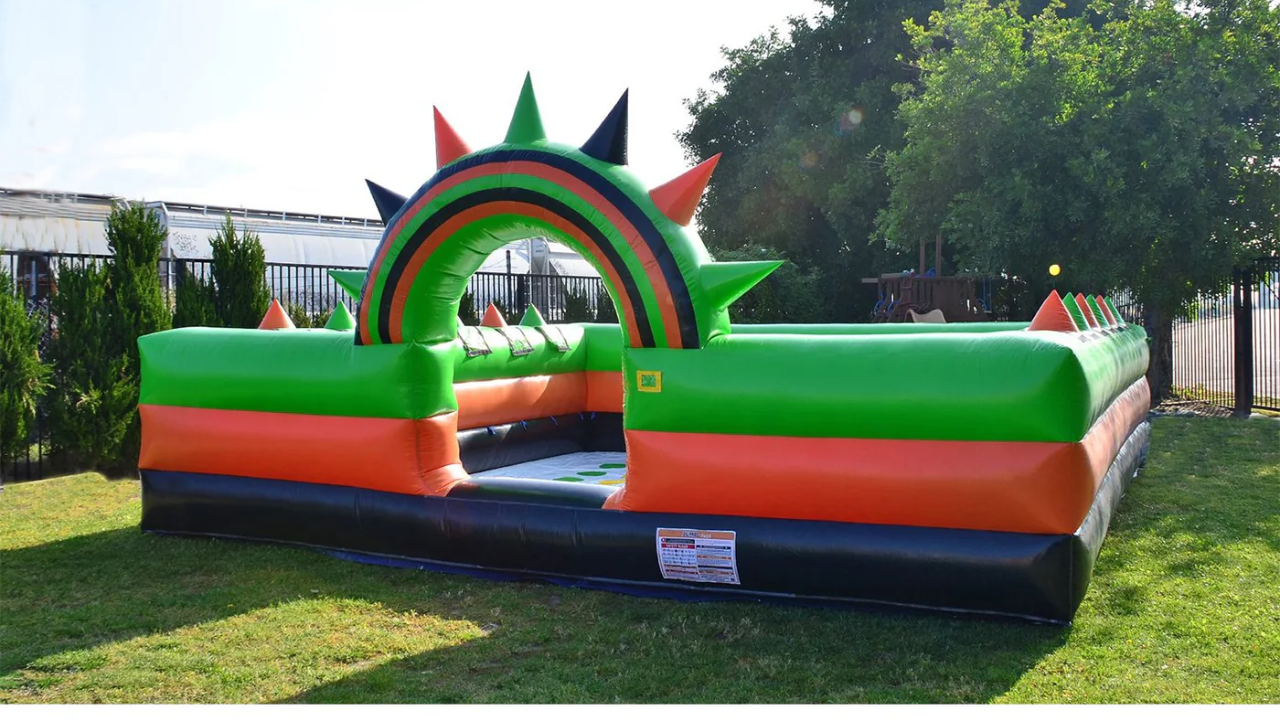
JumpOrange builds commercial-grade inflatables designed for exactly this kind of operation. If you are ready to upgrade your equipment, buy rent-grade slip n slides, expand your inventory, or simply make your delivery days easier and more profitable, talk to the JumpOrange team today. The right setup is closer than you think.


Leave a comment
This site is protected by hCaptcha and the hCaptcha Privacy Policy and Terms of Service apply.