
Key Takeaways
- Material Quality Determines Success: Commercial slip and slide units require 18-20oz PVC (0.55-0.7mm thickness) with heat-welded seams—residential 13oz materials fail within one season of slip and slide for rental business operations, increasing costs 40%.
- ASTM F2374-19 Certification is Non-Negotiable: Insurance providers mandate this certification when buying slip and slide for commercial operations—residential models without certification create liability exposure, destroying the slip and slide for rental business viability.
- Lifespan Drives ROI: Commercial-grade slip n slide delivers 5-10 year operational life versus 1-2 year residential failures—this residential vs commercial slip and slide difference determines whether your investment generates profit or constant replacement costs.
- Weight Specifications Protect Liability: Commercial slip and slide must label both per-person limits (200-250 lbs) AND total capacity (1,000+ lbs)—checking only total capacity when buying slip and slide creates safety risks for slip and slide for rental business.
- 3-Year Warranty Signals Quality: Manufacturers confident in commercial-grade slip n slide construction offer minimum 3-year warranties—shorter coverage indicates quality problems in the residential vs commercial slip and slide decision when buying slip and slide equipment.
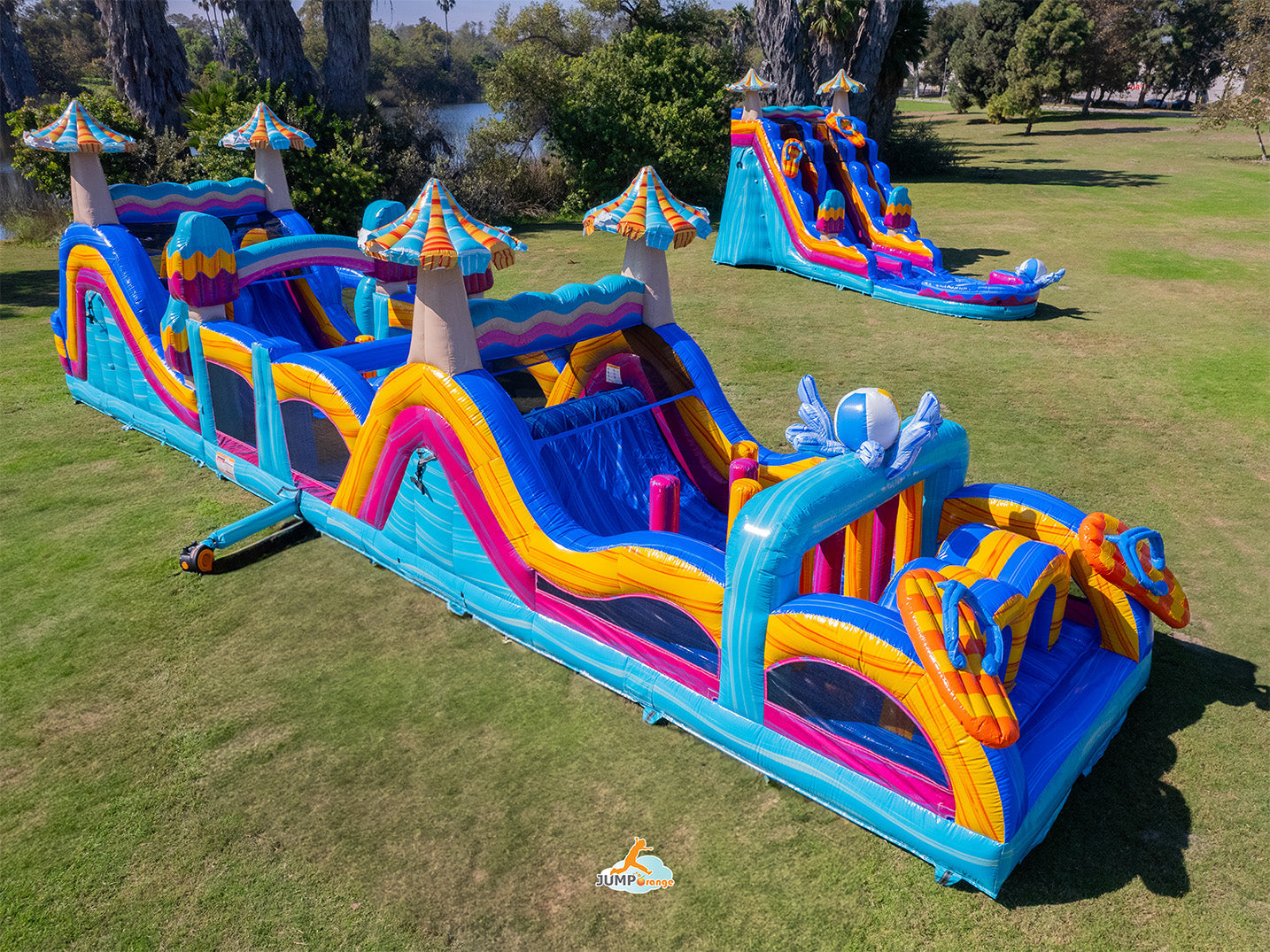
Understanding the distinction between commercial slip and slide units and residential models prevents costly mistakes when buying slip and slide equipment for rental business operations. These categories represent fundamentally different engineering standards—not superficial size variations. Commercial-grade slip n slide construction delivers the durability slip and slide for rental business demands, while residential models serve occasional backyard use. This residential vs commercial slip and slide comparison reveals why proper equipment selection determines profitability.
Commercial slip and slide specifications protect rental business investments from premature failures that destroy ROI. Choosing residential units to save money creates exactly the opposite result—40% higher operational costs from constant repairs and early replacement when buying slip and slide equipment incorrectly.
|
Feature |
Commercial Slip and Slide |
Residential Slip and Slide |
|
Material Weight |
15-20 oz/yd² heavy-duty PVC vinyl (0.55-0.7mm thick) for slip and slide for rental business durability |
13oz PVC—inadequate for commercial use, fails under rental frequency when buying a slip and slide |
|
Seam Construction |
Double/triple/quadruple-stitched with heat-welded seams—commercial grade slip n slide longevity standard |
Single-stitched seams fail within one season of slip and slide for rental business operations |
|
Expected Lifespan |
5-10 years with proper maintenance—critical commercial slip and slide investment metric |
1-2 years before replacement is needed in residential vs commercial slip and slide comparison |
|
Safety Certification |
ASTM F2374-19 compliance is required for insurance coverage when buying a slip and slide commercially |
No certification standards—liability exposure for slip and slide for rental business |
|
Total Weight Capacity |
1,000+ pounds for multiple simultaneous users—essential commercial-grade slip n slide feature |
300-500 lbs maximum is insufficient for commercial slip and slide customer expectations |
|
Per-Person Weight Limit |
200-250 lbs clearly labeled—commercial slip and slide safety standard for rental operations |
Often unlabeled or inadequate when buying a slip and slide for commercial use |
|
Safety Clearance Required |
5-6 feet mandatory perimeter around entire unit for slip and slide for rental business compliance |
Minimal clearance is inadequate for commercial-grade slip n slide operations |
|
Warranty Coverage |
3-year minimum commercial warranty protecting slip and slide for rental business investment |
A 90-day to 1-year limited warranty is insufficient when buying a slip and slide commercially |
Commercial slip and slide construction costs more initially, but delivers the 5-10 year lifespan that slip and slide for rental business profitability requires. Understanding these commercial-grade slip n slide features before buying slip and slide equipment prevents failures that turn promising residential vs commercial slip and slide decisions into costly disasters.
Why Do Rental Entrepreneurs Avoid Residential Grade Equipment?
Rental entrepreneurs avoid residential-grade equipment because poor purchasing decisions when buying slip and slide units increase operational costs by 40% through premature replacement cycles. Residential 13oz materials cannot withstand the wear and tear of slip and slide for rental business frequency—these units fail within one season under commercial use, despite lower initial purchase prices. The residential vs commercial slip and slide distinction matters critically for insurance: ASTM F2374-19 certification is mandatory for commercial liability coverage, and residential models lack this requirement entirely. Commercial-grade slip n slide construction delivers a 5-10 year lifespan, spreading the investment across multiple profitable seasons, while residential failures at 1-2 years force constant re-investment that destroys cash flow. Understanding these durability differences before buying slip and slide equipment separates successful commercial slip and slide rental operations from failed ventures that chose residential models to save money upfront.
What Should Rental Entrepreneurs Evaluate Before Purchasing?
Three critical evaluation categories determine slip and slide for rental business success: ROI factors, material requirements, and safety essentials. This commercial slip and slide checklist prevents equipment failures and liability exposures when buying slip and slide units. Every specification below is non-negotiable for commercial-grade slip n slide operations—missing any single requirement guarantees operational problems in the residential vs commercial slip and slide decision.
- Rental rates per event and booking frequency—calculate revenue projections and seasonal bookings for commercial slip and slide break-even timeline
- 5-10 year lifespan value—proper commercial grade slip n slide delivers multi-year returns versus 1-2 year residential replacement when buying slip and slide
- 18-20oz PVC minimum (0.55-0.7mm thickness)—industry-standard commercial slip and slide construction for slip and slide for rental business durability
- Heat-welded + triple/quadruple-stitched seams—essential commercial grade slip n slide features preventing failures in residential vs commercial slip and slide comparison
- UV-resistant coating with warranty—maintains appearance, commanding premium rates for slip and slide for rental business over time
- Reinforced stress points at 6-8 anchor locations—prevents tear-out when buying a slip and slide for commercial operations
- Mildew-resistant and cold-crack-resistant materials—reduce cleaning costs and enable safe storage for commercial slip and slide investment
- ASTM F2374-19 certification documentation—mandatory for insurance when buying a slip and slide for commercial-grade slip n slide operations
- Weight limits: 200-250 lbs per-person AND 1,000+ lbs total—both critical for slip and slide for rental business liability in residential vs commercial slip and slide specs
- Integrated non-slip landing zones—quality commercial slip and slide includes these features, not add-ons
- 6-8 commercial D-ring anchors + built-in water distribution—secure setup and operational reliability for commercial grade slip n slide
- 3-year warranty minimum + protective side walls—manufacturer confidence and safety protection when buying a slip and slide for a rental business
Meeting all twelve criteria ensures the commercial slip and slide investment delivers the profitability and safety slip and slide for the rental business requires.
How Do You Select Quality Manufacturers?
Manufacturer selection determines commercial slip and slide longevity and slip and slide for rental business support quality. Seven qualification criteria plus three critical questions reveal whether vendors deliver the commercial-grade slip n slide features rental operations require when buying slip and slide equipment. This residential vs commercial slip and slide verification prevents purchasing from manufacturers unable to support long-term profitability.
- 5+ years of manufacturing commercial-grade products—proven track record for slip and slide for rental business, when buying slip and slide equipment
- ASTM F2374-19 documentation provided standard—commercial slip and slide insurance requires certification in residential vs commercial slip and slide operations
- 3-year commercial warranty (not 90-day/1-year residential)—manufacturer confidence protecting commercial-grade slip n slide investment value
- 2+ HP replacement blowers readily stocked—parts availability prevents slip and slide for rental business cancellations from equipment failure
- Rental business customer references from similar markets—verified performance before buying a slip and slide for commercial operations
- After-sales support with setup training—commercial slip and slide assistance helps slip and slide for rental business avoid costly mistakes
- US-based responsive customer service—accessible help protects commercial-grade slip n slide revenue when issues arise
- Exact material spec: 18-20oz PVC, 0.55-0.7mm thickness verified?—confirm when buying slip and slide; vague answers signal residential vs commercial slip and slide problems
- Heat-welded + triple/quadruple-stitched seams confirmed?—essential commercial slip and slide features for slip and slide for rental business durability
- Both per-person (200-250 lbs) AND total (1,000+ lbs) weight limits provided?—dual specs critical for commercial-grade slip n slide safety when buying slip and slide
Thorough vetting ensures buying slip and slide from manufacturers delivering commercial slip and slide features, slip and slide for the rental business profitability requires.
What Hidden Costs Impact Rental Business Profitability?
Hidden operational expenses beyond initial equipment cost determine the slip and slide for rental business success or failure. Most operators focus only on purchase price when buying slip and slide units—ignoring ongoing costs consuming 30-40% of revenue. This commercial slip and slide breakdown reveals expenses that commercial-grade slip n slide operations must budget to maintain profitability in the residential vs commercial slip and slide investment decision.
- Annual maintenance reserves—budget models require 20%+ of purchase price vs premium commercial slip and slide 10-15%; poor quality when buying slip and slide multiplies repair costs
- Commercial liability insurance—$1M-$2M coverage at $800-$2,000+ annually; mandatory slip and slide for rental business expense for legal commercial-grade slip n slide operations
- Water consumption costs—50-200 gallons per hour usage; commercial slip and slide operations must factor in utility expenses when buying a slip and slide
- Fuel and vehicle maintenance per rental—delivery/pickup costs per booking; slip and slide for rental business transport expenses in residential vs commercial slip and slide logistics
- 2+ HP blower energy costs per event—commercial slip and slide blowers consume significant electricity during multi-hour bookings
- Cleaning supplies and sanitization—health compliance products for commercial-grade slip n slide maintenance; slip and slide for rental business legal requirement
- Storage facility rent if needed—climate-controlled space protecting commercial slip and slide investment when buying a slip and slide without warehouse access
- Marketing investments—website, advertising, booking platforms, driving slip and slide for rental business customer acquisition
- Seven features distinguishing budget vs premium models—material thickness, seam construction, 2+ HP airflow, UV protection, weight capacity, setup ease, safety systems, impact commercial slip and slide total ownership costs
- Budget 1-year warranty creates year 2-3 replacement costs—residential vs commercial slip and slide warranty differences affect cash flow when buying slip and slide
- Premium 3-5 year warranty protects through growth period—commercial grade slip n slide coverage ensures slip and slide for rental business profitability during critical expansion years
Comprehensive cost budgeting prevents cash flow crises, destroying commercial slip and slide profitability after buying slip and slide equipment.
What Mistakes Destroy Slip and Slide Rental Success?
Ten critical mistakes when buying slip and slide equipment destroy slip and slide for rental business profitability before operations begin. These errors cost 40% more in operational expenses, void insurance coverage, and limit booking opportunities. This commercial slip and slide mistake list prevents decisions that turn commercial-grade slip n slide investments into financial disasters in the residential vs commercial slip and slide choice.
- Choosing residential 13oz materials to save money—40% cost increase from premature failures; slip and slide for rental business profitability destroyed when buying slip and slide with inadequate residential vs commercial slip and slide materials
- Missing ASTM F2374-19 certification—insurance denial for commercial slip and slide operations; slip and slide for rental business cannot legally operate without compliance when buying slip and slide
- Warranty under 3-year minimum—quality problem signal; commercial grade slip n slide requires manufacturer confidence, protecting slip and slide for rental business investment
- Single-stitched without heat-welding—one-season failure guaranteed; essential commercial slip and slide features missing, destroy equipment within months in residential vs commercial slip and slide comparison
- Price significantly below market—substandard materials confirmed; suspiciously cheap when buying slip and slide indicates 13oz residential quality for commercial grade slip n slide
- No replacement parts availability—operational risk stranding slip and slide for rental business; commercial slip and slide blower failures cancel bookings without accessible parts
- Ignoring per-person 200-250 lb limits—checking only total capacity misses critical commercial-grade slip n slide features; slip and slide for rental business liability requires both specifications
- Buying only the longest units—limits 60-70% of booking opportunities; commercial slip and slide too large for typical venues reduces slip and slide for rental business revenue in residential vs commercial slip and slide sizing
- Operating without backup blowers—destroys customer trust; slip and slide for rental business needs redundant equipment when commercial slip and slide components fail during events
- Selecting manufacturers without rental business references—unverified performance when buying slip and slide; commercial-grade slip n slide demands proof from actual slip and slide for rental business operators
Avoiding these mistakes ensures that buying slip and slide delivers the commercial slip and slide features and reliability slip and slide for rental business profitability requires.
Why Commercial Grade Delivers Rental Success
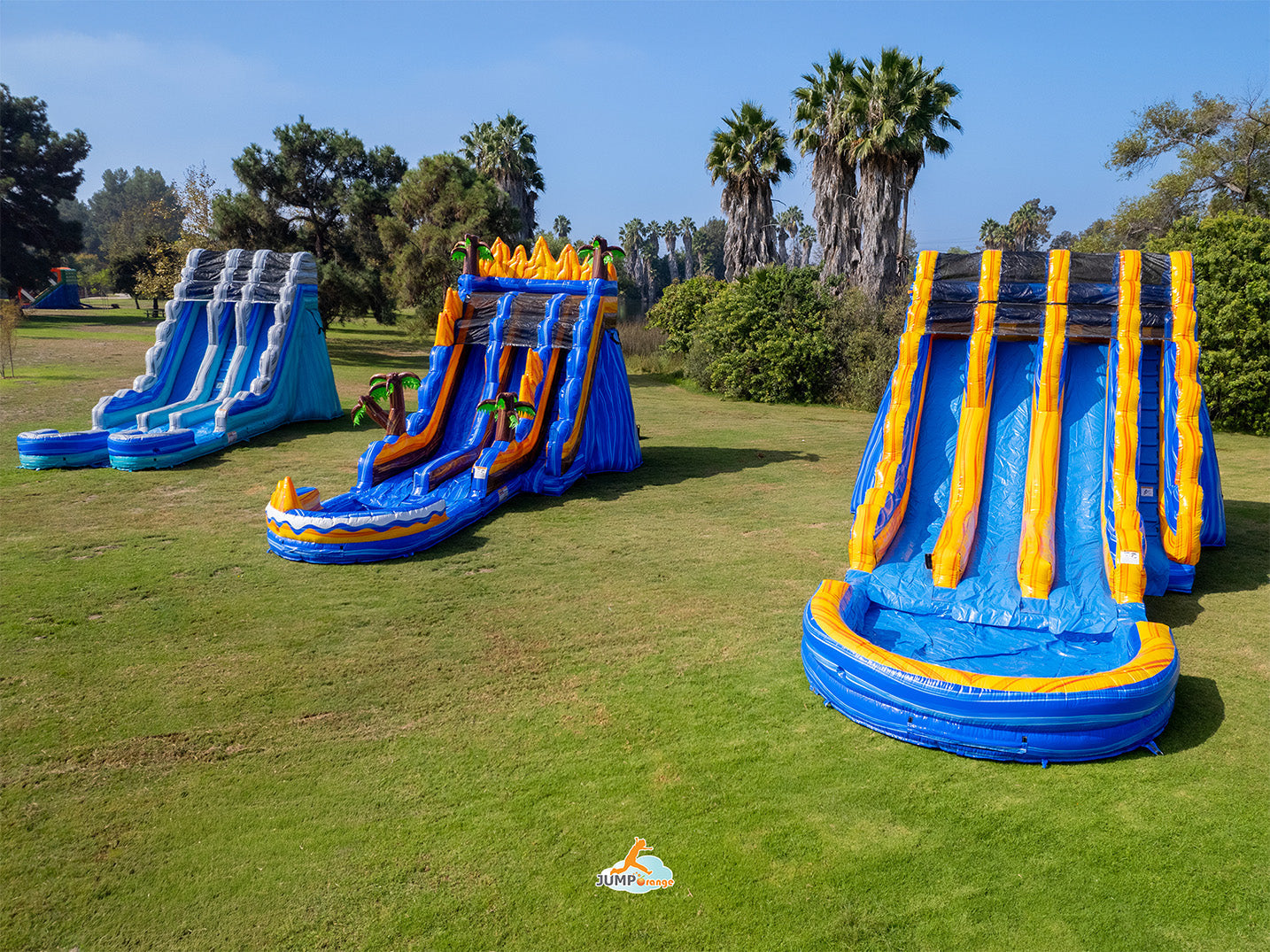
Successful slip and slide for rental business entrepreneurs invest in 18-20oz PVC with heat-welded seams, delivering 5-10 year returns versus residential 13oz materials failing within one season. ASTM F2374-19 certification prevents the 40% cost increase from poor decisions when buying slip and slide equipment—insurance coverage and legal compliance depend on this commercial slip and slide requirement in the residential vs commercial slip and slide decision. Premium commercial-grade slip n slide specifications, including dual lanes, popular themes (tropical, marble, surf), and attached splash pools, justify higher rental rates, offsetting initial investment costs through superior slip and slide for rental business revenue potential. Understanding that a 3-year warranty minimum and 2+ HP replacement parts availability protect long-term profitability separates successful commercial slip and slide operations from failed ventures. This residential vs commercial slip and slide comparison demonstrates that buying a slip and slide requires evaluating the total cost of ownership, not just purchase price. Comprehensive planning for commercial-grade slip n slide features, rent grade bounce house combo for sale options, safety compliance, operational expenses, and manufacturer support determines whether a slip and slide for rental business delivers profitable returns or expensive failures.
Ready to Start Your Commercial Slip and Slide Rental Business?
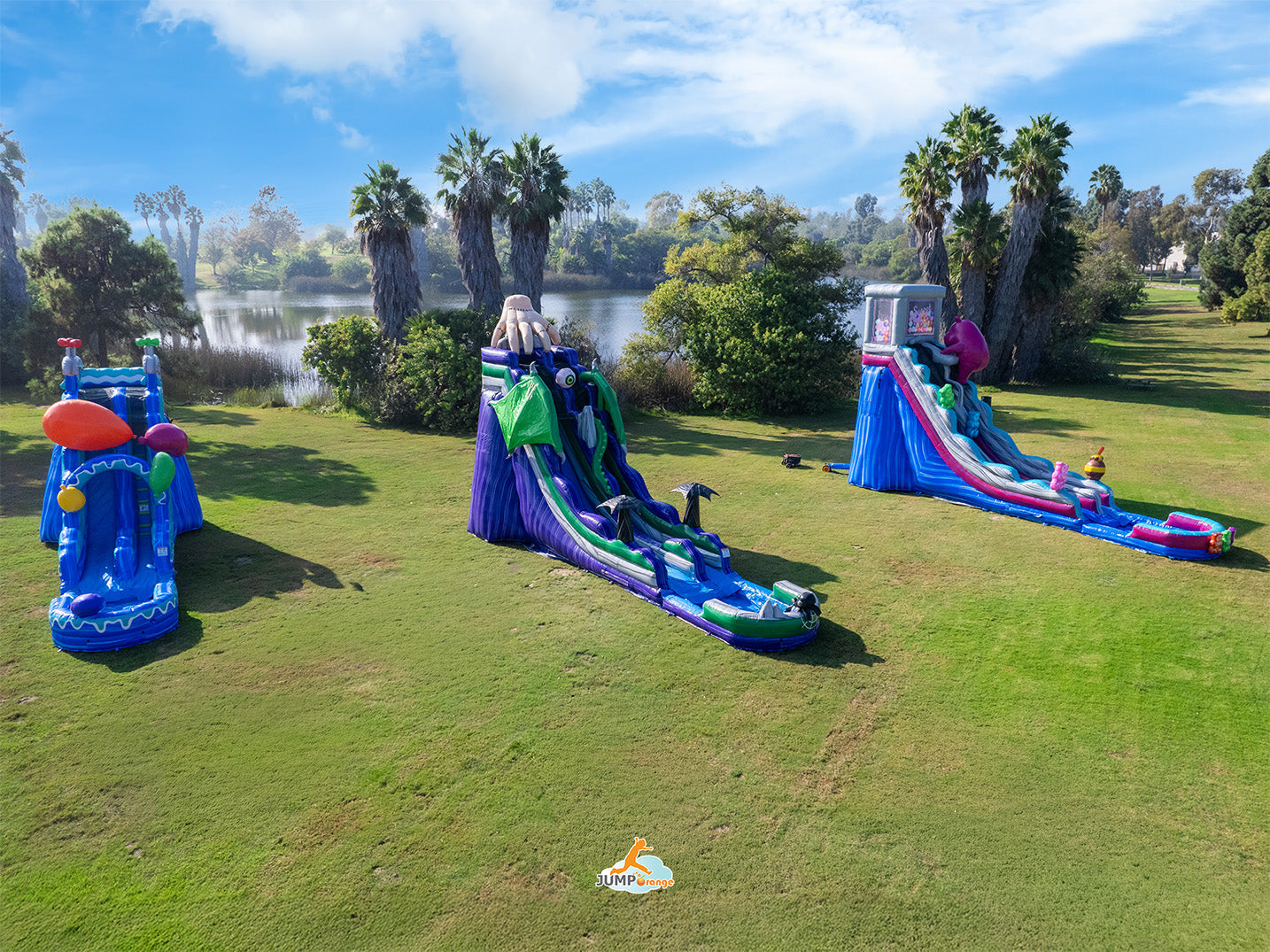
Avoid the 40% cost increase from poor decisions when buying slip and slide equipment. JumpOrange delivers commercial slip and slide features rental operations demand: 18-20oz PVC vinyl with heat-welded triple/quadruple-stitched seams, ASTM F2374-19 certification for insurance compliance, and 3-year commercial warranties protecting your slip and slide for rental business investment value. Our commercial-grade slip n slide inventory includes premium features—dual lanes, attached splash pools, popular themes—commanding higher rental rates that offset initial costs for slip and slide for rental business profitability.
Stop buying slip and slide units that fail within one season. JumpOrange provides the durability specifications, safety certifications, and manufacturer support, separating successful slip and slide for rental business operations from expensive failures in the residential vs commercial slip and slide decision. Our commercial slip and slide experts help you select units matching your market, venues, and budget—preventing the sizing, material, and feature mistakes destroying rental profitability.
Contact JumpOrange today for commercial-grade slip n slide and durable inflatable obstacle course equipment built to slip and slide for rental business standards—delivering the 5-10 year returns your commercial slip and slide investment demands


Leave a comment
This site is protected by hCaptcha and the hCaptcha Privacy Policy and Terms of Service apply.