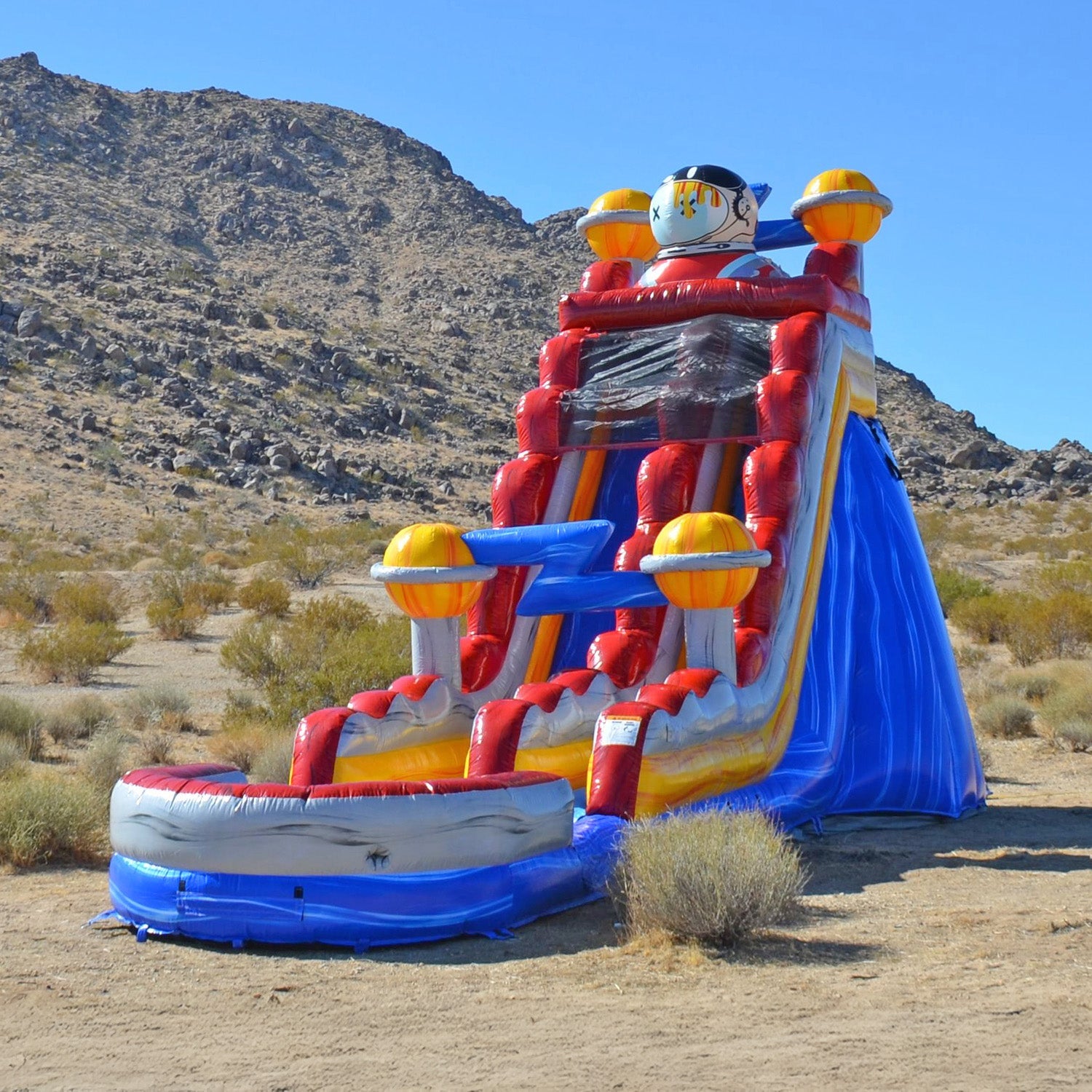
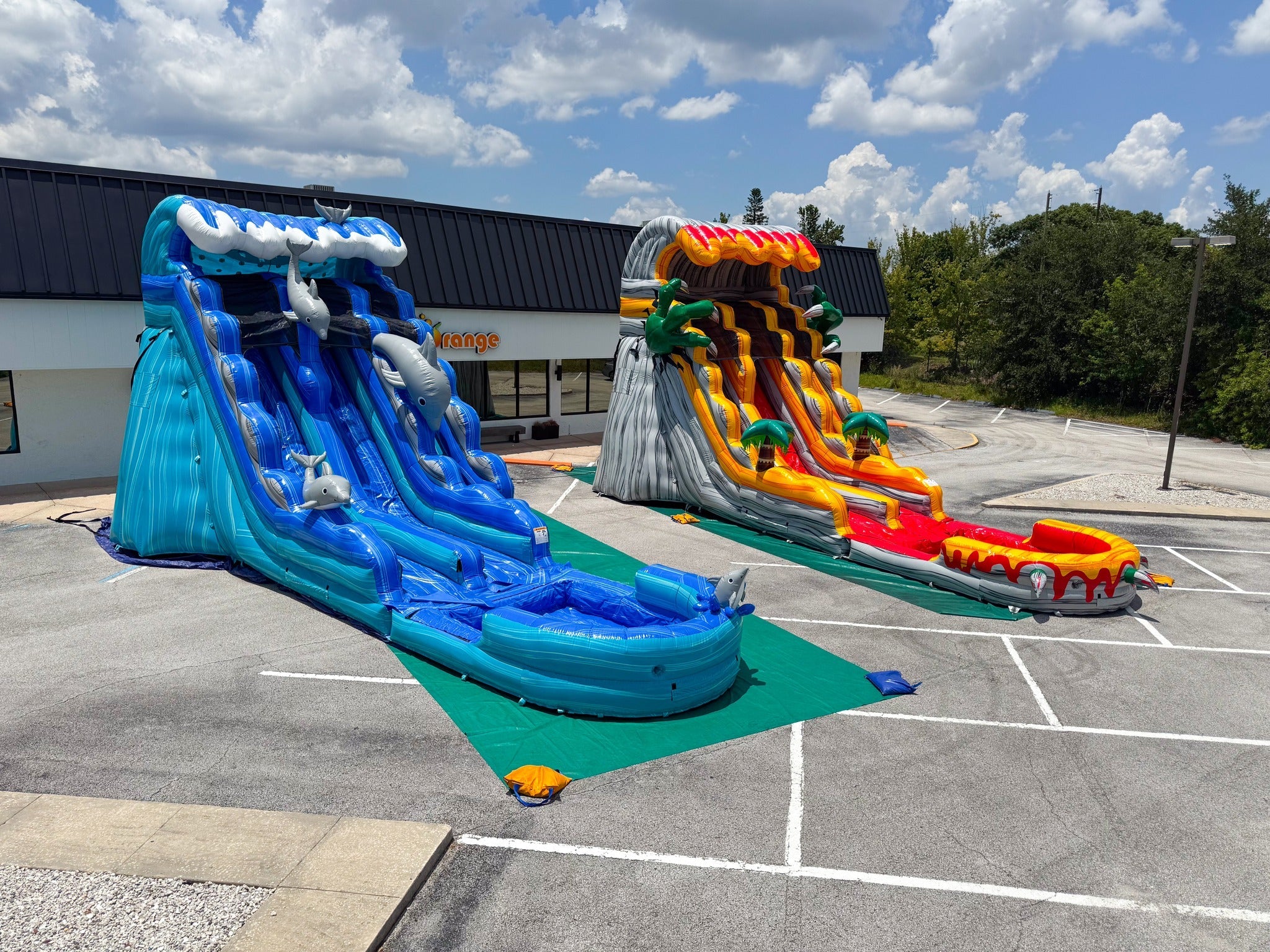
Commercial water slides represent a significant capital investment for rental businesses, with costs ranging from $2,000 to over $10,000 per unit. Understanding the water slide depreciation schedule enables operators to maximize tax benefits while recovering equipment costs over time. The Modified Accelerated Cost Recovery System classifies these assets as 5-year property, creating multiple opportunities for strategic tax planning.
Rental operators can leverage Section 179 deductions for immediate tax relief, apply bonus depreciation for first-year percentage deductions, or utilize standard MACRS schedules for steady annual deductions. Each method serves different business objectives and cash flow requirements. Water slides generate premium rental rates but require careful financial planning due to higher maintenance demands and seasonal revenue patterns.
Key Takeaways
- Commercial water slides qualify as 5-year property under MACRS depreciation, spreading deductions over six tax years
- Section 179 allows immediate deduction of up to $1,220,000 in equipment costs during the first year
- Bonus depreciation provides 60% first-year deduction in 2024, declining to 40% in 2025 before complete phase-out
- Water slides costing $2,000 to $10,000+ generate 40% higher revenue during peak season despite the fastest depreciation rates
- Strategic tax planning, combined with proper maintenance schedules, maximizes equipment value and deduction timing
What Is a Water Slide Depreciation Schedule?
A water slide depreciation schedule outlines how commercial equipment costs are deducted over time for tax purposes. The Internal Revenue Service permits rental businesses to recover the purchase price of commercial equipment through systematic annual deductions that reduce taxable income.
How Is Commercial Equipment Classified for Depreciation?
The Modified Accelerated Cost Recovery System classifies commercial bounce houses and water slides as 5-year property under IRS guidelines. MACRS depreciation spreads deductions over six tax years due to the half-year convention applied in the first and final years.
This classification allows rental operators to recover costs faster than the actual lifespan of the equipment. Commercial-grade water slides built with 15oz or 18oz PVC vinyl typically last 7-10 years with proper maintenance.
What Are the Different Depreciation Methods Applicable?
Section 179 Deduction represents an IRS provision allowing full purchase price deduction of qualifying equipment in the year placed in service. The maximum Section 179 deduction is $1,220,000 for 2024, enabling substantial immediate tax relief for new equipment purchases.
Bonus depreciation provides a percentage deduction in the first year for purchases exceeding the Section 179 limits. The bonus depreciation rate is 60% in 2024 and decreases to 40% in 2025 before complete phase-out by 2027.
Why Is Depreciation Important for Water Slide Investments?
Water slide equipment costs range from $2,000 to $10,000 or more, depending on size and features. These units have the fastest depreciation rate among commercial inflatables due to constant exposure to water, chemicals, and intensive use during peak season.
A proper depreciation strategy becomes essential for managing cash flow in seasonal rental businesses. Tax benefits from accelerated deductions help offset the significant upfront capital required for inventory expansion.
How Does Depreciation Affect Tax Benefits for Commercial Inflatables?
The depreciation schedule directly impacts annual tax liability by creating deductible expenses that reduce taxable income. Rental operators can choose between aggressive first-year deductions or steady annual deductions based on their financial situation and projected income growth.
What Is the Section 179 Deduction and How Does It Apply?
The Section 179 deduction enables rental businesses to write off the full purchase price of qualifying equipment in the year of acquisition. A $25,000 water slide purchase generates an immediate $25,000 deduction, significantly lowering taxable income for that year.
This approach works best for profitable operations with sufficient taxable income to absorb the deduction. Businesses expecting higher future tax rates may prefer spreading deductions over multiple years instead.
How Does Bonus Depreciation Work for Water Slides?
Bonus depreciation applies when equipment purchases exceed Section 179 limits or when operators want partial first-year acceleration. A $50,000 equipment purchase in 2024 qualifies for a $30,000 first-year deduction at the 60% rate.
The remaining $20,000 follows standard MACRS depreciation over subsequent tax years. This method balances immediate tax relief with future deductions for businesses planning sustained growth.
How Does the MACRS Depreciation Schedule Impact Tax Planning?
MACRS depreciation distributes deductions systematically over the 5-year property classification period using declining balance calculations. Year one typically allows 20% depreciation under the half-year convention, followed by 32% in year two.
This conservative approach suits rental businesses expecting increasing profitability in future years. Higher future tax rates make delayed deductions more valuable than immediate write-offs.
What Are the Financial Implications of Water Slide Investment in Inflatable Rentals?
Water slide investments require a comprehensive financial analysis beyond purchase price considerations. Understanding the total cost of ownership, including operational expenses, maintenance, and seasonal cash flow patterns, determines actual profitability and return on investment.
How Do Operational Costs Influence Equipment Depreciation?
Seventy-two percent of new operators underestimate operational costs by 30-40% during initial planning phases. Annual hidden costs range from $15,000 to $25,000, including storage, insurance, maintenance, and transportation expenses that affect overall equipment profitability.
Establishing a 3:1 ratio between operational budget and equipment investment for the first year ensures adequate reserves. This financial cushion prevents cash flow problems when depreciation schedules do not align with actual revenue patterns.
How Does Seasonality Affect Cost Recovery and Depreciation?
Peak season accounts for 75% of annual expenses, concentrated in the second and third quarters. Water slide rentals generate 40% higher revenue during peak season compared to standard bounce houses, but seasonal fluctuations create cash flow management challenges during off-peak periods.
The majority of revenue occurs in Q2 and Q3 when demand peaks for outdoor events. Operators must reserve peak earnings to cover fixed costs, including insurance, storage, and vehicle payments during the winter months.
What Role Do Insurance and Maintenance Play in Financial Management?
Commercial liability insurance costs $2,400-$6,000 annually and requires coverage of $1,000,000 per occurrence minimum. Quarterly maintenance costs range from $500-$1,500 per unit, while annual fleet maintenance requires $2,500-$5,000 for delivery vehicles.
Climate-controlled storage facilities cost $400-$800 monthly to prevent mold and vinyl degradation. These recurring expenses reduce net profit margins and must be factored into the investment calculator when evaluating equipment purchases.
How Should Rental Operators Price Water Slide Rentals While Considering Depreciation?
Pricing strategies must account for equipment depreciation while maintaining competitive market rates. Operators balance cost recovery needs against customer demand and competitor pricing to optimize revenue without sacrificing market share.
What Are Cost-Plus and Value-Based Pricing Strategies?
Cost-plus pricing calculates total ownership costs, including depreciation, and adds a markup percentage to determine rental rates. Value-based pricing sets rates based on customer perceived value, market demand, and seasonal factors rather than pure cost recovery.
Implementing value-based pricing based on seasonality and event type maximizes revenue potential. Premium rates during peak summer months offset slower winter periods when depreciation continues regardless of utilization.
How Does Depreciation Influence Rental Rate Decisions?
Depreciation represents a non-cash expense that still affects profitability calculations and pricing floors. Rental rates must generate sufficient cash flow to cover actual operating expenses while also recovering equipment costs over time.
Gross profit margins often reach 40-60% for well-managed operations when pricing accounts for all costs. Operators tracking depreciation accurately avoid underpricing that appears profitable in the short term but fails to support equipment replacement cycles.
What Factors Affect Pricing During Peak and Off-Peak Seasons?
Water slides measuring 15-17 feet command $400-$600 for 4-hour rentals and $500-$700 for full-day rentals. Larger units exceeding 20 feet generate $600-$900 for 4-hour periods and $800-$1,200 for full-day events.
Peak season premium pricing compensates for accelerated wear and higher liability exposure. Off-peak discounts maintain market presence and equipment utilization while covering fixed operational costs.
What Safety and Consumer Factors Impact Commercial Water Slide Investment?
Safety compliance and consumer preferences directly influence equipment value retention and depreciation rates. Units meeting current safety standards maintain higher resale values, while outdated equipment depreciates faster due to liability concerns.
How Do Safety Compliance and Liability Affect Equipment Value?
Water slides require water supply connections and have higher liability concerns than standard bounce houses. Commercial liability insurance becomes mandatory with stricter underwriting requirements and higher premiums for water-based attractions.
Equipment meeting ASTM F2374-22 standards and proper anchoring specifications commands premium rental rates. Safety compliance reduces liability exposure while protecting rental businesses from costly claims that accelerate insurance costs.
What Consumer Preferences Drive Demand for Water Slides?
The up to 4-year age group represents 18% market share with limited water slide demand. Children aged 4 to 8 years represent 44% market share and constitute the primary demographic for medium-sized water slides.
The above 8-year age group represents 38% market share and prefers larger, more challenging water slides. Bounce houses with slide combos hold 28% market share, offering versatile appeal across multiple age ranges.
How Does Equipment Quality Influence Depreciation and Tax Benefits?
Investing in commercial-grade equipment using 15oz or 18oz PVC vinyl extends useful life and slows depreciation. Residential-grade materials deteriorate rapidly under commercial use, requiring premature replacement that disrupts depreciation schedules.
Mold and vinyl degradation occur without proper storage in climate-controlled facilities. Quality equipment investments maintain structural integrity longer, maximizing tax benefit timing and resale value retention.
How Can Business Owners Maximize Tax Advantages on Water Slide Equipment Purchases?
Strategic timing and method selection for depreciation deductions significantly impact tax savings. Rental operators coordinate equipment purchases with business cycles and income projections to optimize deduction value.
What Are the Best Practices for Utilizing Section 179 Deductions?
Section 179 deductions work best when equipment purchases occur during profitable years with sufficient taxable income. Operators should verify that qualifying equipment meets IRS standards before claiming immediate full deductions.
Coordinating multiple equipment purchases in a single tax year maximizes Section 179 benefits up to the annual limit. This strategy concentrates deductions when tax rates are highest or when offsetting unexpected income spikes.
How to Combine Bonus Depreciation With Other Tax Strategies?
Focusing on equipment maintenance and repairs during off-peak season in Q1 and Q4 creates additional deductible expenses. Combining bonus depreciation with strategic repair timing smooths tax liability across multiple years.
Operators planning expansion should sequence purchases to utilize both Section 179 and bonus depreciation optimally. Front-loading deductions in profitable years preserves future depreciation for expected high-income periods.
What Are Vehicle Deduction Opportunities Related to Equipment Transport?
Investing in heavy-duty vehicles with GVWR exceeding 6,000 lbs maximizes write-offs under Section 179. GVWR refers to Gross Vehicle Weight Rating, the maximum safe weight including vehicle, cargo, and passengers.
Standard SUV deduction limits reach only $30,500 in 2024 due to luxury vehicle caps. Standard SUVs face capped deduction limits while heavy-duty trucks and vans qualify for unlimited Section 179 treatment.
What Are Common Challenges in Managing Water Slide Depreciation Schedules?
Depreciation schedule management requires balancing tax optimization with realistic financial projections. Rental operators face multiple obstacles when aligning depreciation strategies with actual business performance and equipment lifecycles.
How To Account for Rapid Depreciation and Maintenance Costs?
Water slides experience accelerated physical depreciation due to chemical exposure and constant water contact. Accounting systems must track both tax depreciation and actual equipment condition to plan replacement timing accurately.
Maintenance costs increase as equipment ages, reducing net profitability even as tax deductions decline. Operators should establish replacement reserves separate from depreciation schedules to fund future equipment purchases.
What Financial Risks Arise from Underestimating Operational Expenses?
New operators focusing solely on depreciation benefits often overlook cash requirements for ongoing operations. Aggressive first-year depreciation strategies reduce taxable income but do not generate cash for insurance, storage, or maintenance bills.
Cash flow shortfalls force operators to reduce inventory quality or delay maintenance. This creates a negative cycle where equipment condition deteriorates faster than depreciation schedules anticipate.
How to Align Depreciation Schedules with Business Profit Cycles?
Water slides are seasonal units with limited year-round demand in most markets. Standard MACRS schedules distribute deductions evenly, while actual revenue concentrates in the summer months.
Operators must maintain sufficient cash reserves from peak season to cover off-season fixed costs. Profitable pricing strategies during summer ensure year-round financial stability despite misaligned depreciation timing.
Water Slide Depreciation Schedule and Tax Advantages in Commercial Equipment Investment
Understanding the complete water slide depreciation schedule empowers rental operators to make strategic investment decisions. The combination of Section 179 deductions, bonus depreciation, and MACRS schedules provides flexible tax planning options that adapt to different business situations.
Successful operators balance aggressive tax strategies with realistic cash flow management. Equipment quality, maintenance timing, and premium pricing strategies work together to maximize both tax benefits and actual profitability.
Water slide investments represent a substantial commitment requiring comprehensive financial planning beyond simple depreciation calculations. Operators who master depreciation timing while maintaining operational excellence create sustainable competitive advantages in the rental market. The tax advantages available through a proper depreciation strategy significantly improve return on investment when combined with quality equipment and professional business practices. Investing in water slide jumpers becomes increasingly profitable when operators understand the full financial picture, including depreciation benefits.
JumpOrange supports rental operators with commercial-grade equipment designed for long-term performance and value retention. Strategic equipment investments combined with expert tax planning create the foundation for profitable rental operations that withstand seasonal fluctuations and competitive pressure.
Build a Smarter Equipment Investment with JumpOrange
Your depreciation strategy only pays off when the equipment behind it actually holds up. JumpOrange manufactures commercial water slides built with heavy-duty 15oz and 18oz vinyl, the kind of construction that protects resale value, extends useful life, and keeps your deductions working in your favor year after year. Pair that durability with the right tax approach, and every unit you add becomes a stronger return rather than a rushed replacement.
Browse JumpOrange commercial water slides, buy slip n slides online, and find equipment engineered to earn through every season. Have questions about which units fit your fleet and your budget? Our team has spent years helping rental operators invest with confidence.


Leave a comment
This site is protected by hCaptcha and the hCaptcha Privacy Policy and Terms of Service apply.