Key Takeaways:
- Two-person teams complete setup in 25-35 minutes, reducing time by nearly 50% versus single operators, with newer deflation technology cutting takedown by 15-20%.
- Climate-controlled storage (50-80°F) extends lifespan to 7-10 years versus 1-3 years outdoors, reducing cumulative maintenance costs by over 80% over five years.
- Proper anchoring requires 24-inch stakes for soft ground or 200-300 lbs per anchor point on hard surfaces—inadequate securing creates liability and tipping risks.
- Enclosed transport vehicles reduce damage risk by over 60% compared to uncovered pickups, with damage rates soaring 40% when using open trailers versus enclosed trucks.
- "Burrito roll" folding method is industry standard (fold sides to middle, roll tightly) preventing excessive creases that weaken material and cause premature equipment failure.
Setup and takedown procedures directly determine operational profitability and equipment longevity. Efficient processes enable multiple daily events while preventing costly damage. Mastering these fundamentals transforms side hustles into scalable rental businesses. This guide provides systematic protocols for commercial operators.
What are the essential steps to set up a 40 ft inflatable obstacle course for events?
Site preparation and equipment readiness determine setup success. Systematic procedures prevent damage and ensure participant safety. Understanding pre-setup requirements optimizes time allocation and prevents costly mistakes.
What preparations need to be made to the setup area before installation?
Site preparation is required before inflation begins, preventing equipment damage. Clear the area of debris, sharp objects, and hazards, protecting the vinyl material. Measure space requirements to ensure adequate operational area for safe use. Verify power access for blowers before beginning setup, avoiding delays.
How do you ensure the ground is level and clear of hazards for safe setup?
The ground must be level to prevent tipping or uneven inflation during operation. Remove rocks, sticks, glass, and sharp debris from setup area protecting material. Check for underground sprinkler heads or utility lines preventing punctures. Ensure surface is appropriate for chosen anchoring method matching equipment to conditions.
What equipment is necessary for inflating and securing the obstacle course?
Blowers with 1.5 HP to 2.0 HP provide more powerful, energy-efficient inflation. Newer models feature multiple deflation zippers reducing deflation times by 15-20%. Anchoring equipment varies by surface type requiring stakes or weights. Minimum 24-inch stakes required for soft ground installations meeting safety standards.
How should you transport your 40 ft inflatable obstacle course safely?
Vehicle selection directly impacts damage prevention and professional operations. Understanding capacity requirements and protection levels guides equipment decisions. Proper transport methods reduce damage rates by over 60%.
What kind of trailer and vehicle are needed for transporting large inflatables?
Enclosed box trucks offer 700-900 cu ft capacity with 3,000-4,000 lbs weight limit and excellent weather protection. Cargo vans provide 400-500 cu ft capacity with a 2,500-3,500 lbs weight limit and easy driving. Enclosed trailers deliver 400-500 cu ft capacity with 2,000-3,000 lbs weight limit, offering cost-effective protection. Open trailers (covered) provide 300-400 cu ft capacity with 1,500-2,500 lbs weight limit—affordable but less secure.
How do you protect the obstacle course from damage during transport?
Forty-foot inflatable obstacle courses weigh between 150 and 300 pounds when packed requiring proper handling. Enclosed box trucks or cargo vans reduce risk of physical damage by over 60% compared to uncovered pickups. Damage rates soar by up to 40% when using open trailers versus enclosed trucks. Ideal vehicles provide clean, dry, enclosed space free of sharp objects or debris.
What tools and methods are required for unloading and setting up the inflatable?
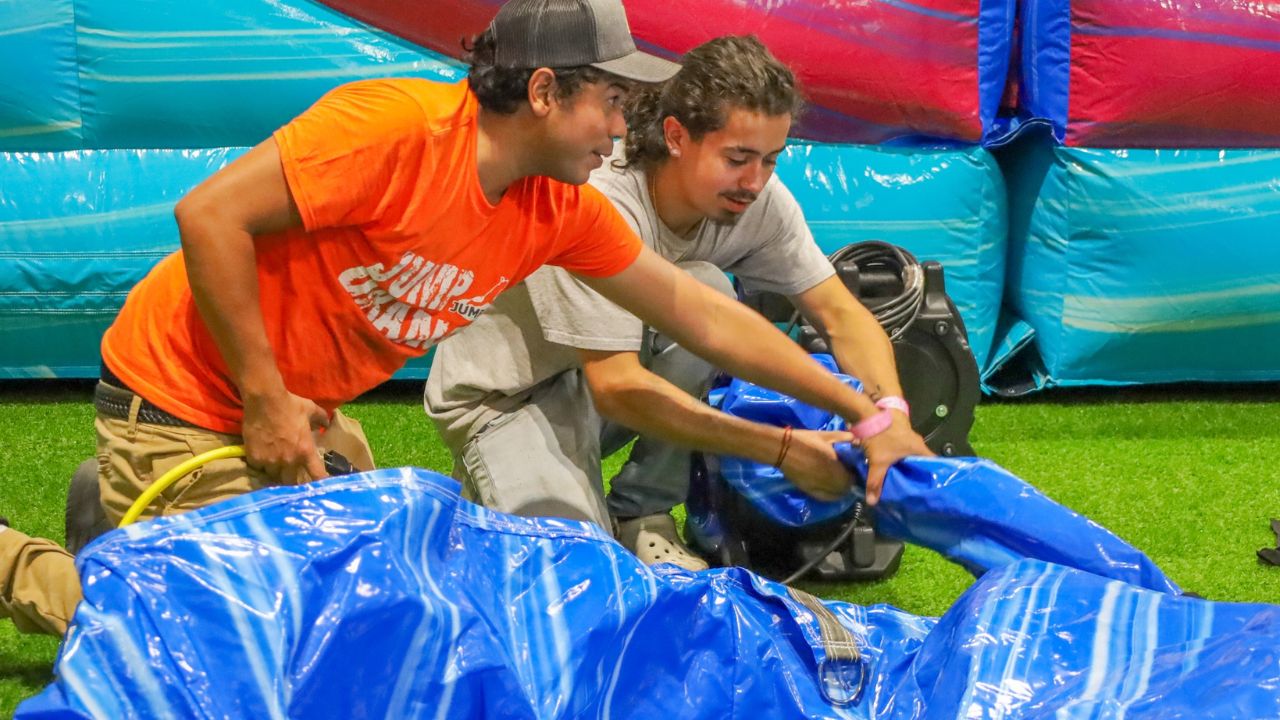
Always use team of at least two people or dolly/hand truck for lifting safely. Lift with your legs, not your back, to prevent injury to operators. Center the rolled inflatable properly for weight distribution during unloading. Two-person teams can reduce setup and teardown time by nearly 50% compared to single operators.
How do you safely inflate and secure the 40 ft obstacle course on-site?
Inflation and anchoring procedures ensure structural integrity and participant safety. Pre-inflation inspections identify damage requiring immediate attention. Proper securement prevents tipping and shifting during high-traffic events.
How do you check for any damages before inflation?
Inspect seams, anchor points, and high-traffic areas for wear and tear before each use. Visual inspection required before inflation to identify damage preventing mid-event failures. Check for punctures, tears, or material degradation requiring repairs. Look for any new damage that occurred during transport needing immediate attention.
What are the steps to safely inflate the obstacle course without damaging the materials?
Standard 40 ft obstacle courses can be set up by trained two-person teams in approximately 25-35 minutes. Setup includes site preparation, inflation, and anchoring following systematic protocols. Newer models with more powerful blowers reduce inflation times by 15-20% improving efficiency. Follow manufacturer inflation procedures to prevent material stress extending equipment life.
How do you secure the obstacle course to prevent tipping or shifting during use?
Anchoring critical with minimum 24-inch stakes required for soft ground installations. Hard surfaces require 200-300 lbs of weight per anchor point meeting safety standards. Proper anchoring prevents tipping and shifting during use protecting participants. Use appropriate anchoring method for surface type—grass, pavement, or indoor—matching conditions.
What safety checks should be conducted during the setup process?
Safety inspections prevent mid-event failures and liability exposure. Systematic checks identify structural issues before participant access. Documentation creates accountability and protects business reputation.
How do you inspect the inflatable for holes, tears, or other safety hazards?
Conduct thorough visual inspection before and after each use maintaining standards. Check seams for splitting or separation indicating wear requiring attention. Inspect anchor points for stress or damage compromising structural integrity. Verify all deflation zippers are functional enabling proper takedown procedures.
What role do safety barriers and supervision play in the setup process?
Safety barriers establish clear boundaries around equipment during setup operations. Supervision ratios must be established before operation begins meeting regulatory standards. Safety protocols prevent unauthorized access during setup protecting workers and equipment. Clear signage indicating setup in progress protects workers from interference.
How do you test the obstacle course after inflation to ensure it is ready for use?
Verify full inflation and proper air pressure before participant access begins. Check all anchor points are secure and holding under operational stress. Walk through course checking for proper structure identifying any issues. Test all entry and exit points for safety ensuring participant flow functions properly.
How do you prepare the inflatable obstacle course for takedown after the event?
Proper deflation and folding procedures prevent material damage and extend lifespan. Systematic takedown processes ensure nothing is forgotten at event sites. Understanding proper procedures protects significant equipment investment.
What steps should be taken to safely deflate the obstacle course?
Operations must cease and unit must be deflated if winds exceed 15-20 mph. Newer models feature multiple deflation zippers reducing deflation times by 15-20% improving efficiency. Complete deflation required before folding and packing preventing material stress. Allow sufficient time for proper deflation to prevent damage from rushing.
How do you avoid damaging the inflatable while taking it down?
Use team approach to prevent dragging on rough surfaces causing abrasion. Lift with legs, not back, during takedown process protecting operators from injury. Avoid pulling or tugging on seams or anchor points preventing material damage. Follow proper deflation sequence to prevent material stress extending equipment life.
How should the course be folded and stored to prevent wear and tear?
Use "burrito roll" method: fold sides to middle and roll tightly from one end. This method is industry standard minimizing creases preventing material weakening. Creates compact, manageable bundle for transport and storage efficiency. Tight, proper folding essential to prevent damage during storage and future deployments.
What equipment and tools are needed for the safe takedown of the obstacle course?
Proper equipment prevents rushed procedures causing material damage. Understanding storage requirements protects long-term equipment value. Systematic packing ensures all components return from event sites.
How do you use the proper deflation equipment to avoid rushing the process?
Multiple deflation zippers on newer models speed process by 15-20% without rushing. Allow complete deflation before beginning folding process preventing air pockets. Never rush deflation as it can stress materials shortening equipment lifespan. Proper deflation equipment prevents damage enabling consistent quality control.
What storage solutions should be in place for the inflatable after each event?
Store in heavy-duty, water-resistant storage bag protecting from moisture and contamination. Never store directly on concrete floor which transmits moisture causing mold. Use wooden pallet or heavy-duty shelving for elevation allowing air circulation. Climate-controlled storage maintains temperature between 50-80°F preserving material integrity.
How do you ensure that all components (blowers, stakes, tarps) are securely packed away?
Create checklist for all components before leaving site preventing losses. Pack blowers separately to prevent damage from heavy inflatable weight. Store stakes in dedicated container keeping organized and preventing injury. Verify all accessories accounted for before departure protecting inventory investment.
How do you handle unexpected issues during setup or takedown?
Emergency preparedness minimizes event disruptions and financial losses. Understanding common problems enables rapid on-site solutions. Contingency planning protects business reputation and customer satisfaction.
What are the most common setup problems, and how can they be solved on-site?
Uneven ground requires leveling or surface preparation before inflation begins. Insufficient power requires generator or extension cords solving immediately. Weather changes may require postponement protecting equipment and participants. Equipment malfunction requires backup blowers or repair kit enabling quick resolution.
How can you quickly address minor damages or malfunctions during the takedown?
Have repair kit available for minor field repairs enabling same-day solutions. Document any damage discovered during takedown for maintenance tracking. Make repairs promptly when damage is identified preventing escalation. Address small issues before they become major problems requiring replacement.
What contingency plans should be in place for bad weather or equipment failure?
Wind conditions above 15-20 mph require tough slip and slides operation to cease meeting safety standards. Rain requires covered storage or delay in takedown protecting equipment. Backup blowers prevent event cancellation maintaining customer commitments. Emergency contact list for equipment support enables rapid problem resolution.
How do you manage time efficiently when setting up and taking down a 40 ft inflatable obstacle course?
Time management directly affects profitability and booking capacity. Understanding duration requirements enables realistic scheduling and customer communication. Efficiency improvements compound across multiple events creating competitive advantages.
How do you estimate the setup and takedown times for different event sizes?
Standard 40 ft obstacle courses require 25-35 minutes setup with two-person teams. Setup includes site preparation, inflation, and anchoring in total time estimate. Two-person teams reduce time by nearly 50% versus single operator improving efficiency. Factor in additional time for complex sites or indoor setups requiring extra preparation.
What tools and processes can help streamline both setup and takedown?
Dolly or hand truck enables safe, efficient movement reducing physical strain. Pre-setup checklists ensure nothing is forgotten preventing return trips. Standardized procedures improve consistency across team and events. Newer deflation technology reduces times by 15-20% improving daily capacity.
How do you allocate time for post-event cleaning and inspection of the obstacle course?
Inflatable must be completely clean and dry before storage preventing mold growth. Storing wet or dirty inflatable fastest way to cultivate mold requiring replacement. Visual inspection conducted before and after each event maintaining quality standards. Time for cleaning essential to equipment longevity maximizing return on investment.
What are the common mistakes to avoid when setting up and taking down a 40 ft obstacle course?
Operator errors cause preventable damage reducing equipment lifespan significantly. Understanding failure modes enables proactive risk mitigation protecting investment. Cost of prevention far exceeds repair and replacement expenses.
How does improper storage lead to damage during future setups?
Storing wet or dirty inflatable causes irreversible mold damage requiring costly replacement. Climate-controlled storage extends lifespan to 7-10 years versus competitors' practices. Uncovered outdoor storage reduces lifespan to just 1-3 years wasting investment. Mold and mildew can permanently stain and weaken vinyl material beyond repair.
What risks are associated with inadequate securing or inflating techniques?
Improper anchoring leads to tipping or shifting during use creating liability exposure. Insufficient stakes or weights create safety hazards endangering participants. Poor inflation technique can stress seams and materials shortening equipment life. Rushing setup increases risk of equipment damage requiring expensive repairs.
How can rushing the takedown process cause long-term damage to the inflatable?
Rushing deflation stresses materials and seams causing premature failure. Improper folding creates excessive creases weakening material at stress points. Dragging equipment causes abrasion damage shortening operational lifespan. Inadequate cleaning before storage leads to mold growth requiring replacement.
What are the costs associated with setting up and taking down a 40 ft obstacle course?
Accurate cost modeling enables profitable pricing and sustainable operations. Understanding labor and maintenance expenses guides business decisions. Hidden costs erode profitability without systematic tracking and optimization.
How do you calculate transportation, setup, and takedown labor costs?
Two-person teams improve efficiency reducing labor costs per event significantly. Setup requires 3-person crew for 3 hours total in some complex scenarios. Labor efficiency improves significantly with proper team size and training investment. Time savings translate directly to labor cost reductions and increased capacity.
What ongoing maintenance costs should be factored into your business model?
Climate-controlled storage reduces cumulative maintenance costs by over 80% over five-year period. Regular inspection and repairs prevent costly replacements extending equipment life. Proper storage dramatically reduces long-term maintenance expenses protecting margins. Prevention through proper procedures more cost-effective than repairs and downtime.
How do you account for wear and tear on equipment after multiple uses?
Commercial-grade equipment designed for regular rental use withstanding repeated deployments. Proper care maximizes lifespan and return on investment protecting business viability. Regular maintenance key to maximizing equipment lifespan preventing premature replacement. Climate-controlled storage preserves asset value maintaining resale potential.
How can you scale the setup and takedown process for multiple events?
Scaling requires systematic process optimization and team coordination. Understanding efficiency multipliers enables profitable growth trajectories. Infrastructure investments pay dividends across increasing booking volumes.
What strategies can help increase efficiency when managing multiple events in one day?
Standardized processes improve efficiency across team ensuring consistent quality. Pre-packed kits for each unit speed deployment reducing setup time. Route planning optimizes travel between locations reducing fuel costs. Team coordination enables parallel operations maximizing daily event capacity.
How can you optimize your team's workflow during peak event seasons?
Training investment pays off in time savings compounding across events. Two-person teams reduce setup time by nearly 50% versus single operators. Clear role assignments prevent confusion improving coordination and speed. Communication systems coordinate multi-event operations preventing scheduling conflicts.
What systems can be put in place to track setup and takedown schedules for multiple locations?
Digital scheduling systems track equipment location preventing double-booking errors. GPS tracking on vehicles optimizes routing reducing travel time. Checklists ensure nothing left behind at sites protecting inventory investment. Documentation tracks equipment condition over time identifying maintenance needs.
How do you ensure that your team is properly trained for setting up and taking down the obstacle course?
Training quality determines operational efficiency and damage prevention rates. Systematic instruction creates consistent service quality across team members. Investment in training pays dividends through reduced errors and faster operations.
What training materials or programs should be provided for your team?
Manufacturer manuals include loading and securing instructions following best practices. Video training demonstrates proper procedures showing visual step-by-step guidance. Hands-on practice under supervision builds competence before solo operations. Safety protocol training prevents injuries and damage protecting people and equipment.
How do you ensure that everyone knows their specific roles during setup and takedown?
Written role assignments for each team member clarify expectations and responsibilities. Color-coded or numbered task cards for clarity simplifying complex procedures. Team leader coordinates and oversees operations ensuring quality standards. Regular review of procedures maintains standards preventing skill degradation.
Why is it important to have a backup plan for team members in case of emergencies or scheduling conflicts?
Cross-training enables team flexibility preventing event cancellations from absences. Backup personnel list prevents event cancellations maintaining customer commitments. Emergency contact system reaches available team members enabling rapid deployment. Documented procedures enable quick training of replacements maintaining service quality.
How do you optimize your pricing and packages for obstacle course setup and takedown?
Strategic pricing captures operational costs while maintaining competitive positioning. Understanding value drivers enables premium pricing for enhanced services. Package bundling increases average transaction value improving profitability.
What should be included in your pricing for setup, takedown, and maintenance?
Labor costs for two-person setup and takedown teams represent significant expense. Transportation costs to and from event location vary by distance. Equipment wear and maintenance expenses accumulate with each deployment. Time for cleaning and post-event inspection protects equipment investment.
How do you adjust pricing based on event size and setup complexity?
Indoor setups may require additional time and complexity, commanding premiums. Difficult terrain increases labor requirements, justifying price adjustments. Multi-unit events command premium pricing reflecting increased coordination needs. Distance from base affects transportation costs requiring distance-based pricing.
How can you bundle services to maximize revenue per event?
Package setup, takedown, and supervision services for convenience pricing. Include delivery and pickup in flat-rate pricing simplifying customer decisions. Offer attendant services during event creating additional revenue streams. Bundle multiple units for discounted package pricing increasing transaction size.
How does JumpOrange support your setup and takedown process for 40 ft obstacle courses?
Manufacturer support determines operational success and equipment performance longevity. Understanding available resources optimizes setup procedures and problem resolution. Leveraging manufacturer expertise prevents costly operator errors.
What resources, guides, and tips does JumpOrange offer to make setup and takedown easier?
JumpOrange provides specific setup guidance for their products, optimizing procedures. Manufacturer manuals include detailed instructions following industry best practices. Quick-deflation technology enables faster turnarounds, improving daily capacity. Improved materials: lead-safe, fire-retardant 15oz to 18oz "Lite" vinyl offers the same durability at reduced weight.
How does JumpOrange's warranty and customer support assist with handling issues during setup and takedown?
Five-year warranty provides peace of mind for equipment investment, protecting business. Personal phone support from business owners who understand the industry firsthand. Phone support available with staff who actually answer calls solving problems. Customer success stories and case studies provide guidance from real operators.
Why should you consult JumpOrange's team for expert advice on best practices for efficient event management?
Personal consultation from business owners provides industry-specific insights unavailable elsewhere. Community of 2,000+ successful rental entrepreneurs shares strategies and solutions. JEM Club membership: business training, marketing materials, ongoing support. Complete packages eliminate hidden costs that erode profitability over time.
What are the key takeaways for safely setting up and taking down a 40 ft obstacle course for your side hustle business?
Setup and takedown excellence determines equipment longevity and business profitability fundamentally. Systematic procedures prevent damage, reduce costs, and ensure participant safety. Following best practices maximizes return on investment over equipment lifespan.
Why is having a structured plan and the right equipment essential for success?
Two-person teams reduce setup and teardown time by nearly 50% improving efficiency. Proper equipment prevents injury and damage protecting people and investment. Standardized procedures ensure consistency and quality across all events. Planning prevents costly mistakes and delays maintaining customer satisfaction.
How can efficient time management and risk mitigation lead to higher profitability?
Setup time of 25-35 minutes enables multiple daily events increasing revenue capacity. Proper procedures prevent damage reducing repair costs protecting margins. Time savings translate directly to increased booking capacity expanding business. Risk mitigation protects investment value and business reputation enabling growth.
How does proper setup and takedown contribute to the longevity and safety of your inflatable obstacle course?
Climate-controlled storage for sport inflatables for business extends lifespan to 7-10 years versus 1-3 years outdoors. Proper folding and storage prevent creases and material weakening, extending life. Clean, dry storage prevents mold that permanently damages vinyl, requiring replacement. Following manufacturer guidelines maximizes equipment longevity and return on investment.



Leave a comment
This site is protected by hCaptcha and the hCaptcha Privacy Policy and Terms of Service apply.