Key Takeaways:
- Climate-controlled storage (50-80°F, 30-50% humidity) extends equipment lifespan to 7-10 years versus 1-3 years for uncovered outdoor storage—storage is the single most important longevity factor.
- Proper storage reduces cumulative maintenance costs by over 80% over five years, preventing mold damage, UV degradation, and material weakening that require costly repairs or premature replacement.
- Equipment must be completely clean and dry before storage using the "burrito roll" folding method, heavy-duty water-resistant bags, and elevated storage on pallets—never store on concrete.
- Storage bags cost $50-200 per unit, with climate-controlled facilities varying by location but hidden costs of improper storage include equipment replacement every 1-3 years versus 7-10 years.
- Commercial property insurance, ASTM F2374 compliance, and zoning laws affect storage location decisions—residential zoning often restricts commercial equipment storage, requiring proper facility selection.
Storage decisions determine equipment lifespan more than any operational factor. Proper conditions extend life to 7-10 years while poor storage destroys equipment in 1-3 years. Understanding storage fundamentals protects investments and maximizes profitability. This guide provides essential storage protocols for rental operators.
Why is proper storage crucial for a 40 ft inflatable obstacle course?
Storage represents the single most important factor determining equipment longevity. Environmental exposure accelerates material degradation requiring premature replacement. Understanding storage risks enables informed facility decisions protecting business viability.
What risks are associated with improper storage of a 40 ft obstacle course?
Storage represents the single most important factor determining blow up inflatable obstacle course longevity. Environmental exposure accelerates material degradation requiring premature replacement. Understanding storage risks enables informed facility decisions protecting business viability.
How does improper storage affect the longevity of the obstacle course?
Climate-controlled storage extends lifespan to 7-10 years maximizing investment returns. Uncovered outdoor storage reduces lifespan to just 1-3 years wasting capital. Storage is single most important factor in determining equipment lifespan affecting profitability. Proper storage dramatically reduces long-term maintenance costs protecting business margins.
How does proper storage impact safety and functionality?
Clean, dry storage prevents material degradation affecting structural integrity during operation. Proper storage ensures equipment remains safe for participant use meeting liability standards. Prevents seam weakening and anchor point stress from environmental exposure causing failures. Maintains manufacturer safety certifications and warranty coverage protecting business investment.
What are the best storage solutions for a 40 ft obstacle course?
Multiple storage options exist with dramatically different cost and protection levels. Understanding facility types guides optimal investment decisions. Evaluating options against business needs prevents costly mistakes.
What are the different storage options for a 40 ft obstacle course?
Climate-controlled indoor storage in warehouse or dedicated facility offers maximum protection. Non-climate-controlled indoor storage like garage or shed provides basic weather protection. Covered outdoor storage under tarp or canopy delivers minimal protection. Uncovered outdoor storage NOT RECOMMENDED due to rapid equipment degradation. Self-storage units with climate control options balance cost with protection. Commercial warehouse facilities with professional storage services provide turnkey solutions.
How does indoor storage compare to outdoor storage for inflatables?
Indoor climate-controlled storage can extend life to 7-10 years versus outdoor alternatives. Outdoor storage with only tarp protection reduces lifespan to 1-3 years. Indoor storage provides protection from UV light, pests, and weather exposure. Climate control prevents mold growth and material degradation maintaining equipment value. Investing in climate-controlled storage can reduce cumulative maintenance and repair costs by over 80% over five-year period.
What factors should influence the decision for the best storage solution?
Business scale and inventory size determine facility space requirements. Geographic location and climate conditions affect storage urgency and options. Budget for storage costs must balance protection with operational cash flow. Frequency of equipment use and rotation influences storage accessibility needs. Long-term business growth plans guide facility investment decisions. Distance from operational service area affects logistics efficiency and response times.
How should a 40 ft obstacle course be stored to avoid damage?
Systematic preparation prevents storage-related damage extending equipment life. Proper procedures require time investment protecting significant capital. Following protocols consistently ensures quality control across inventory.
What steps are needed to clean the obstacle course before storage?
Inflatable must be completely clean and dry before storage preventing contamination. Before each storage period, equipment must be completely clean and dry. Storing wet or dirty inflatable fastest way to cultivate mold requiring replacement. Proper cleaning prevents permanent staining and material weakening maintaining professional appearance.
What method should be used to deflate and fold the course properly?
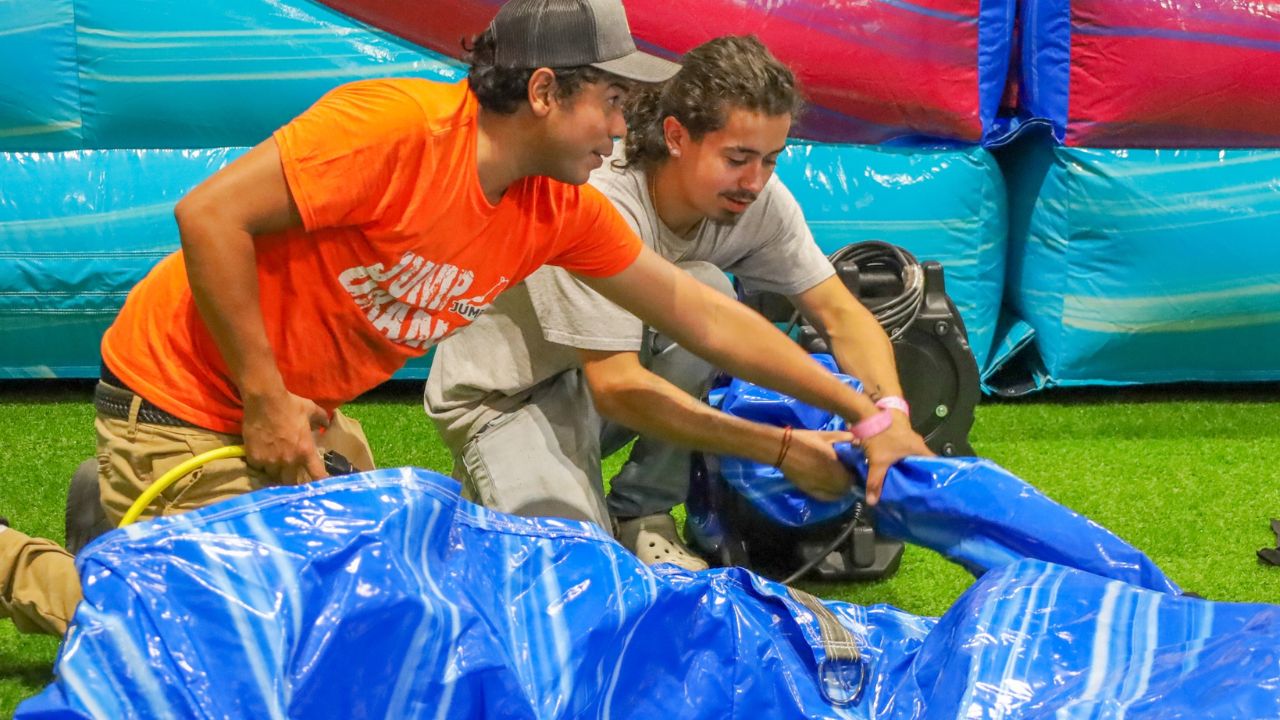
Use "burrito roll" method: fold sides to middle and roll tightly from one end. This method is industry standard minimizing creases preventing material weakening. Creates compact, manageable bundle for storage optimizing space utilization. Newer models feature multiple deflation zippers reducing deflation times by 15-20%. Tight, proper folding essential to prevent damage during storage protecting investment.
How do you ensure the obstacle course is securely stored to prevent damage?
Always store in heavy-duty, water-resistant storage bag protecting from contamination. This provides additional layer of protection against dust, dirt, and moisture. Never store directly on concrete floor which transmits moisture causing mold. Use wooden pallet or heavy-duty shelving to keep elevated and allow air circulation.
What environmental factors should be considered when storing an obstacle course?
Environmental controls directly affect material preservation and equipment longevity. Temperature and humidity management prevent degradation extending operational life. Understanding optimal conditions guides facility selection and investment priorities.
What is the ideal temperature range for storing a 40 ft inflatable obstacle course?
Ideal storage environment maintains temperature between 50-80°F year-round. Temperature extremes cause material degradation and vinyl weakening shortening lifespan. Climate control prevents material stress from temperature fluctuations maintaining integrity. Consistent temperature preservation extends equipment operational life maximizing returns.
How does humidity affect the course when stored?
Relative humidity should be 30-50% to prevent mold and mildew growth. Mold and mildew permanently stain and weaken vinyl material beyond repair. Climate-controlled storage maintains optimal humidity levels automatically. High humidity creates conditions for rapid mold cultivation requiring equipment replacement.
What steps can be taken to protect the course from extreme weather conditions?
Climate-controlled facilities protect against all weather extremes maintaining consistent conditions. Enclosed storage protects from UV light exposure causing material breakdown. Elevated storage prevents moisture transmission from ground eliminating contamination source. Weather-resistant storage bags provide additional protection layer during transport and storage.
How do you choose the right storage location for a 40 ft obstacle course?
Location selection balances protection, cost, and operational convenience factors. Facility evaluation requires systematic assessment against objective criteria. Understanding priorities guides optimal decision-making protecting business interests.
What factors should be considered when evaluating a storage facility?
Temperature and humidity control capabilities maintaining 50-80°F and 30-50% humidity standards. Ceiling height and door clearances for equipment access preventing damage during movement. Clean, dry environment free from pests and contaminants protecting stored inventory. Adequate space for current inventory and growth accommodating business scaling. Electrical access for climate control systems ensuring consistent environmental management. Loading dock or easy vehicle access for efficient operations reducing labor costs.
How do you assess the security and accessibility of a storage location?
Security systems protecting equipment investment against theft and vandalism. Access hours matching operational schedule needs enabling flexible operations. Insurance requirements for facility coverage meeting policy standards. Proximity to service area for efficient logistics reducing transport time and costs. Facility reputation and reliability preventing operational disruptions. Emergency access procedures for urgent equipment needs supporting customer commitments.
Should you rent storage space or set up your own facility?
Rental costs versus ownership investment analysis determines optimal approach. Business scale determines facility size requirements affecting decision economics. Long-term growth projections influence decision between flexibility and control. Control over storage conditions versus convenience balances operational needs. Tax implications of rental versus ownership affect total cost calculations. Flexibility for business scaling and relocation preserves strategic options.
What tools and equipment are required for storing a 40 ft obstacle course?
Proper equipment enables efficient storage procedures preventing damage. Initial investment in quality tools pays long-term dividends. Understanding requirements guides procurement decisions and budget allocation.
What tools are necessary for deflation and rolling up the obstacle course?
Blowers with multiple deflation zippers available on newer models. Newer models feature multiple deflation zippers reducing deflation times by 15-20%. Dollies or hand trucks for safe equipment movement preventing injury and damage. Team of at least two people for proper handling following safety protocols. Standard folding and rolling supplies enabling systematic procedures.
What type of storage bags or covers should be used to protect the course?
Heavy-duty, water-resistant storage bag required for all units. Storage bags with reinforced handles and moisture-wicking properties improve durability. Weather-resistant materials protecting against environmental exposure during storage and transport. Properly sized bags preventing overpacking and material stress extending life. Durable construction withstanding repeated use cycles protecting long-term investment.
How can you ensure proper ventilation during storage to prevent mold?
Never store directly on concrete floor which transmits moisture causing contamination. Use wooden pallet or heavy-duty shelving for elevation enabling air circulation. Elevation allows air circulation around stored equipment preventing moisture accumulation. Climate control systems maintain proper air flow automatically. Storage bags with moisture-wicking properties aid ventilation preventing mold growth.
What are the maintenance requirements during storage for a 40 ft obstacle course?
Active maintenance during storage prevents unnoticed deterioration requiring repairs. Inspection schedules identify problems before they escalate into failures. Documentation creates accountability tracking equipment condition over time.
How often should the obstacle course be inspected during storage?
Regular inspection schedule prevents unnoticed deterioration requiring costly repairs. Seasonal inspections minimum for climate-controlled storage maintaining quality standards. More frequent checks required for non-climate-controlled environments increasing risk exposure. Pre-season inspections before busy rental periods ensure operational readiness. Documentation of condition tracks equipment status over time identifying patterns.
What maintenance checks should be done to ensure its condition?
Inspect seams, anchor points, and high-traffic areas for wear and tear. Visual inspection for mold, mildew, or material degradation requiring immediate attention. Check storage bag condition and protective measures maintaining effectiveness. Verify climate control systems functioning properly ensuring consistent conditions. Document any issues requiring repairs before next use preventing mid-event failures.
How do you avoid the buildup of mold or mildew in stored inflatables?
Inflatable must be completely clean and dry before storage preventing contamination. Climate-controlled storage maintains optimal humidity at 30-50% preventing growth. Elevated storage using pallets allows air circulation eliminating moisture accumulation. Regular inspections identify early mold growth enabling prompt intervention. Temperature control between 50-80°F prevents mold conditions maintaining equipment integrity.
What are the costs associated with storing a 40 ft obstacle course?
Accurate cost modeling enables informed facility decisions balancing protection with budget. Understanding total expenses guides pricing strategies and profitability projections. Hidden costs often exceed obvious rental fees requiring comprehensive analysis.
How much does it cost to rent storage space for a 40 ft obstacle course?
Climate-controlled storage costs vary by location and facility size significantly. Monthly rental costs balanced against equipment longevity benefits justify investment. Self-storage units versus commercial warehouse pricing differences affect decision economics. Location proximity affects both cost and operational efficiency creating tradeoffs. Long-term contracts may offer cost savings versus month-to-month providing stability.
How do equipment and tools contribute to the overall cost of storage?
Heavy-duty storage bags for bounce house combos cost $50-200 per unit representing initial investment. Wooden pallets or shelving systems for elevation require upfront capital. Climate control systems if self-storing represent significant upfront investment. Dollies and hand trucks for safe equipment movement protect against injury costs. Maintenance and inspection supplies accumulate over operational lifespan.
What are the hidden costs of improper storage for inflatables?
Repair costs from mold damage can be substantial affecting profitability. Equipment replacement from premature failure at 1-3 years versus 7-10 years doubles capital needs. Lost revenue from equipment downtime during repairs reduces booking capacity. Customer dissatisfaction from equipment appearance degradation damages reputation. Increased maintenance expenses without climate control run 80% higher over five years.
What legal and insurance considerations should be addressed for storage?
Regulatory compliance and insurance coverage protect business viability and personal assets. Understanding requirements prevents costly violations and coverage gaps. Documentation proves compliance supporting claims and audits.
What insurance coverage is necessary for a stored 40 ft obstacle course?
Commercial property insurance covering stored equipment value protects capital investment. Coverage for damage from fire, theft, weather events prevents total loss. Liability coverage for storage facility requirements meets contractual obligations. Documentation of proper storage for insurance claims supports recovery processes. Policy review for storage location requirements and exclusions prevents coverage gaps.
Are there specific legal requirements for storing inflatable obstacle courses?
Commercial storage may require business licenses depending on jurisdiction. Fire safety codes for storage facilities mandate compliance preventing violations. ASTM F2374 compliance considerations for commercial equipment maintain standards. Record-keeping requirements for equipment maintenance support regulatory audits. Manufacturer warranty requirements for proper storage preserve coverage validity.
How do local zoning laws affect your ability to store the obstacle course?
Residential zoning restrictions on commercial equipment storage limit home-based options. Commercial zoning requirements for storage facilities dictate facility selection. Home-based business storage limitations vary by municipality requiring research. Permit requirements for storage structures add time and cost to operations. Neighborhood association rules affecting storage options constrain facility choices.
How can you optimize storage space for multiple obstacle courses?
Space optimization reduces costs while maintaining accessibility and equipment protection. Systematic organization improves operational efficiency during busy periods. Strategic planning accommodates inventory growth within existing footprint.
What are the best practices for organizing multiple inflatable obstacle courses?
Label each unit clearly for quick identification reducing retrieval time. Most frequently used units stored for easiest access improving efficiency. Rotation system prevents long-term stationary storage equalizing wear patterns. Inventory tracking system monitors equipment location preventing losses. Color-coding or numbering system simplifies organization reducing errors.
How can vertical storage be utilized for space optimization?
Heavy-duty shelving systems maximize vertical space reducing facility footprint. Use wooden pallets or shelving to keep equipment elevated enabling stacking. Stack properly folded units with weight distribution considerations preventing damage. Ensure structural support for stacked equipment weight meeting safety standards. Access considerations for upper storage levels balance density with practicality.
What storage solutions are best for businesses with limited space?
Compact folding using "burrito roll" method maximizes space utilization efficiency. Vertical shelving systems optimize limited floor space through height utilization. Off-site climate-controlled storage for overflow inventory provides flexible capacity. Modular storage systems that scale with business growth accommodate expansion. Shared warehouse space with other rental businesses reduces per-unit costs.
What are the benefits of proper storage for your 40 ft obstacle course business?
Strategic storage investments deliver compounding returns over equipment lifespan. Understanding benefits justifies upfront costs relative to alternatives. Professional storage creates competitive advantages attracting premium clients.
How does proper storage reduce maintenance costs?
Climate-controlled storage reduces cumulative maintenance costs by over 80% over five-year period. Prevents mold damage requiring costly repairs or replacement preserving capital. Extends equipment lifespan from 1-3 years to 7-10 years improving returns. Reduces frequency of repairs from environmental damage protecting margins. Preserves equipment value for better resale potential maintaining asset value.
How does efficient storage improve customer satisfaction and business efficiency?
Equipment maintains professional appearance attracting premium clients and higher rates. Reduces setup time with properly stored, well-maintained equipment improving productivity. Prevents mid-event failures from storage-related damage protecting reputation. Organized storage enables faster equipment retrieval and deployment increasing capacity. Professional storage reflects overall business quality standards differentiating from competitors.
How can proper storage help you scale your business?
Protected equipment maintains value enabling reinvestment in inventory expansion. Longer equipment lifespan improves return on investment supporting growth financing. Reduced maintenance costs free capital for inventory expansion accelerating scaling. Systematic storage accommodates growing equipment fleet without facility constraints. Professional operations attract larger contracts and institutional clients expanding market reach.
How do you prepare for the future of storage as your business grows?
Proactive planning prevents capacity constraints limiting growth opportunities. Understanding scaling strategies guides infrastructure investments and timing. Long-term perspective optimizes total cost of ownership over business lifecycle.
What strategies should be used to scale storage capacity?
Plan for 20-30% excess capacity beyond current inventory accommodating growth. Modular storage systems that expand incrementally match investment to needs. Establish relationships with multiple storage facilities providing flexible options. Consider ownership versus rental based on growth projections and capital availability. Build storage costs into pricing model for sustainable scaling maintaining margins.
How do you plan for increasing inventory as your obstacle course business expands?
Track storage space utilization rates over time identifying capacity constraints. Project inventory growth based on booking trends forecasting facility needs. Budget for storage expansion in business planning allocating resources appropriately. Evaluate efficiency improvements in current storage setup before expanding footprint. Consider specialized storage for different equipment types optimizing space allocation.
What long-term storage solutions should be considered for business growth?
Purpose-built storage facility for mature businesses provides optimal control. Climate-controlled warehouse with professional systems ensures consistent conditions. Location near operational service area for efficiency reduces logistics costs. Owned facility providing long-term cost control eliminates rental expense escalation. Expandable facility design accommodating future growth prevents relocation costs. Investment in quality storage infrastructure pays long-term dividends compounding over years.
Key takeaways for storing your 40 ft obstacle course
Storage decisions fundamentally determine business profitability and equipment longevity. Strategic facility selection protects capital investments over operational lifespan. Implementing proper protocols differentiates professional operators from amateurs in competitive markets.
What are the most important considerations when storing an inflatable obstacle course?
Climate-controlled storage maintaining 50-80°F and 30-50% humidity extends lifespan to 7-10 years. Equipment must be completely clean and dry before storage preventing mold growth. Use heavy-duty storage bags and elevated storage preventing moisture transmission. Regular inspections during storage identify issues early enabling preventive intervention. Proper storage reduces maintenance costs by over 80% over five years protecting margins.
How does choosing the right storage solution affect your business in the long run?
Storage decisions directly impact equipment lifespan ranging from 7-10 years to 1-3 years. Long-term maintenance cost savings compound over years of operation improving profitability. Professional storage enables business scaling and growth supporting expansion plans. Equipment value preservation improves overall business profitability maintaining asset value. Quality storage differentiates professional operators from amateurs attracting premium clients.
What steps should you take now to ensure safe and efficient storage?
Evaluate current storage conditions against climate control standards, identifying gaps. Invest in proper storage bags and elevation systems immediately protecting current inventory. Establish systematic cleaning and inspection protocols ensuring consistent execution. Research climate-controlled storage options in your area comparing cost and features. Budget for proper storage as an essential business investment not optional expense. Document storage procedures for consistent team execution, maintaining quality standards.
Ready to Invest in Equipment Built for Long-Term Storage Success?
JumpOrange designs commercial-grade 40 ft obstacle courses with storage longevity in mind. Our 15 oz vinyl construction (versus competitors' 13 oz) withstands years of proper storage cycles without degradation. Heat-sealed seams prevent splitting during repeated folding and unfolding. Quick-deflation technology reduces storage preparation time by 15-20%. Every unit includes heavy-duty storage bags designed for climate-controlled environments. Our 5-year warranty covers equipment properly stored following manufacturer guidelines—giving you peace of mind that your investment is protected.
Join 2,000+ successful rental entrepreneurs who trust JumpOrange for equipment that maintains value through proper storage. Our JEM Club membership provides storage best practices, maintenance schedules, and facility recommendations specific to your climate. Personal phone support from experienced operators who understand storage challenges helps you avoid costly mistakes. Complete packages include everything needed for proper storage—no hidden costs eroding your profitability. Contact JumpOrange today to discuss durable commercial grade water slide equipment built to last 7-10 years with professional storage, not the 1-3 years you'll get from cheaper alternatives. Your storage investment deserves equipment designed to maximize its protection.


Leave a comment
This site is protected by hCaptcha and the hCaptcha Privacy Policy and Terms of Service apply.