
Key Takeaways
- Dual-lane units weigh 445 to 610 lbs, requiring two-person crews for safe loading and transport
- Single-lane towers deliver a $99 contribution per labor hour versus $95 for dual-lane configurations
- Solo operators achieve four bookings per Saturday with single-lane versus three with dual-lane models
- Dual-lane premium pays back in 26 bookings when throughput genuinely drives customer demand
- Slip-and-slide add-ons generate $132 per labor hour when attached to existing deliveries
A commercial slip-and-slide business requires careful lane configuration decisions affecting profitability across multiple operational dimensions. Solo operators face distinct equipment constraints that dual-lane marketing rarely addresses. The 445-pound packed weight of a 20-foot dual-lane tower creates a physical barrier no pricing structure overcomes. Single-lane configurations between 260 and 395 pounds remain manageable with proper loading equipment.
Below, you will find a breakdown of how lane count affects setup cycles, power requirements, vehicle capacity, and daily booking limits for operators without permanent crew. Dual-lane units require 51 minutes of solo setup versus 36 minutes for single-lane towers. This 42 percent time differential compounds across Saturday routes when operators schedule four to eight weekend events. Financial returns depend less on rate premiums than on matching equipment capacity to available labor hours.
Commercial Slip and Slide Configuration Types
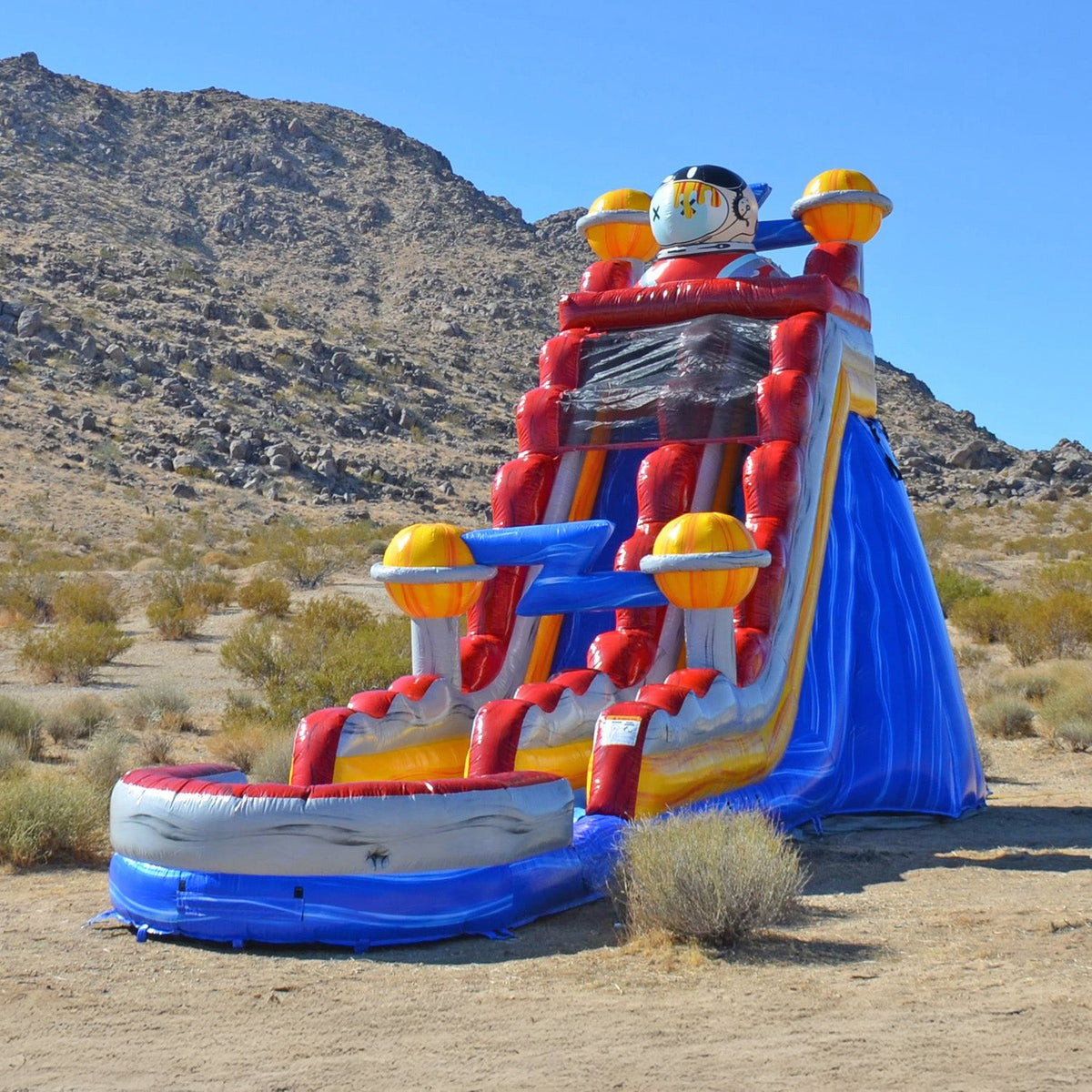
Commercial slip and slide configurations divide into three functional classes. Flat single-lane models measure 30 feet long with 11-foot inflated heights and 260-pound packed weights. Single-lane tower slides reach 19 feet tall with 395-pound packed weights and 540-square-foot footprints. Dual-lane towers at 20 feet tall weigh 445 to 610 pounds and occupy 722 square feet inflated.
Each configuration serves distinct event types based on throughput needs and site constraints. Backyard birthday parties rarely exceed 25 guests, making dual-lane throughput advantages irrelevant. School field days with 30-child class rotations benefit from 75 riders per hour dual-lane capacity that single-lane units cannot match.
|
Configuration |
Height |
Length x Width |
Packed Weight |
Inflated Footprint |
|---|---|---|---|---|
|
Flat single-lane (30 ft) |
11 ft |
30 ft long |
260 lbs |
Not tower-style |
|
Single-lane tower (19 ft) |
19 ft |
36 ft x 15 ft |
395 lbs |
540 sq ft |
|
Dual-lane tower (20 ft) |
20 ft |
38 ft x 19 ft |
445 to 610 lbs |
722 sq ft |
Single-Lane Versus Dual-Lane Model Differences
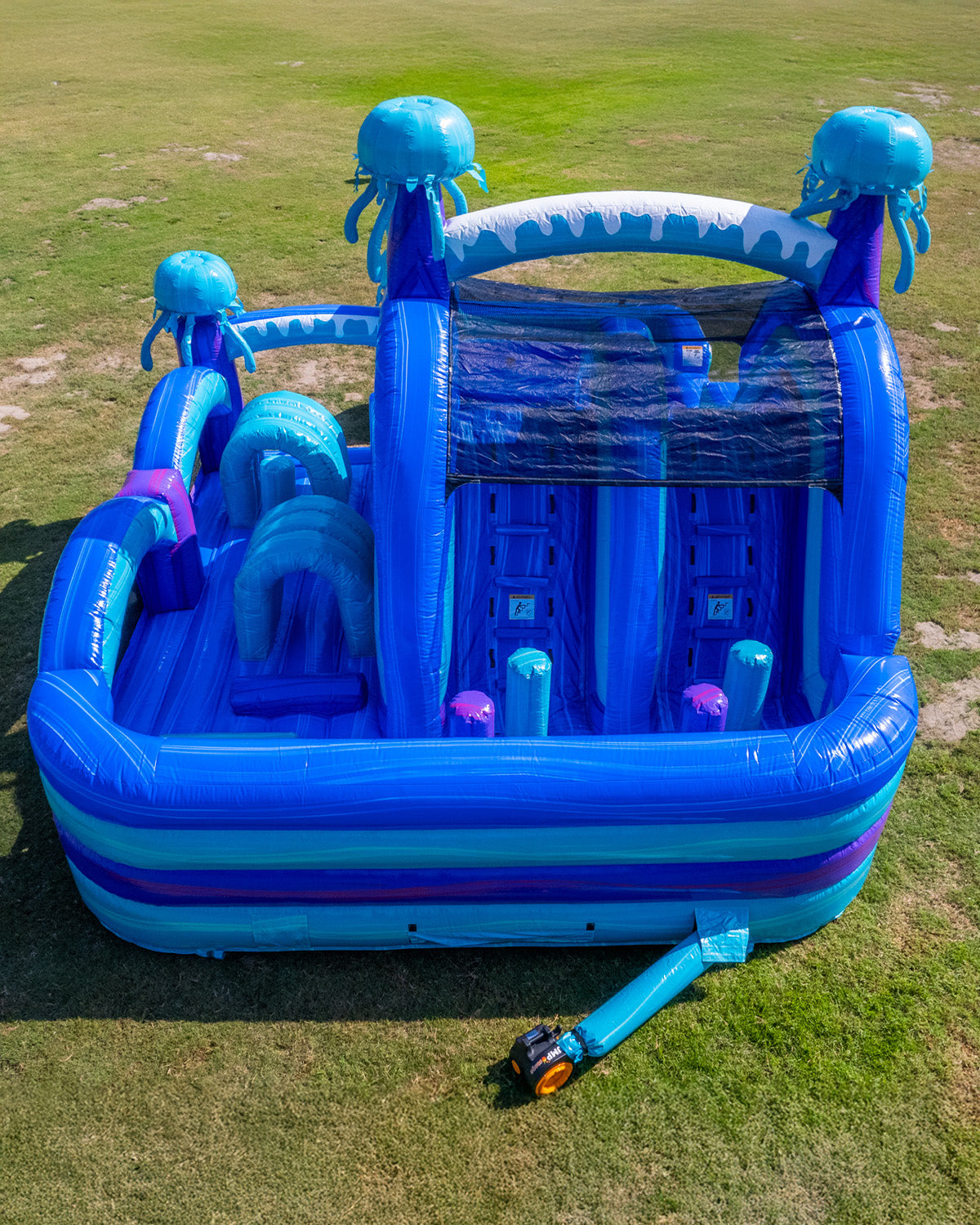
Single-lane models feature one slide surface with a single climbing structure and landing pool. The JumpOrange Electric 19-foot single lane measures 36 feet long by 15 feet wide when inflated. Dual-lane configurations add a second parallel slide lane sharing a common climb structure. The JumpOrange T-Rex 20-foot dual-lane expands to 38 feet long by 19 feet wide.
Width differential drives site suitability more than length variance. Dual-lane width increases 26.7 percent over single-lane at the same height. Ground area expands 33.7 percent from 540 square feet for single-lane to 722 square feet for dual-lane.
Tower Height and Footprint Effects on Setup
Tower height determines overhead clearance requirements and wind exposure. A 20-foot dual-lane tower with a 5-foot perimeter requires 1,392 square feet of setup area. Single-lane 19-foot towers need 1,150 square feet including the same safety perimeter. Suburban backyards face width constraints from fence lines more than length limitations.
Overhead clearance becomes binding at 19 feet or above when residential power drops and tree canopy create conflicts. Published length variance at 20-foot dual-lane models spans 30 to 42.5 feet across manufacturers. This 42 percent spread means units fitting one yard may physically exclude another at identical advertised height.
Typical Power and Water Requirements
Power requirements scale with blower count and horsepower ratings. A 30-foot slip and slide requires one 1.0-horsepower blower drawing 10.5 amps during inflation. Single-lane 19-foot towers operate on one 1.5-horsepower blower at 12 amps inflating and 7.5 amps maintaining pressure. Dual-lane 20-foot models need 1.5 to 2.0-horsepower blowers, with some requiring two separate 1.5-horsepower units.
Two-blower dual-lane configurations draw 24 amps during inflation and 15 amps while maintaining pressure. Residential 15-amp circuits support 12 amps continuously after 80 percent derating. Residential 20-amp dedicated circuits provide 16 amps continuous capacity. Inflatable water slides use 200 to 500 gallons per hour depending on lane count and surface wetting.
Commercial Slip and Slide Lane Count and Throughput
Lane count influences rider throughput through cycle time reduction rather than simultaneous occupancy increases. Manufacturer guidelines limit single-lane slides to two simultaneous users and dual-lane to three total occupants. The third position accommodates one climber while two riders descend separate lanes. Shared climbing structures prevent dual-lane units from achieving true 2x throughput gains.
Actual throughput gains range from 1.7x to 1.9x single-lane capacity depending on event supervision and rider discipline. Well-operated single-lane towers deliver 25 riders per hour at backyard events. Dual-lane towers increase throughput to 35 riders per hour when competitive racing maintains continuous participation.
Single-Lane Versus Dual-Lane Throughput Comparison
Modeled backyard birthday scenarios show single-lane towers processing 25 riders per hour. Dual-lane configurations at identical events increase throughput to 35 riders per hour through racing incentives. Church festivals with volunteer supervision push single-lane capacity to 35 riders per hour and dual-lane to 62 riders per hour.
School field day operations achieve 40 riders per hour on single-lane and 75 riders per hour on dual-lane. Throughput gains of 1.7x to 1.9x reflect shared climb structures creating ascent bottlenecks regardless of descent lane count. Flat slip-and-slide models without tower climbs genuinely double throughput by eliminating vertical circulation constraints.
|
Event Type |
Single-Lane (Riders/Hr) |
Dual-Lane (Riders/Hr) |
|---|---|---|
|
Backyard birthday party |
25 |
35 |
|
Church festival |
35 |
62 |
|
School field day |
40 |
75 |
Event Types Suited to Single or Dual Lanes
Residential backyard markets generate 34,000 monthly US searches for bounce house rentals compared to 2,000 for inflatable water slide rentals. Dual-lane specific terms represent 0.8 percent of 39,230 monthly searches across all inflatable categories. Within water slide searches totaling 4,430 monthly volume, dual-lane terms comprise 7.4 percent of category demand.
Corporate events tolerate 20 to 30 percent higher rental rates than residential bookings while maintaining lower cancellation rates. School field days require throughput matching 25 to 30 child class rotations within fixed 20-minute windows. Single-lane capacity at 40 riders per hour cannot clear a 30-child class with repeat rides inside rotation schedules.
Lane Count Effects on Line Management and Safety
Single-lane slides permit two maximum simultaneous users under manufacturer guidelines. Dual-lane configurations allow three total occupants: one rider per lane plus one climber. Supervision ratios for tweens recommend one attendant per 8 to 10 children. Modeled school field day single-lane operations achieve 40 riders per hour with proper marshaling.
Dual-lane school field day throughput reaches 75 riders per hour when dedicated attendants control launch timing and runout clearance. Racing formats encourage competitive behavior, increasing early launch incidents and lateral collisions. Attendant costs at $35 per hour over four-hour bookings add $140 per event, erasing twice the dual-lane rate premium unless billed separately.
Operational Constraints for Solo Operators
Solo operators face binding constraints from packed weight, vehicle capacity, and daily time budgets; dual-lane configurations compound. A 445-pound dual-lane tower exceeds published two-person lift thresholds at 250 to 350 pounds. Loading requires ramps, tailgate rolls, or hand trucks. Setup time penalties increase by 70 percent for solo dual-lane versus two-crew baseline.
Daily booking capacity drops from four single-lane events to three dual-lane events within a 12-hour Saturday window. The lost booking represents $286 in contribution margin; no rate premium recovers. Vehicle payload ratings become binding when dual-lane units approach 600 pounds packed before adding blowers, stakes, hoses, and generator weight.
Weight and Vehicle Requirements for Setup and Transport
The JumpOrange Electric 19-foot single lane weighs 395 pounds packed, with the shipping carton measuring 48 inches long by 36 inches wide by 60 inches tall. Industry data shows dual-lane 20-foot models weigh approximately 600 to 610 pounds. Published two-person lift thresholds range from 250 to 350 pounds, placing all tower configurations outside solo unaided lifting capability.
Modeled dual-lane 20-foot packed volume reaches 68 to 75 cubic feet versus 55 to 60 cubic feet for single-lane towers. A 6-foot by 12-foot enclosed trailer provides approximately 340 cubic feet of usable volume after accounting for wheel wells. Two dual-lane units at 445 to 610 pounds each exceed single-axle trailer payload ratings before adding accessories.
Solo Setup and Teardown Time by Configuration
Modeled slip-and-slide 30-foot solo setup requires 21 minutes from arrival to operational. Single-lane 19-foot tower solo setups consume 36 minutes, including unloading, positioning, anchoring, and inflation verification. Dual-lane 20-foot solo setups extend to 51 minutes per booking.
Solo setup time penalties run 1.7 times two-crew baseline durations across all configurations. Dual-lane 20-foot solo operation carries a 70 percent time penalty versus two-person crews. Non-parallelizable tasks including stair positioning and pool liner attachment drive larger penalties on complex tower configurations.
Power Draw and Generator Needs by Lane Configuration
A 1.5-horsepower blower draws 1,350 watts and 12 amps during inflation, dropping to 900 watts and 7.5 amps while maintaining pressure. Residential 15-amp circuits at 80 percent continuous derating support 12 amps maximum sustained load. Residential 20-amp dedicated circuits provide 16 amps continuous capacity.
A 4,000-watt generator supports two blowers plus lighting for dual-lane configurations requiring separate motors. Single-lane operations run comfortably on 2,000 to 2,500-watt generators dedicated to one blower. Generator fuel costs average $2 to $4 per four-hour event at 0.15 to 0.25 gallons per hour consumption.
Financial Implications for Solo Operators
Financial returns for solo operators depend on contribution margin per labor hour rather than gross revenue per booking. Single-lane 19-foot towers generate $338 per booking requiring 2.90 labor hours, delivering $117 revenue per labor hour. Dual-lane 20-foot towers produce $413 per booking across 3.70 labor hours, yielding $112 revenue per labor hour. The $5 per hour differential favors single-lane despite lower absolute revenue.
Labor hour efficiency governs solo profitability because operator time remains the binding constraint regardless of capital access. Break-even bookings for dual-lane units reach 19 at solo operation versus 18 for single-lane towers despite a $1,700 higher purchase price. The incremental dual-lane premium requires 26.2 bookings to recover at $65 incremental contribution margin per booking.
|
Metric |
Single-Lane (19 ft) |
Dual-Lane (20 ft) |
|---|---|---|
|
Delivered JEM price |
$3,750.75 |
$5,195.75 |
|
Revenue per booking |
$338 |
$413 |
|
Labor hours per booking |
2.90 |
3.70 |
|
Revenue per labor hour |
$117 |
$112 |
|
Break-even bookings (solo) |
18 |
19 |
Purchase Price and Insurance Cost Comparison
Dual-lane 20-foot towers delivered to JEM members cost $5,195.75 including membership fees and freight. Single-lane 19-foot delivered JEM member pricing reaches $3,750.75 for identical purchasing terms. Entry-tier slip-and-slide 30-foot models deliver at $2,390.75 to JEM members after applying 15 percent discounts and freight waivers.
JEM membership returns $1,494.25 on a single $5,995 dual-lane purchase through combined discounts and freight savings. General liability insurance with inflatable amusement riders ranges from $1,500 to $2,500 annually for operators with one to five units. Insurance costs scale with unit count and revenue rather than lane configuration.
Typical Rental Rates and Revenue Premiums
Mid-range dual-lane four-hour rates span $250 to $350 across comparable height tiers and markets. Single-lane four-hour rates range from $200 to $275 for 18- to 22-foot tower configurations. Dual-lane rate premiums over single-lane bookings average $62.50 for four-hour events, representing 26.3 percent higher pricing.
Full-day dual-lane premiums reach $75 over single-lane rates, marking a 22.2 percent increase at identical heights. Weekend bookings run 40 to 60 percent above weekday full-day rates regardless of lane configuration. Corporate events tolerate 20 to 30 percent higher rates than residential markets while booking further in advance.
Repair, Maintenance, and Drying Time Cost Effects
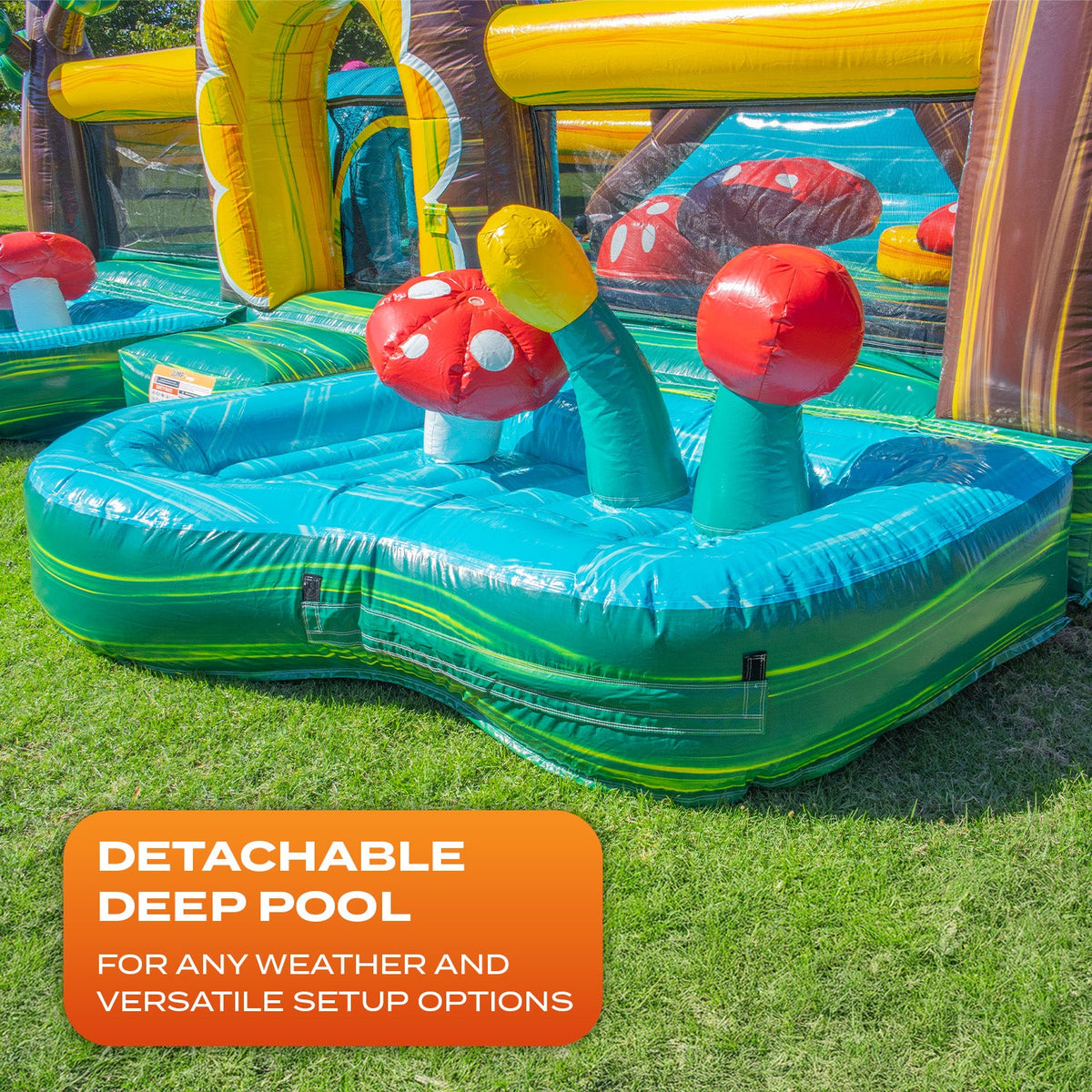
Modeled single-lane tower drying times with attached pools span 45 to 75 minutes depending on weather. Dual-lane towers with detachable pools require 60 to 100 minutes for complete drying before safe packing. Mold colonization begins within 48 to 72 hours when units remain stored damp.
Service life penalties for damp storage reach 40 to 50 percent of design life expectations. Dual-lane 20-foot repair reserves at 2 percent of unit cost total $120 per season. Realistic repair budgeting for solo commercial slip and slide operations should include lost revenue contingencies from weekend downtime during seam repairs.
When Adding a Second Lane or Unit Makes Sense
Adding a second lane makes financial sense when incremental contribution exceeds premium costs across expected asset life. The $1,700 incremental dual-lane premium over single-lane requires 26.2 solo bookings to break even at a $65 incremental margin. JEM Club membership pricing narrows that gap through a 15 percent discount and free terminal shipping on commercial units. Operators achieving 28 or more bookings per season recover dual-lane premiums within one season at solo labor rates.
Hiring helpers at $25 per hour converts solo time penalties back to two-crew baselines, adding $65 per booking in labor costs. Helper-enabled dual-lane operations require 37 bookings to break even on the lane premium when crew wages reduce contribution margins. Second identical unit additions make sense when operators turned away more than eight bookings in the previous season.
Break-Even Booking Threshold for Dual-Lane Premiums
Incremental dual-lane premium over comparable single-lane towers reaches $1,700 at published JEM member-delivered pricing. Incremental contribution margin for dual over single configurations totals $65 per booking at solo operation. Break-even bookings for recovering the dual-lane premium reach 26.2 for solo operators and 37.0 with paid crew.
Dual-lane 20-foot break-even bookings total 19 at solo labor rates, including full delivered cost recovery. Single-lane 19-foot break-even bookings require 18 events at identical labor and pricing assumptions. The single booking differential reflects higher dual-lane rates partially offsetting greater capital requirements.
Hiring a Helper and Its Effect on Capacity and Returns
Maximum Saturday bookings for solo dual-lane operators reach three within 12-hour working windows. Solo single-lane operations achieve four Saturday bookings at the same time constraints. Helpers enable one to two extra Saturday bookings for dual-lane by eliminating 70 percent solo time penalties.
Marginal contribution from helper-enabled dual-lane bookings ranges from $351 to $702 depending on whether helpers unlock one or two additional Saturday slots. Helper costs per dual-lane booking are $25 per hour, totaling $65 for combined setup and teardown. First helper-enabled bookings generate $286 net contribution after subtracting crew wages from incremental revenue.
Adding a Second Unit Versus Upgrading One
One single-lane tower at 26 bookings per season generates $7,436 in total contribution margin. Two single-lane towers at 48 combined bookings produce $13,728 in seasonal contribution, yielding $6,292 marginal contribution from the second unit. One tower plus one slip-and-slide with 60 percent attached bookings delivers $10,180 in seasonal contribution.
Buy a second unit when operators turned away more than eight bookings last season. Second identical units make sense when rejected bookings occurred on dates when primary units were committed. Slip-and-slide add-ons suit situations where accepted bookings could have carried additional items to the same address.
Water Supply Effects on Slip and Slide Performance
Water supply constraints affect lane wetting consistency and operational reliability across site conditions. Residential spigots fully opened deliver 8 to 10 gallons per minute, translating to 480 to 600 gallons per hour. Dual-lane configurations at upper consumption approach or exceed single-hose delivery capacity on weak supplies.
Single-lane models drawing 200 to 250 gallons per hour maintain comfortable margins on typical suburban water pressure. Extra 50-foot hose runs cost 10 to 15 percent of available flow through friction losses. 100-foot hose runs drop pressure by 10 to 15 PSI, compounding water delivery constraints on dual-lane operations.
Typical Water Flow Rates and Hose Constraints
Residential spigots fully opened deliver 8 to 10 gallons per minute, equal to 480 to 600 gallons per hour. Typical residential spigot ranges span 5 to 10 gallons per minute at 45 to 80 PSI operating pressure. 100-foot hose runs reduce available pressure by 10 to 15 PSI through friction and elevation.
Extra 50-foot hose sections beyond 100 feet cost 10 to 15 percent of total flow capacity. Upgrading from 5/8-inch to 3/4-inch hose diameter nearly doubles flow at identical supply pressure. Single-lane operations maintain adequate wetting with standard residential supplies, while dual-lane units risk underwetting one lane on weak or distant connections.
Water Consumption Differences Between Single and Dual Lanes
Inflatable water slides consume 200 to 500 gallons per hour depending on size, lane count, and surface wetting. A 250-gallon tank provides 30 to 75 minutes of continuous operation on single-lane configurations. Tank rental adds $75 to $100 per booking for park and field events without spigot access.
Dual-lane configurations at high consumption exhaust 250-gallon tanks in 25 to 40 minutes of continuous wetting. Multi-tank arrangements or intermittent wetting become necessary for events exceeding two hours without municipal water connections. Solo operators should verify spigot locations during booking rather than discovering supply issues upon arrival.
Practices for Managing Water on the Job
Carry both 5/8-inch and 3/4-inch hose in 50-foot sections rather than single 100-foot runs to minimize friction losses. Ask about spigot location during booking confirmation to prevent arrival-day supply discoveries. A 250-gallon tank buys 30 to 75 minutes on single-lane and 25 to 40 minutes on dual-lane units.
Park or field bookings over two hours require intermittent wetting schedules or multiple tanks when spigots exceed 100-foot distances. JumpOrange slip-and-slide models ship with internal water bladder systems and supplied hoses included. Upgrading to 3/4-inch hose raises flow by roughly the amount needed to close dual-lane supply gaps on marginal connections.
Liability and Supervision Factors for Operators
Liability considerations scale with occupancy limits, supervision ratios, and competitive behavior incentives across lane configurations. CPSC data from 2003 through 2013 documented 113,272 emergency department-treated injuries associated with inflatable amusements. More than 18,000 bounce house injuries received emergency department treatment during 2018.
Standard minimum coverage requires $1,000,000 per occurrence, with many venues now requiring $2,000,000 in liability limits. Single severe claims increase premiums 50 to 100 percent or trigger non-renewal depending on severity. Insurance carriers recognize documented anchoring, posted wind limits, and staff supervision as controls that directly improve pricing and claims experience.
Maximum Occupancy and Supervision Ratios
Single-lane slides permit two maximum simultaneous users under manufacturer specifications and insurance requirements. Dual-lane slides allow three total occupants: one rider per slide lane plus one climber. Supervision ratios for tweens recommend one attendant per 8 to 10 children with proper training.
Weight limits per user reach 250 pounds across commercial water slide configurations regardless of lane count. Minimum age for standard slides begins at 6 years and up for both single-lane and dual-lane models. School and church bookings frequently require dedicated attendants regardless of manufacturer occupancy guidelines.
Racing Format Effects on Risk and Attendant Requirements
Racing formats actively encourage competitive behavior that increases early launch incidents and lateral collision risks at shared pool landings. The feature commanding 22 percent higher rental rates simultaneously creates the behavior pattern generating increased claims. Dual-lane racing slides marketed as self-sustaining entertainment require no adult organization, describing the liability risk rather than the operational benefit.
Attendant costs at four hours and $35 per hour total $140 per booking for school or public events. This expense erases roughly twice the $75 dual-lane rate premium unless billed separately to clients. Solo operators cannot simultaneously serve as on-site attendants and drivers for subsequent deliveries during Saturday routes.
Lane Count Impact on Insurance and Safety Protocols
Standard minimum coverage begins at $1,000,000 per occurrence, with common venue requirements reaching $2,000,000 for schools and municipal facilities. Single severe claims increase annual premiums by 50 to 100 percent or trigger non-renewal, depending on claim severity. Documented anchoring per manufacturer specifications, posted maximum wind speeds with shutdown procedures, and trained staff supervision reduce catastrophic claims frequency. Lane configuration itself does not directly affect insurance pricing, but required attendant ratios and competitive format risks create indirect cost pressures.
Commercial Slip and Slide Lane Configurations: Optimal Choices for Solo Operators
Solo operators maximize returns by matching equipment capacity to available labor hours rather than chasing maximum revenue per booking. Single-lane 19-foot towers deliver $99 contribution per labor hour versus $95 for dual-lane 20-foot configurations. The $4 per hour differential compounds across 140 bookings over five seasons, favoring single-lane despite lower absolute revenue. Slip-and-slide add-ons generate $132 per labor hour when attached to existing deliveries, making them the highest-return marginal product.
Financial decisions depend on solving crew constraints before purchasing lanes requiring two-person operation. Dual-lane units at 445 to 610 pounds exceed solo lifting capability regardless of pricing advantages or throughput benefits. Operators achieving 28 or more bookings per season with available helpers recover dual-lane premiums within one season. Starting operators should begin with single-lane towers, add slip-and-slide units as second purchases, and consider dual-lane upgrades only after establishing crew reliability.
Get the Right Slip and Slide Configuration From JumpOrange
Choosing between single-lane and dual-lane configurations comes down to your labor hours, your vehicle, and the bookings you want to run each season. The JumpOrange product team can walk through your market, your crew situation, and your storage space to help you match equipment to the way you actually operate. JEM Club members get a 15 percent discount and free terminal shipping on every commercial unit, which changes the break-even math in your favor from the first order.
Call JumpOrange at 1-877-388-5867 or request a personalized quote to talk through single-lane, dual-lane, slip-and-slide, and inflatable bounce house combos options for your rental fleet.
Frequently Asked Questions
What is the difference between single-lane and dual-lane commercial slip and slides?
Single-lane models feature one slide surface with a single climbing structure, while dual-lane units add a second parallel lane sharing that same climb structure. Dual-lane towers are wider and heavier, typically 26.7 percent wider and 33.7 percent larger in footprint than a single-lane tower of the same height. The extra lane increases throughput but does not double it, since both riders still share one climbing structure. Solo operators should weigh this width and weight difference against their actual storage and transport capacity before choosing a configuration.
How much does a commercial slip and slide weigh?
Packed weight depends on configuration. A flat 30-foot single-lane model weighs around 260 pounds, a 19-foot single-lane tower weighs about 395 pounds, and a 20-foot dual-lane tower weighs between 445 and 610 pounds. Published two-person lift thresholds fall between 250 and 350 pounds, which places every tower configuration outside solo unaided lifting capability. Operators without a helper should plan on ramps, tailgate rolls, or a hand truck regardless of which configuration they choose.
Can one person set up a commercial slip and slide alone?
Yes, though setup time and physical demands increase with lane count and tower height. A single-lane 19-foot tower takes about 36 minutes for solo setup, while a 20-foot dual-lane tower takes about 51 minutes, a 42 percent time difference that compounds across a full Saturday route. Solo setup generally runs 1.7 times longer than a two-person crew baseline across all configurations. Operators booking four or more events per Saturday should factor this time penalty into how many bookings they can realistically accept.
How many bookings does it take to pay off a dual-lane slip and slide?
At solo operation, the incremental $1,700 premium for a dual-lane 20-foot tower over a comparable single-lane unit requires about 26.2 bookings to break even, based on a $65 incremental contribution margin per booking. Operators who hire a paid helper convert some of that lost solo time back into capacity, but the added $65 in labor cost per booking pushes the break-even point to roughly 37 bookings. Operators who consistently book 28 or more events per season tend to recover the dual-lane premium within a single season.
What size generator does a commercial slip and slide need?
A single-lane tower running on one 1.5-horsepower blower operates comfortably on a 2,000 to 2,500-watt generator. Dual-lane configurations that run two separate 1.5-horsepower blowers need a 4,000-watt generator to support both motors plus lighting. Fuel costs average $2 to $4 per four-hour event at 0.15 to 0.25 gallons per hour of consumption. Operators working sites without residential power access should size their generator to the configuration before booking outdoor or park events.


Leave a comment
This site is protected by hCaptcha and the hCaptcha Privacy Policy and Terms of Service apply.