Starting an inflatable rental business requires understanding costs beyond the initial equipment purchase. Most new operators focus on buying bounce houses while missing operational expenses that significantly impact profitability during the first year.
The global bounce house market reached $4.2 billion in 2024 and projects steady growth through 2034. Success in this expanding industry depends on accurate financial planning that accounts for both visible and hidden operational costs.
Key Takeaways
- New operators typically underestimate party rental costs by 30-40%, facing $15,000-$25,000 in annual hidden expenses
- Equipment investments range from $1,395 for classic bounce houses to $10,995 for obstacle courses with ongoing maintenance requirements
- Peak season drives 75% of annual expenses while water slides generate 40% higher revenue during summer months
- Section 179 deductions allow operators to deduct up to $1,220,000 in equipment purchases during the year placed in service
- Commercial liability insurance premiums cost $2,400-$6,000 annually while maintenance requires $500-$1,500 quarterly
What Are the Core Components of Party Rental Expenses?
Party rental costs consist of equipment acquisition and ongoing operational expenses that support daily business activities. Understanding both categories helps operators create realistic budgets and avoid cash flow problems during seasonal fluctuations.
Research shows that 72% of new inflatable rental businesses underestimate their total operating costs significantly. Comprehensive planning must account for storage, insurance, maintenance, transportation, and digital infrastructure alongside equipment investments.
Which Equipment Types Drive Initial Investment?
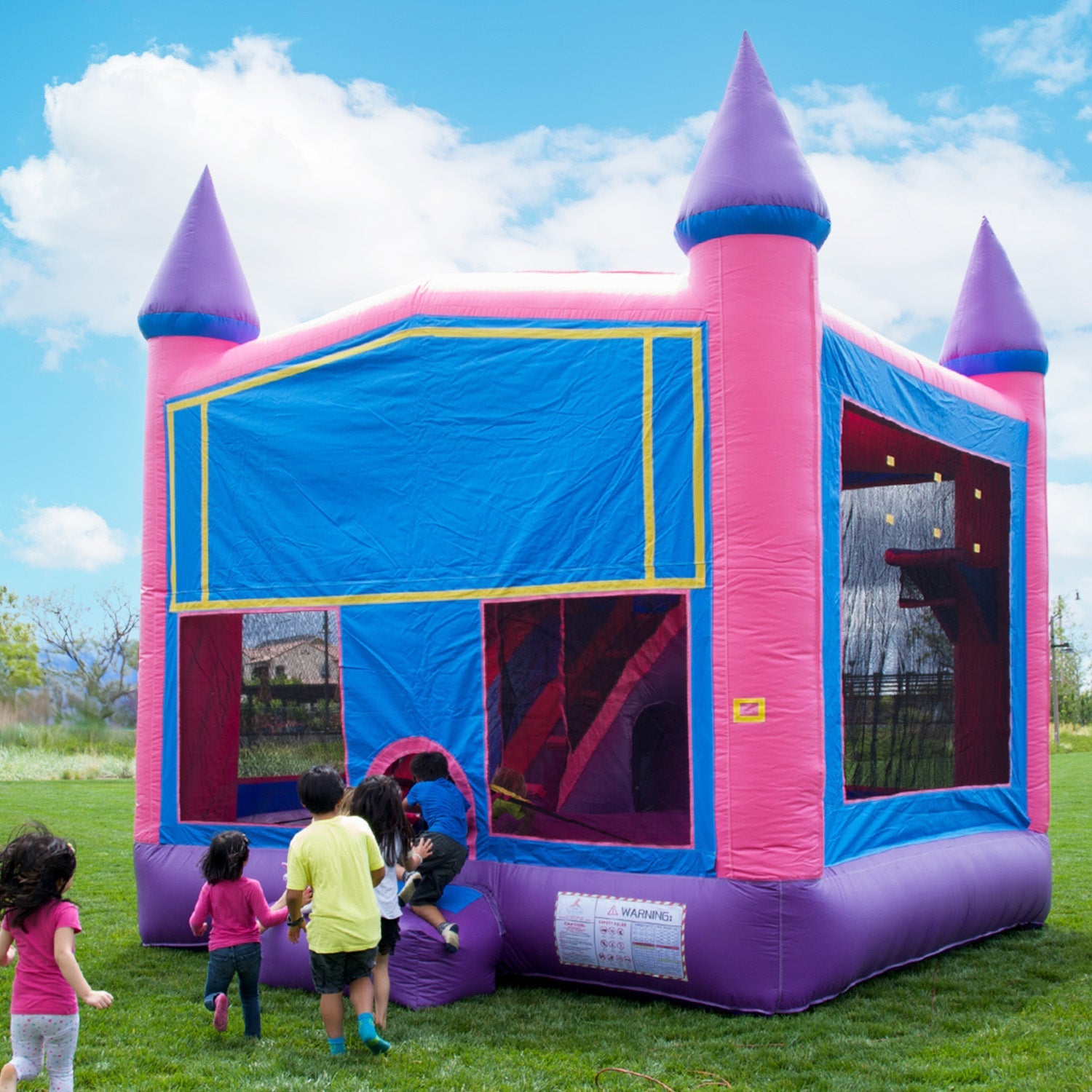
Commercial-grade bounce houses represent the entry point for most operators at $1,395 to $2,995 per unit. These classic inflatables dominate 38% of the market and provide reliable revenue from backyard birthday parties.
Bounce houses with slide combos cost between $2,400 and $4,700, capturing 28% of the market share. These units command higher rental rates and appeal to customers seeking more entertainment variety than standard jumpers.
Obstacle courses range from $2,995 to $10,995, depending on length and complexity. These premium units attract older demographics and corporate events, justifying higher prices through competitive play elements.
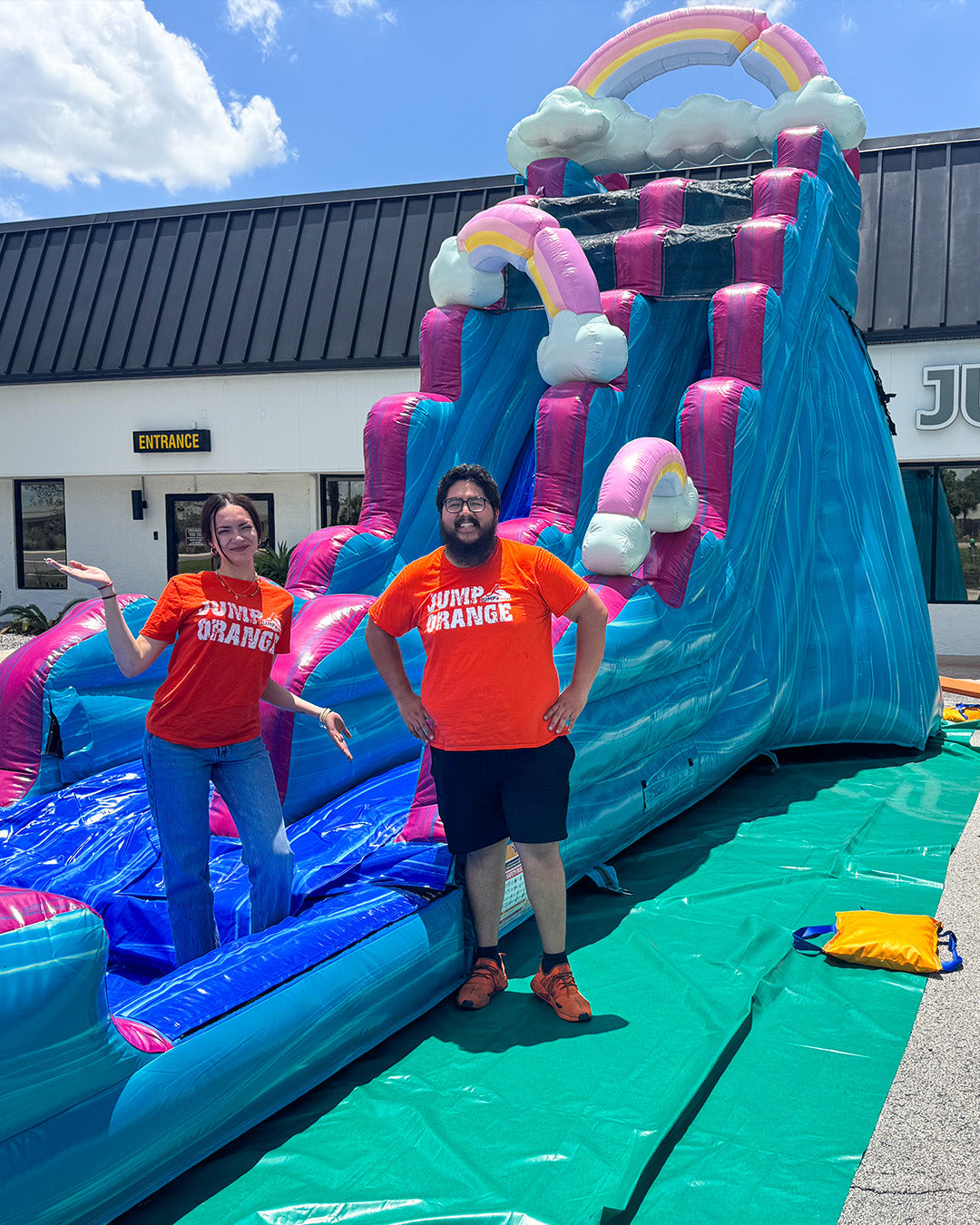
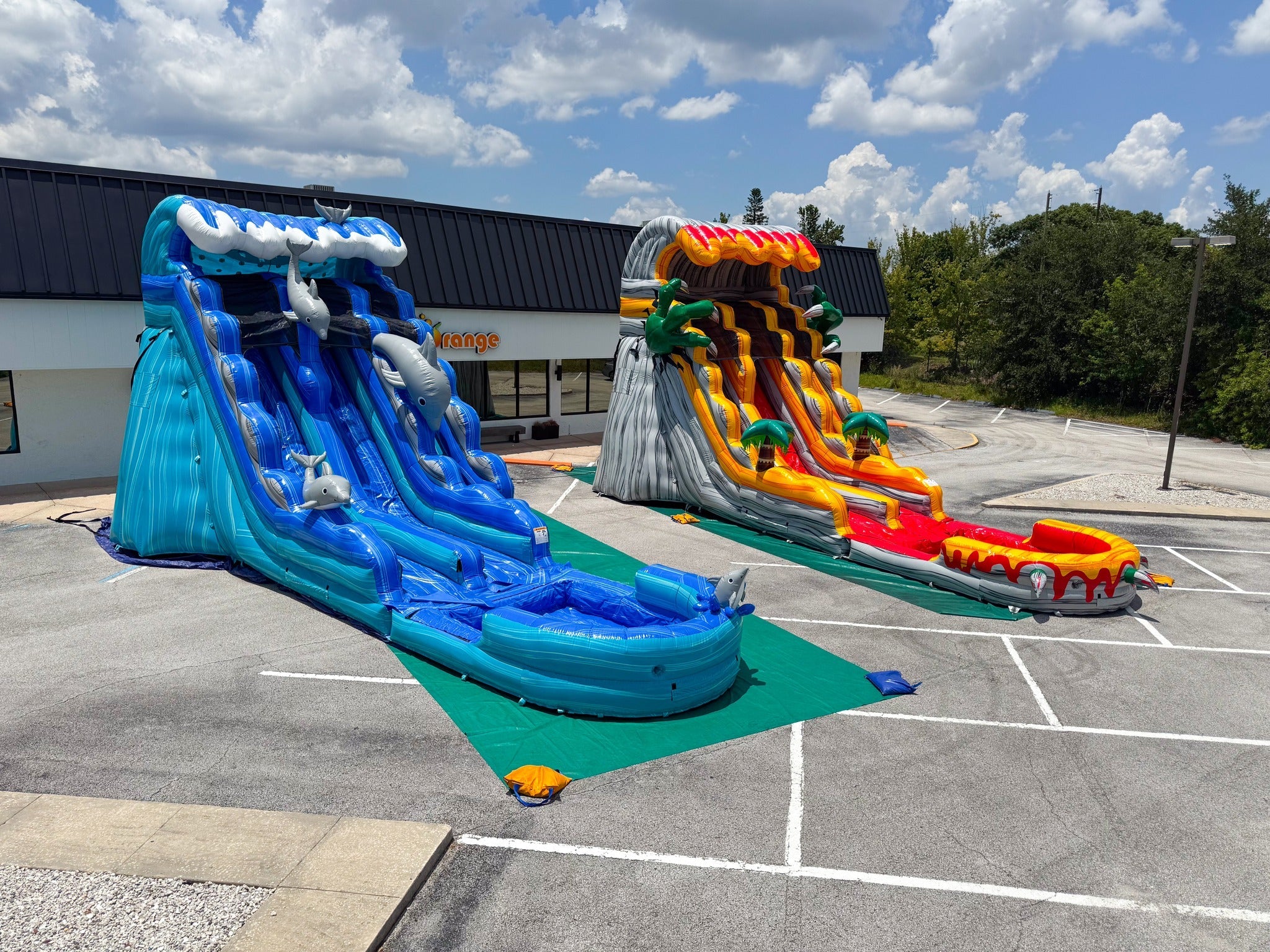
Water slides represent the highest investment at $2,000 to $10,000 or more for commercial units. Large-scale slides generate premium revenue during peak season but require significant maintenance and water supply infrastructure.
What Are Typical Operational Costs Beyond Equipment?
Storage facilities with climate control cost $400 to $800 monthly to prevent mold and vinyl degradation. Proper storage protects equipment investments and extends the usable life of commercial inflatables significantly.
Transportation fleet maintenance requires $2,500 to $5,000 annually for reliable delivery vehicle operation. Digital infrastructure, including booking software and marketing tools, adds $150 to $500 in monthly recurring expenses.
How Does Seasonality Influence Expense Distribution?
Peak season, covering the second and third quarters, accounts for 75% of annual operating expenses. Summer months drive maximum revenue but also require increased labor, fuel, and maintenance spending for daily operations.
Water slide rentals generate 40% higher revenue during peak season compared to other inflatable categories. Operators must reserve cash from summer profits to cover off-season operational costs, including storage, maintenance, and business overhead during slower months.
How Do Consumer Preferences Impact Rental Inventory and Pricing?
Consumer age demographics directly determine which equipment types generate the highest rental demand. Strategic inventory selection based on target audience preferences maximizes rental frequency and return on equipment investment.
Market research reveals distinct preferences across age groups that influence purchasing decisions for rental operators. Understanding these patterns helps businesses stock appropriate equipment ratios and avoid capital tied up in low-demand units.
What Are the Primary Demographics and Their Equipment Preferences?
Children aged 4 to 8 years represent 44% of the inflatable rental market as the largest segment. This group prefers brightly colored bounce houses with simple integrated features like small slides and basketball hoops.
The above-8 age group accounts for 38% of market demand, seeking adventurous obstacle courses and competitive elements. Children under 4 years comprise 18% of the market, with a focus on gentle bounce surfaces and low walls.
Which Factors Shape Consumer Priorities for Rentals?
Safety and compliance rank as the highest consumer priority when selecting rental providers. Parents and event organizers prioritize equipment condition, adherence to ASTM safety standards, and proper anchoring techniques.
Equipment quality follows as the second priority, with customers expecting clean and well-maintained commercial-grade units. Service reliability, including punctual delivery and professional setup, significantly influences customer satisfaction and repeat business rates.
How Does Equipment Quality Affect Customer Satisfaction?
Commercial-grade materials using 15-ounce or 18-ounce PVC vinyl demonstrate durability that customers recognize during setup. Quality equipment shows minimal wear, maintains vibrant colors, and operates safely throughout rental periods without deflation issues.
Superior equipment quality justifies premium pricing while reducing liability concerns from equipment wear failures. Investing in higher-grade inflatables reduces replacement frequency and builds a reputation that generates referral business from satisfied customers.
What Pricing Strategies Do Successful Operators Use?
Rental pricing strategies balance cost recovery with market demand to optimize revenue across different seasons. Operators must choose between cost-based and value-based approaches depending on their market position and competition.
Strategic pricing directly impacts profitability margins while influencing customer perception of service quality. Setting competitive rental rates requires analyzing both internal costs and external market conditions across different inflatable categories.
How Does Cost-Plus Pricing Work in This Industry?
Cost-plus pricing calculates total ownership costs, including purchase price, depreciation, maintenance, insurance, and storage expenses. Operators then add markup percentages typically ranging from 100% to 300% to determine rental rates.
This method ensures cost recovery but may ignore market demand fluctuations and competitive positioning. Cost-plus pricing works best for operators with unique equipment or serving markets with limited competition.
What Are the Benefits of Value-Based Pricing?
Value-based pricing sets rates according to perceived customer value, market demand, and competitor pricing analysis. This strategy allows operators to charge premium rates for high-demand units during peak season or specialized events.
Premium pricing becomes justified when offering superior service quality, unique equipment, or convenient booking systems. Operators can maximize revenue from popular units while maintaining competitive rates on standard equipment to capture market share.
How Do Different Inflatable Categories Influence Rental Rates?
Classic bounce houses command $150 to $200 for four-hour rentals as the baseline pricing tier. These entry-level rates attract budget-conscious customers while maintaining profitability through high utilization rates during peak season.
Bounce house with slide combos generate $200 to $300 for four-hour rentals reflecting their enhanced entertainment value. Obstacle courses reach $300 to $400 while small water slides command $400 to $600 for similar durations.
Large water slides exceeding 20 feet generate premium rates between $600 and $900 for four-hour rentals. These units justify higher pricing through impressive visual appeal, unique experiences, and strong summer demand that supports seasonal revenue goals.
How Can Operators Manage Hidden Operational Costs Effectively?
Hidden expenses account for first-year budgeting failures when operators focus exclusively on equipment acquisition costs. Annual hidden costs ranging from $15,000 to $25,000 significantly impact cash flow and profitability for unprepared businesses.
Effective cost management requires establishing operational reserves and tracking all expense categories systematically. Understanding startup cost structures helps operators maintain sufficient working capital throughout seasonal business cycles and unexpected equipment repairs.
What Are Common Underestimated Expenses?
Insurance premiums for commercial liability coverage cost $2,400 to $6,000 annually based on coverage limits and claims history. Many operators underestimate these mandatory costs when calculating initial business feasibility and profit projections.
Maintenance and repair expenses require $500 to $1,500 quarterly for commercial-grade inflatables operating under normal conditions. Additional underestimated costs include cleaning supplies, replacement blowers, sandbags, stakes, and repair patches that accumulate throughout operating seasons.
How Should Budget Allocation Adjust for Peak and Off-Peak Seasons?
Peak season budget allocation should reserve sufficient cash from high-revenue months to cover off-season operational expenses. Operators must maintain storage facility payments, insurance premiums, and equipment maintenance during slower periods without active income.
Successful businesses establish emergency reserves covering three months of fixed expenses before expanding equipment inventory. This approach prevents cash flow crises during unexpected slow periods or when major equipment repairs coincide with low revenue.
What Insurance and Maintenance Costs Must Be Accounted For?
Commercial liability insurance providing $1,000,000 per occurrence coverage represents a non-negotiable business expense. Required insurance coverage protects operators from potentially devastating lawsuits while meeting venue requirements for school and municipal rentals.
Quarterly maintenance costs between $500 and $1,500 cover cleaning, vinyl repairs, and blower replacements for active equipment. Proactive maintenance prevents equipment wear from escalating into costly replacements while maintaining safety standards that protect customers.
What Tax Benefits and Depreciation Options Are Available for Equipment?
Equipment depreciation strategies significantly reduce taxable income while recovering capital invested in commercial inflatables. Understanding available IRS deductions helps operators maximize after-tax profitability and reinvest savings into business growth.
Strategic tax planning enables operators to choose optimal depreciation methods based on current income and future growth projections. Different approaches provide varying benefits depending on business structure and equipment acquisition timing throughout the fiscal year.
How Does the Section 179 Deduction Support New Operators?
Section 179 deduction allows operators to deduct the full purchase price of qualifying equipment during the year placed in service. The maximum deduction reaches $1,220,000 for 2024, providing substantial immediate tax relief for new businesses with significant equipment investments.
This aggressive deduction strategy reduces first-year taxable income dramatically when operators purchase multiple commercial inflatables. A $25,000 equipment purchase generates an immediate $25,000 deduction, substantially lowering tax liability for profitable operations.
When Is Bonus Depreciation Applicable?
Bonus depreciation allows percentage deductions in the first year for equipment purchases exceeding Section 179 limits. The rate stands at 60% for 2024, declining to 40% in 2025 before complete elimination by 2027.
This provision benefits larger operations, making substantial equipment investments beyond Section 179 thresholds. Operators should accelerate equipment purchases before the bonus depreciation phases out completely to maximize available tax benefits.
What Are Depreciation Strategies for Vehicles and Equipment?
MACRS depreciation classifies commercial bounce houses as five-year property, spreading deductions over six tax years. This conservative approach provides steady tax benefits for businesses expecting higher future income when deductions become more valuable.
Heavy-duty delivery vehicles with GVWR exceeding 6,000 pounds qualify for unlimited Section 179 deductions. Standard SUVs face capped limits at $30,500 in 2024, making larger commercial vehicles more tax-advantageous for business purposes.
Which Safety and Quality Measures Are Essential for First-Time Operators?
Safety standards and equipment quality directly influence customer satisfaction, liability exposure, and long-term business reputation. First-time operators must prioritize compliance with industry standards to protect customers and maintain insurability.
Quality measures extend beyond initial purchase decisions to include ongoing maintenance protocols and operational procedures. Comprehensive business planning integrates safety compliance into daily operations rather than treating it as an optional enhancement.
What Safety Standards Must Equipment Meet?
Commercial inflatables must comply with ASTM F2374-22 standards covering design, manufacturing, installation, and operation requirements. These specifications address material strength, anchoring systems, ventilation, and user capacity limits for commercial rental applications.
Equipment should carry NFPA 701 flame resistance certification to meet venue requirements for indoor and municipal events. Proper anchoring using stakes or sandbags according to manufacturer specifications prevents displacement during operation and wind events.
How Does Equipment Material Affect Longevity and Liability?
Commercial-grade PVC vinyl using 15-ounce or 18-ounce thickness provides durability that withstands frequent use and transportation. Higher-quality materials resist punctures, maintain air pressure, and retain color longer than residential-grade alternatives.
Evaluating equipment durability before purchase prevents premature replacement costs and reduces liability from equipment failures during rentals. Superior materials justify higher initial costs through extended service life and reduced maintenance frequency over multiple operating seasons.
Why Is Comprehensive Insurance Crucial?
Comprehensive liability insurance protects operators from injury claims that could financially devastate uninsured businesses. Proper insurance coverage enables access to premium venues including schools and municipal facilities requiring proof of coverage.
Coverage limits of $1,000,000 per occurrence represent industry standard minimums for commercial operations. Additional umbrella policies provide excess liability protection for businesses operating multiple units or serving large-scale corporate events.
What Operational Tools and Technologies Enhance Cost Management?
Digital infrastructure reduces administrative overhead while improving customer experience through streamlined booking and payment processing. Modern rental management software automates tasks that previously required significant manual labor and prone to scheduling errors.
Technology investments between $150 and $500 monthly generate returns through reduced labor costs and increased booking conversion rates. Efficient systems allow operators to manage larger equipment inventories without proportional increases in administrative staffing requirements.
How Can Digital Booking Software Reduce Overhead?
Automated booking systems allow customers to check availability, reserve equipment, and process payments without direct operator involvement. This self-service approach reduces phone calls, eliminates double-booking risks, and captures reservations during non-business hours.
Integrated calendar management provides real-time inventory visibility across multiple delivery zones and time slots. Digital contracts and liability waivers streamline paperwork while ensuring consistent legal protection for every rental transaction.
What Role Does Marketing Play in Rental Demand?
Digital marketing drives customer acquisition through search engine visibility, social media engagement, and online reviews. Consistent marketing presence during off-season maintains brand awareness and generates early bookings for peak season events.
Professional photography showcasing equipment quality and happy customers builds trust with prospective clients evaluating reliable bounce house water slide rental solutions. Marketing investments generate measurable returns through increased booking rates and premium pricing justified by perceived service quality.
How Does Transportation Management Affect Expenses?
Route optimization software reduces fuel costs and maximizes daily delivery capacity by efficiently scheduling multiple stops. Proper vehicle maintenance prevents breakdowns during peak season when every delivery generates significant revenue and customer satisfaction.
Investing in reliable delivery vehicles with adequate cargo capacity prevents equipment damage during transport. Commercial vehicles exceeding 6,000 pounds GVWR provide tax advantages while offering superior payload capacity for transporting multiple large inflatables.
Maximizing Profitability Through Understanding Hidden Party Rental Expenses
Successful inflatable rental operations achieve gross profit margins between 40% and 60% through disciplined cost management and strategic pricing. Understanding hidden expenses prevents the cash flow problems that cause 72% of new operators to underestimate costs by 30-40%.
Establishing operational reserves using a 3:1 ratio between working capital and equipment investment protects businesses during seasonal fluctuations. This approach ensures sufficient funds for insurance premiums, storage costs, maintenance requirements, and unexpected equipment repairs throughout the business cycle.
Smart operators leverage tax benefits, including Section 179 deductions, while investing in commercial-grade equipment that commands premium rental rates. Quality equipment reduces liability exposure, minimizes equipment wear, and builds customer trust that generates referral business and repeat bookings.
The inflatable rental industry offers substantial growth opportunities for operators who plan comprehensively beyond initial equipment acquisition. Balancing immediate investments with long-term operational expenses creates sustainable businesses that thrive through changing seasons and market conditions.
JumpOrange has supported rental operators since 2002 with commercial-grade inflatables and business guidance for building profitable operations. Their in-house manufacturing and distribution network provides reliable supply chain access while membership programs deliver meaningful cost savings on equipment investments.
Build on Equipment That Protects Your Margins
Hidden costs hurt most when your gear gives out mid-season. JumpOrange manufactures commercial-grade inflatables built to survive years of back-to-back weekends, so you spend less on repairs and replacements and more time booking jobs. Every order ships with a repair kit, an industry-leading warranty, and real phone support from people who run this business too. Join the JEM Club for member pricing, free shipping on qualifying orders, and the kind of guidance that keeps first-year operators out of cash-flow trouble. Explore the JumpOrange collection and start your rental business on equipment that pays you back.


Leave a comment
This site is protected by hCaptcha and the hCaptcha Privacy Policy and Terms of Service apply.