Successful inflatable rental businesses grow by adding equipment at precise moments when demand exceeds supply capacity. Strategic water slide procurement requires analyzing utilization rates, seasonal revenue patterns, break-even timelines, and customer booking trends to determine optimal expansion windows.
Operators who expand too quickly face idle inventory and cash flow constraints. Those who delay expansion lose bookings to competitors during peak weekends when multiple customers request similar units simultaneously.
Key Takeaways
- Purchase additional units when existing inventory reaches 80% utilization during peak weekends to avoid revenue loss
- Off-season buying (October-February) delivers 15-20% cost savings compared to peak season premium pricing
- Combo units break even in 4.1 months, while obstacle courses require 12.7 months for investment recovery
- Budget 10% of equipment value annually for maintenance and 15-20% depreciation in capital allocation planning
- Commercial-grade PVC units lasting 5-10 years deliver superior ROI compared to residential models degrading within 3 years
What Are the Key Types of Inflatable Water Slides and Their Market Roles?
Understanding product categories helps operators build balanced inventories that serve diverse customer segments. Each inflatable type addresses specific age groups, event types, and price points within the rental market.
How Do Combo Units Compare to Classic Bounce Houses and Water Slides?
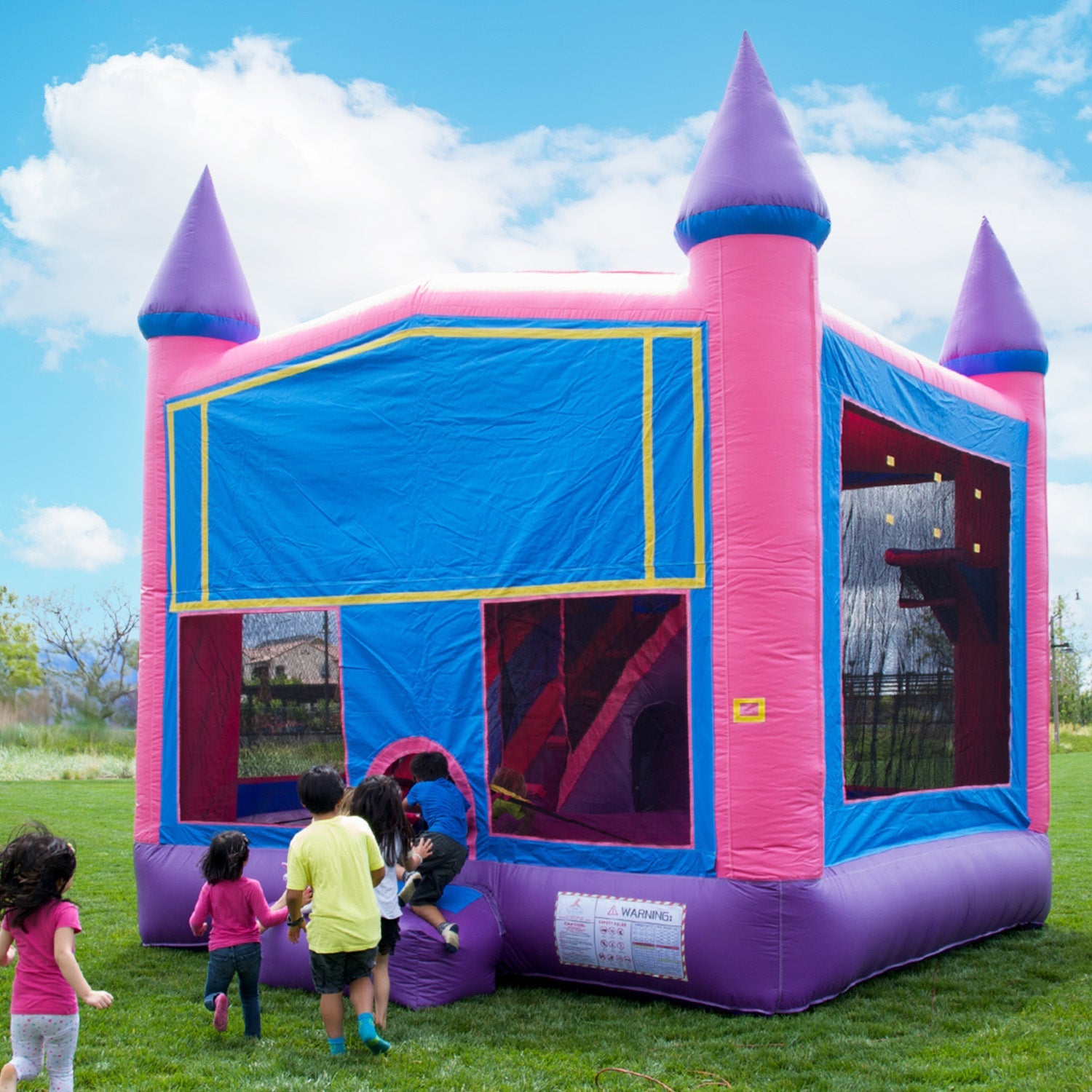
Combo units dominate rental demand by offering jumping areas paired with slides for wet or dry operation. These versatile inflatables capture 32% market share, while classic bounce houses hold 28%, and standalone water slides claim 22%.
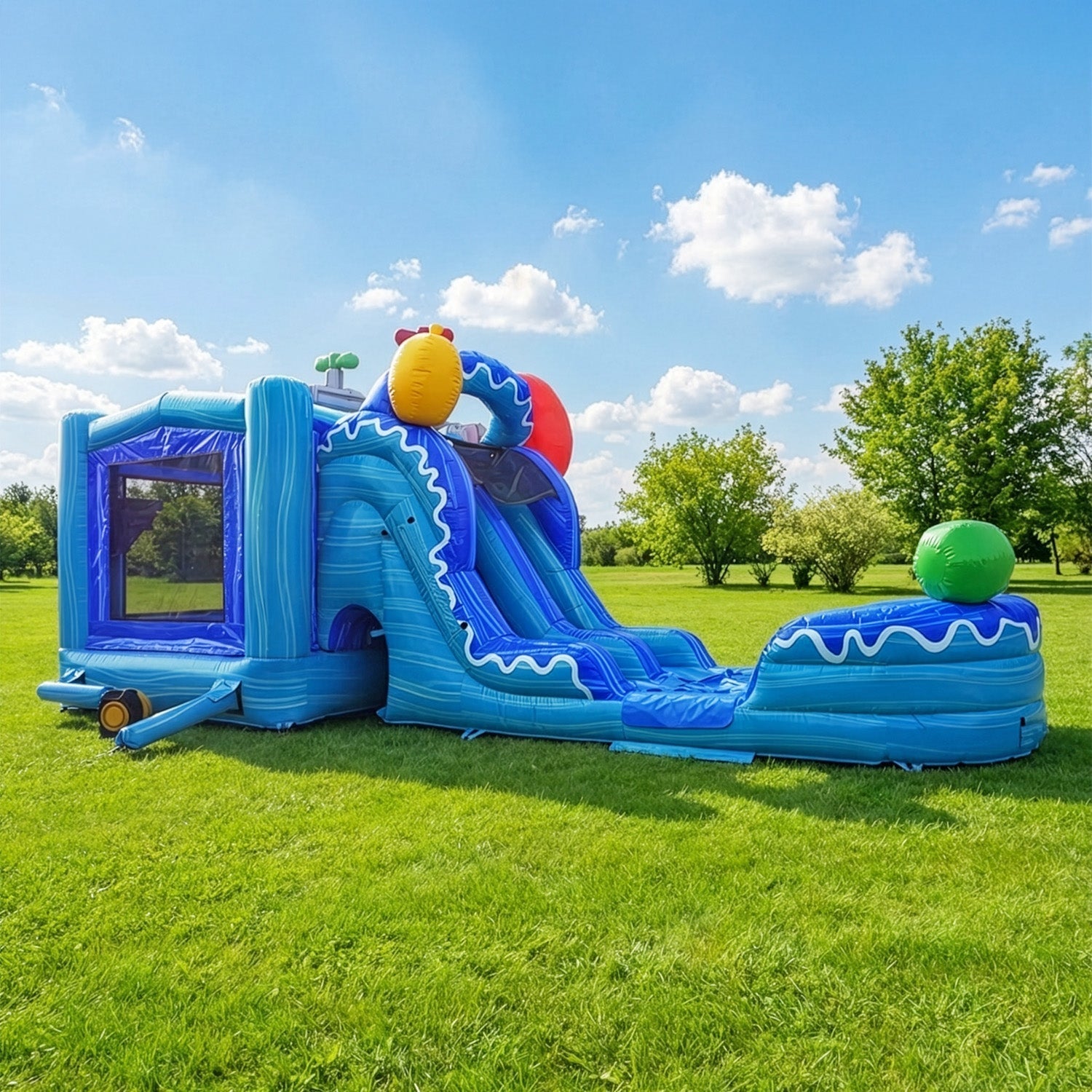
The combo unit break-even occurs at 4.1 months versus obstacle course timelines extending to 12.7 months. This accelerated cost recovery makes combo units essential for the best water slides for rental business inventory strategy during the expansion phase.
What Features Define Obstacle Courses and Interactive Games?
Obstacle courses capture 12% market share through modular designs featuring tunnels, climbing walls, and balance beams. Interactive games hold 6% market share with specialized equipment, including human foosball, jousting, bungee runs, and sports-themed challenges.
Themed designs spanning tropical, sports, and superhero aesthetics differentiate premium rental offerings from generic inventory. Obstacle courses demand a complex setup requiring multiple staff members and extensive space compared to self-contained bounce houses.
Which Market Segments Drive Demand for Each Product Type?
Residential backyard parties generate consistent demand for combo units and classic bounce houses throughout peak season. Corporate events, school field days, and community festivals require larger obstacle courses and interactive games that command premium pricing.
Summer events heavily favor commercial water slide options with integrated splash pools, while indoor venues prefer dry combo units. Urban rental businesses prioritize vertical designs with compact footprints, whereas suburban operators stock traditional horizontal layouts.
Who Are the Primary Customers and How Do Their Preferences Affect Inventory Planning?
Customer demographics directly determine which equipment types generate consistent bookings versus seasonal demand. Age-specific preferences shape inventory composition while geographic factors influence unit sizing and feature requirements.
How Do Age Groups Influence Water Slide and Inflatable Selection?
Toddlers up to 3 years require small enclosed play zones with minimal height, whereas teens prefer obstacle courses and competitive water slides. Ages 3-7 represent the core demographic for classic bounce houses, while those above 7 years consistently demand interactive games.
Parents booking for mixed-age events favor combo units accommodating multiple age brackets simultaneously. Adult corporate clients specifically request giant obstacle courses and team-building interactive games for employee engagement events.
What Are Urban, Suburban, and Rural Adoption Patterns?
Urban areas demonstrate a strong preference for indoor-compatible units and vertical designs addressing space constraints. Suburban markets favor classic bounce houses for residential backyard installations with standard lot dimensions.
Rural areas consistently choose large-scale obstacle courses, leveraging available acreage for community gatherings. Urban operators stock compact 13x13 units fitting apartment courtyards, while suburban inventories include indoor and outdoor bounce house rentals serving diverse venue types.
Which Buyer Decision Factors Impact Purchase Timing and Unit Selection?
Safety and compliance requirements drive 95% of consumer decisions when selecting rental providers. Price and ROI calculation potential rank as a priority for 92% of operators evaluating equipment investments.
Durability and lifespan influence 88% of purchasing decisions, while ease of setup matters to 82% of buyers. Maintenance requirements affect 75% of selections, and customization options impact 68% of final equipment choices.
When Is the Best Time to Purchase Additional Water Slides for Your Inventory?
Optimal purchase timing balances seasonal demand patterns against manufacturer pricing cycles and inventory availability. Strategic buyers secure discounts during slow periods while ensuring delivery before peak booking windows.
How Does Seasonal Demand Affect Optimal Purchase Windows?
Peak season generates 60-65% of total annual revenue, with July alone representing 22-26% of yearly income. Off-peak bookings decline by up to 60% during winter months in regions with distinct seasonal patterns.
Off-season purchases between October and February deliver 15-20% manufacturer discounts compared to spring buying. Peak season purchases cost up to 30% more while facing inventory shortages and extended delivery timelines.
What Are the Cost Differences Between Budget, Mid-Range, and Premium Units?
Classic bounce house pricing ranges from $1,395 budget tier, through $2,000 mid-range, to $2,995 premium models. Combo units span the $2,400 budget tier to $3,500 mid-range, while premium versions exceed $4,700.
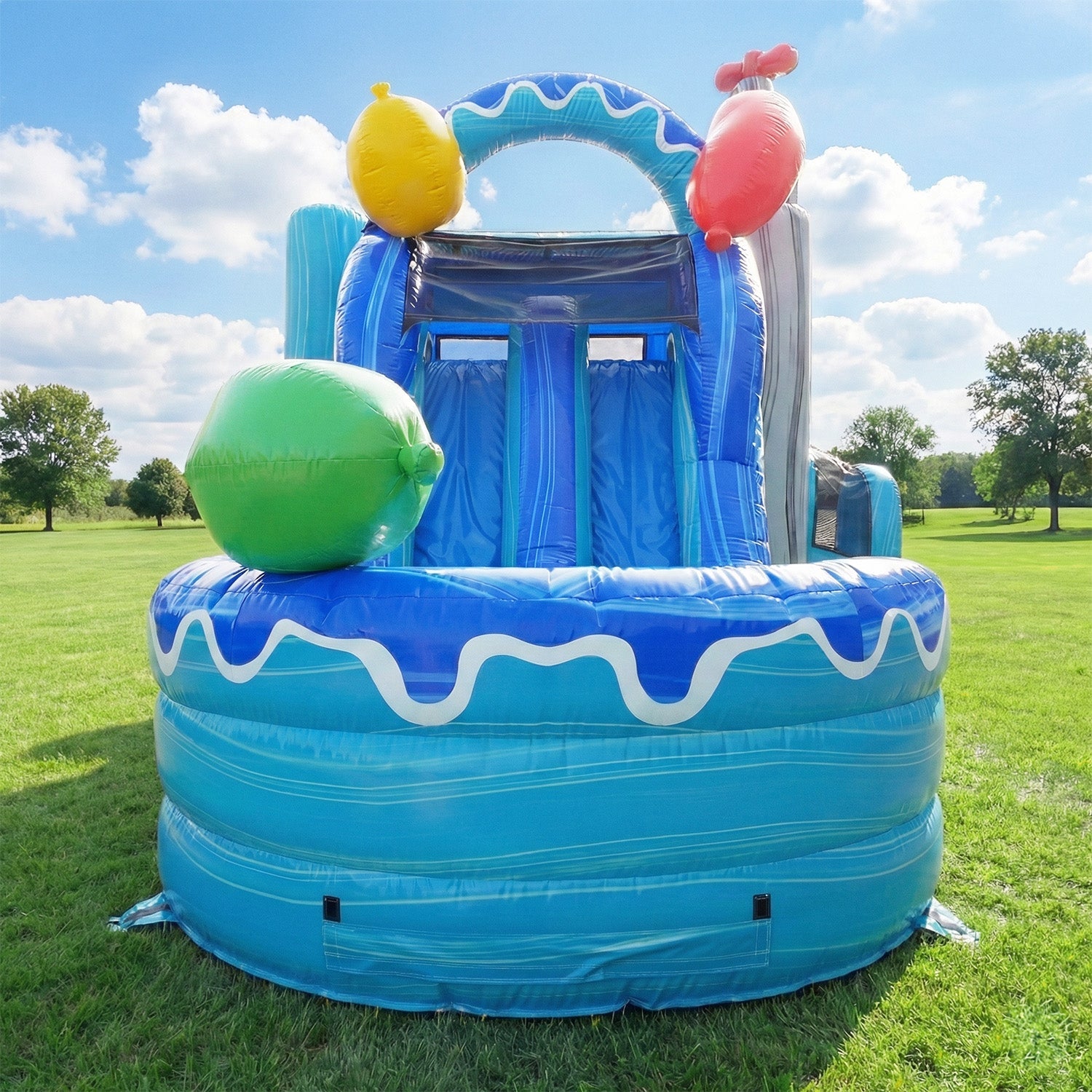
Medium water slides cost $4,500 to $8,000, depending on features and construction quality. Premium water slides range from $8,000 to $10,995+ with obstacle courses following similar $2,995 to $10,995+ pricing structures.
How Do Break-Even Timelines Vary by Water Slide Model?
Classic bounce houses achieve break-even at 3.2 months versus premium water slides requiring 7.7 months for cost recovery. Combo units reach profitability in 4.1 months while obstacle courses extend to 12.7 months before investment recovery.
Medium water slides break even at 5.9 months when maintained on consistent rental schedules. Understanding the investment needed for adding a water slide helps operators time purchases around cash flow availability and anticipated booking demand.
How Should You Manage Equipment Lifespan and Replacement Cycles?
Equipment longevity directly impacts long-term profitability through reduced replacement frequency and maintenance costs. Material quality and usage intensity determine when units transition from revenue generators to financial liabilities.
What Is the Typical Lifespan of Commercial-Grade Water Slides?
Commercial-grade PVC inflatables constructed from 15-20 oz/yd² material significantly outlast residential nylon alternatives. Cheap residential models degrade within 1-3 years, while mid-grade commercial units survive 3-5 years.
Top commercial-grade units deliver 5-10+ years of service when properly maintained and stored. ASTM F2374-22 standards govern safety netting, secure anchoring, and lead-free materials, ensuring compliance and durability.
When Should You Retire or Upgrade Existing Units?
Replace units when annual repair costs exceed 50% of the depreciated equipment value. Budget 15-20% annual equipment depreciation in financial projections to fund systematic replacement cycles.
Aesthetic fading and visible wear negatively impact customer reviews despite functional integrity remaining acceptable. Operators should upgrade inventory when booking requests decline due to dated appearance compared to competitor offerings.
How Can Maintenance Influence Replacement Timing?
Consistent cleaning after every use and complete drying before storage extends equipment lifespan significantly. Water slides demand careful drying protocols to prevent mold growth that accelerates material degradation.
Proper maintenance for commercial water slide rentals delays replacement timelines by years compared to neglected units. Allocating 10% of total equipment value annually for repairs maintains inventory condition and preserves customer satisfaction ratings.
What Strategies Maximize ROI When Expanding Water Slide Inventory?
Profitability optimization requires coordinating equipment purchases with demonstrated demand patterns and utilization metrics. Expansion timing determines whether additional units generate revenue or consume capital through idle inventory costs.
How Can Utilization Rates Guide the Timing for a 2nd, 3rd, or 4th Unit Purchase?
Expand inventory when current units achieve 80%+ utilization rates during peak weekends, indicating unmet demand. Booking denials and double-booking conflicts signal the precise moment for investment in a jumper with water slide inventory expansion.
Unit expansion timing should align with seasonal purchase windows to secure discounts while meeting summer demand. Operators tracking weekly utilization rates identify growth opportunities before losing customers to competitors with available inventory.
What Are the Hidden Costs Beyond Unit Purchase Price?
Equipment represents only 35% of startup costs, with commercial liability insurance adding $2,400-$6,000 annually. Allocate 10% of the total equipment value each year for repair supplies, replacement parts, and maintenance labor.
Transportation costs, storage facility rent, and cleaning supplies accumulate rapidly in capital allocation planning. Water slide rental income calculations must account for these operational expenses to determine true profitability margins.
How Does Equipment Quality Affect Long-Term Profitability?
Standard rentals generate $185 net profit per booking with 57% profit margins on average pricing. Premium rentals produce $732 net profit per booking with 77% margins, justifying higher initial equipment investments.
Commercial-grade construction reduces maintenance frequency and extends replacement cycles compared to budget alternatives. Quality equipment maintains appearance longer, receives better customer reviews, and commands premium pricing throughout its service life.
How Do Geography and Market Growth Trends Inform Inventory Expansion?
Regional demand patterns and market growth rates determine optimal inventory composition and expansion velocity. Operators analyzing geographic trends position themselves ahead of emerging opportunities while avoiding oversaturated markets.
Which Regions Present the Highest Rental Demand for Water Slides?
North America accounts for 42% of the bounce house rental market share, driven by an established party rental infrastructure. This regional dominance reflects strong consumer spending on recreational activities and widespread adoption of inflatable entertainment.
Warm-climate regions sustain year-round water slide demand while seasonal markets concentrate revenue into 4-5 peak months. Urban density areas generate consistent booking volume, whereas rural regions depend on larger community events.
How Does Regional Market Growth Impact Investment Decisions?
Global bounce house market valuation reached $4.46 billion in 2025, with projections to $6.43 billion by 2034 at 4.15% CAGR. The broader inflatable products market, estimated at $14.8 billion in 2025, expands to $26.3 billion by 2034 with 6.6% CAGR.
The inflatable toys market, valued at $6.25 billion in 2026, grows to $9.70 billion by 2035 with 5.00% CAGR. These sustained growth rates validate inventory expansion decisions and support long-term business planning across all geographic markets.
What Future Trends Should Operators Monitor?
Corporate event demand for team-building inflatables continues to accelerate as companies prioritize employee engagement activities. Interactive game categories grow faster than traditional bounce houses as customers seek unique entertainment experiences.
Indoor venue partnerships expand inflatable rental opportunities beyond seasonal outdoor limitations. Operators monitoring these trends adjust inventory composition before competitors recognize shifting demand patterns.
What Are the Best Practices for Maintaining and Storing Water Slide Units?
Proper maintenance protocols directly extend equipment lifespan while reducing replacement frequency and repair costs. Storage methods prevent mold, UV degradation, and material deterioration that prematurely retire otherwise functional units.
Which Cleaning and Drying Protocols Extend Equipment Lifespan?
Clean units after every use to remove dirt, debris, and organic matter that accelerates material breakdown. Ensure units are completely dry before rolling to eliminate moisture trapped in folds and seams.
Water slides require careful drying protocols, preventing mold establishment in splash pool areas and slide channels. Following expert advice for cleaning your inflatable water slide preserves material integrity and maintains the hygiene standards customers expect.
How Does Proper Storage Prevent Mold and Material Degradation?
Mildew ranks as the primary destroyer of water slides and combo units through irreversible material damage. UV exposure degrades inflatable materials over time, requiring covered storage away from direct sunlight.
Moisture damage affects durability by weakening seams and promoting bacterial growth within fabric layers. Climate-controlled storage facilities optimize equipment preservation compared to uncovered outdoor storage, exposing units to temperature extremes.
What Are Common Maintenance Mistakes to Avoid?
Rolling wet units creates ideal conditions for mold growth that renders equipment unsalvageable within months. Skipping post-event cleaning allows stains and organic matter to bond permanently with PVC surfaces.
Using harsh chemicals damages protective coatings and accelerates material deterioration despite achieving short-term cleanliness. Neglecting annual inspections allows small tears to expand into major repairs requiring professional patching services.
Optimizing Water Slide Inventory Planning for Maximum Return on Investment
Strategic inventory expansion transforms rental businesses from seasonal side operations into year-round profitable enterprises. Operators who time purchases during off-season windows, select equipment matching demonstrated utilization patterns, and maintain units properly achieve superior returns compared to reactive buying approaches.
JumpOrange supports rental business growth through direct manufacturer relationships, quality control standards, and expert consultation, helping operators build profitable inventories. Our 24 years of experience manufacturing commercial inflatables ensures equipment durability that extends replacement cycles, while our JEM Club membership delivers 15% discounts plus free shipping on qualifying orders.
Build Your Water Slide Fleet With JumpOrange
You have the numbers. Now you need equipment that holds up booking after booking, season after season. JumpOrange has spent 24 years manufacturing commercial inflatables built for rental operators who treat their inventory like the investment it is.
Time your next purchase right and pair it with units that keep earning. Our commercial water slides come backed by up to 3-year warranty coverage and NJ/PA approval, and JEM Club members save 15% plus free shipping on qualifying orders. That kind of margin makes your second, third, and fourth units pay for themselves faster.
Explore the full JumpOrange water slide lineup, buy slip n slides online, and start expanding your inventory on your terms.


Leave a comment
This site is protected by hCaptcha and the hCaptcha Privacy Policy and Terms of Service apply.